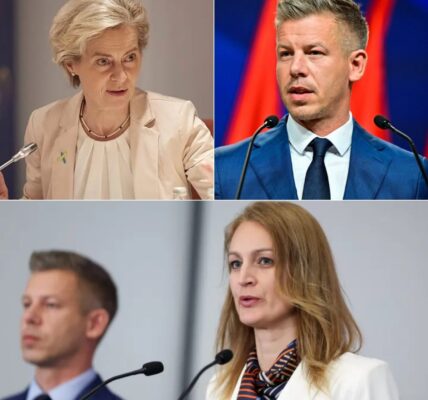
Andy Burnham ‘patting’ Brexit voters on head as Tony Blair breaks silence on row . hyn

Theresa May has urged Andy Burnham to ‘move on’ (Image: bbc)
Andy Burnham is patronising Brexit voters by floating the prospect of rejoining the EU, Theresa May hinted.
The former Prime Minister said Mr Burnham is effectively saying “try again” to voters who rejected the bloc in favour of an independent future.
And Mrs May, who negotiated Britain’s first Brexit deal with Brussels, said she is “aghast” with the Labour leader’s language.
The Prime Minister intends to discuss options for future ties with the EU over the next 12 months, after striking deals at Friday’s Brussels summit covering food and agriculture exports, emissions trading, and a youth experience scheme.
She told the BBC’s Sunday with Laura Kuenssberg: “If you look at politics across the world, we’re seeing increasing polarisation in politics. People increasingly living in an absolutist world where you either have to be 100% with me or 100% against me. Government is complex.
“Geopolitics around the world are complex.
“When I became Prime Minister, I was very clear. People had voted for Brexit, we should deliver Brexit regardless of the fact that I’d voted for remain because previously where I’d seen countries in the European Union, where there had been changes to treaties and been a referendum, and people had voted against and the government came back a few months later and said try again, and I almost think this is what Andy Burnham is saying to the British people.
“Sort of patting them on the head and saying, you know what, remember that vote, well you got it wrong didn’t you, so have another go, and come out with the right answer, or what he thinks is the right answer.
“But as I say, let’s just get on with making sure that the United Kingdom is as strong economically, in security terms and in terms of opportunities for people as it can be.”
Lady May said negotiations with the EU consume vast amounts of government time and resources.
She said: “It’s not just prime ministerial time, it’s Cabinet Ministers’ time, officials’ time, toing and froing on those negotiations, because you have to negotiate hard in order to make sure that you’re getting out what you want, and that’s one of the reasons I look slightly aghast at what Andy Burnham is talking about, further negotiations of going into the EU.
“And also we, as a country, we voted for Brexit. When I was Prime Minister, I was very clear that we should deliver on that vote. So, I’m afraid my message to him really is people voted for Brexit, Brexit is done, just accept Brexit and move on.
Sir Tony Blair, a Labour former premier, on Sunday argued that Britain should only rejoin the bloc if it reforms and allows more technological innovation.
Meanwhile, Sir Tony said his advocacy for rejoining the EU was “heavily conditioned”.
He told The Sunday Times: “The problem if we go back and join Europe is that; I can’t say that the technology revolution is the single biggest thing, and then if Europe moves in the wrong direction on technology innovation, which they might do and presently probably are doing, that it’s a good idea for Britain to rejoin.
“That’s what’s changed in this last 10 years.”
Tory former prime ministers Boris Johnson and Lord David Cameron have both cautioned Mr Burnham against returning to the bloc.
One of the three deals agreed by Mr Burnham at the UK-EU summit will end most post-Brexit checks and restrictions on food and agricultural products from March 1, 2028.
European relations minister Hamish Falconer denied the sanitary and phytosanitary (SPS) agreement would mean “significantly” more checks on goods from the rest of the world because the UK “didn’t actually diverge that much from the EU rulebook”.
Asked whether there would be referendum if rejoining the EU is on the table, Mr Falconer said: “Everything will be in the end voted on by the British public.
“We are talking, as the Prime Minister was clear, about the long-term. We will have a general election before then. People will be able to express their views.”
Tory deputy leader Alex Burghart said his party would “certainly repeal” the deal agreed this week if it wins the next general election.
He told Sky News the agreement would impose costly EU regulations on British farmers and businesses without giving the UK a say over them.
“I think it’s a really bad business,” he said.
Conservative Party leader Kemi Badenoch questioned why no treaty text has emerged after the Brussels summit.
She said on X: “That is weird because a political statement is not a legally binding agreement, and the Government is behaving as though the deal is done while keeping Parliament and the public in the dark about the actual terms.
“What has Burnham agreed and what is he not telling us?”
Andy Burnham ‘Patting’ Brexit Voters on the Head as Tony Blair Breaks Silence on Row
The political debate surrounding Brexit has returned to the centre of British public life, with Andy Burnham facing criticism over his perceived attitude towards voters who supported leaving the European Union. The controversy has raised difficult questions about political arrogance, democratic accountability and whether Britain’s political establishment has ever truly accepted the result of the 2016 referendum. As former Prime Minister Tony Blair breaks his silence on the growing row, the disagreement highlights how deeply Brexit continues to divide politicians, commentators and the public.
At the heart of the controversy is the suggestion that Burnham’s approach to Brexit supporters risks appearing dismissive, almost as though those who voted Leave need to be reassured or educated by politicians who believe they understand the country’s interests better than ordinary voters. The image of a politician metaphorically patting Brexit voters on the head has become a powerful expression of the resentment that remains among sections of the electorate.
For many Leave supporters, the referendum was not simply a disagreement about trade regulations or the institutional structure of Europe. It represented a demand for political recognition, national sovereignty and greater control over decisions affecting everyday life. Millions of people believed that successive governments had become increasingly distant from their concerns. Voting to leave the European Union was, for many, an opportunity to challenge that political establishment.
That is why any suggestion that Brexit voters should now be treated as misguided or reassured by politicians can provoke such a strong reaction. People who supported leaving the EU do not necessarily believe that every consequence of Brexit has been positive. Some recognise that economic challenges have emerged and that the process of leaving was more complicated than many campaign promises suggested. However, acknowledging difficulties does not mean accepting that the original democratic decision was wrong.
Burnham faces a particularly delicate political challenge because his position on Britain’s future relationship with Europe could become a defining issue in any wider leadership ambitions. Any attempt to establish closer ties with Brussels must contend with the fact that the referendum result remains politically significant, particularly in communities where Brexit was viewed as a rejection of years of centralised decision-making.
The controversy also brings Tony Blair back into an argument that has followed him since his departure from Downing Street. Blair has consistently supported closer European integration and has been an influential voice in discussions about Britain’s international position. His interventions on Brexit have often reflected his belief that leaving the European Union weakened Britain’s economic and political influence.
However, Blair’s involvement also carries historical significance. His premiership was associated with a period when Britain’s relationship with Europe remained a major political question, even though he did not take the country into the eurozone. His views continue to attract attention because he represents a political generation that generally regarded European integration as an important part of Britain’s future.
For critics of the former prime minister, his position illustrates the disconnect between Westminster’s political establishment and voters who wanted a different direction. They argue that politicians who spent decades supporting closer European integration have struggled to understand why so many people rejected that approach in 2016.
Blair’s comments therefore risk reopening an argument that has never completely disappeared. The central question is whether Britain should treat Brexit as a settled democratic decision or as a political mistake that future governments should gradually correct.
There is a significant difference between improving practical cooperation with European countries and reversing the fundamental principles behind Brexit. Britain can work closely with its neighbours on defence, scientific research, energy security and international trade without necessarily surrendering the independence that Leave voters believed they were protecting.
Nevertheless, the distinction is not always straightforward. Arrangements involving regulatory alignment, shared institutions and freedom of movement can quickly become politically sensitive. For voters who supported Brexit because they wanted greater control over British laws and borders, even relatively limited agreements may raise concerns about whether politicians are gradually moving the country towards a relationship they rejected.
This is where Burnham’s political language becomes especially important. A politician seeking to build support across different parts of the country must recognise that Brexit voters are not a single group with identical opinions. Some may support closer economic cooperation with the EU while remaining firmly opposed to rejoining. Others may believe that Britain should maintain a much greater distance from Brussels.
Treating these voters as though they simply need to be persuaded by a more sophisticated political argument risks overlooking the reasons behind their original decision. The referendum was shaped by questions of identity, trust and democratic representation as much as by economic calculations.
The political consequences could be substantial. Labour cannot assume that voters who supported the party in previous elections will automatically accept a major change in Britain’s relationship with Europe. In several constituencies, Brexit remains closely connected to questions about national identity, immigration and whether political leaders listen to ordinary communities.
The party also faces competition from Reform UK, which has consistently presented itself as a defender of the referendum result and a challenger to what it describes as the political establishment. Nigel Farage has built much of his political appeal around the argument that Brexit must be respected rather than gradually diluted through agreements negotiated behind closed doors.
If Labour figures appear dismissive of Leave voters, Reform could use the controversy to strengthen its argument that established political parties have learned little from the referendum. Even voters who are not enthusiastic supporters of Farage may become frustrated if they believe their democratic decision is being treated as an inconvenience.
For Burnham, the danger is that an argument about European policy becomes a broader argument about political respect. His supporters may argue that Britain needs a pragmatic relationship with its largest neighbouring economic bloc and that refusing cooperation simply because of historical disagreements would be irresponsible. That is a legitimate debate. However, presenting closer European ties as an obvious solution without properly addressing public concerns could create significant difficulties.
There is also an economic dimension that cannot be ignored. Britain and the European Union remain closely connected through trade, investment, supply chains and financial services. Businesses on both sides have an interest in reducing unnecessary barriers and establishing predictable arrangements. Improving cooperation could therefore deliver practical benefits.
Yet economic arguments alone cannot settle the political question. Brexit was never exclusively about calculating the immediate financial consequences of membership. For many voters, sovereignty and democratic accountability were more important than forecasts produced by economists or political institutions.
This helps explain why the debate remains so emotionally charged more than a decade after the referendum. People who voted Leave often believe that their concerns were repeatedly dismissed before 2016 and that the subsequent political arguments have reinforced their distrust. They do not want to be told that they misunderstood the question or that the country would have been better off making a different decision.
At the same time, supporters of closer European integration argue that the international environment has changed considerably. Security threats, economic competition and instability across global markets have strengthened the case for cooperation between neighbouring democracies. They believe Britain should be able to reconsider practical arrangements when circumstances change.
The challenge is finding a way to discuss these issues without turning every disagreement into an accusation of betrayal. A mature political debate should allow people to recognise the advantages of cooperation while respecting the referendum result. It should also allow critics of Brexit to explain their concerns without automatically being accused of trying to overturn democracy.
Tony Blair’s intervention adds another layer to this complicated situation. As a former prime minister, his opinions carry historical weight, but they also remind voters of the political divisions that existed long before the referendum. His perspective may appeal to those who believe Britain should play a more integrated role in Europe. However, it may be less convincing to voters who see the political establishment’s continued involvement in the debate as evidence that their decision has never been fully accepted.
Ultimately, Burnham must demonstrate that he understands the political significance of Brexit rather than treating it as an obstacle to be managed. If he wants to persuade voters that closer relations with Europe would benefit Britain, he must explain precisely what those arrangements would involve, what safeguards would remain and how democratic accountability would be protected.
The public also deserves clarity about the distinction between cooperation and reintegration. Vague promises about improved relations will not be sufficient if voters suspect that the eventual objective is a return to the European Union through gradual political concessions.
Britain’s future relationship with Europe will undoubtedly remain an important issue for years to come. Economic realities may encourage closer cooperation, while political disagreements over sovereignty and immigration will continue to influence public opinion. Neither side can simply declare the argument finished.
The most important lesson for Burnham and other political leaders is that democratic decisions cannot be dismissed simply because political circumstances have changed. Voters are entitled to reconsider their opinions, but they must be given honest arguments rather than lectures about what they should have believed.
The image of a politician patting Brexit voters on the head captures precisely the danger facing anyone who approaches this debate with a sense of superiority. People who voted to leave the European Union are not an audience waiting for instructions from Westminster. They are citizens whose decision helped reshape the country.
If Burnham hopes to lead a political movement capable of uniting Britain, he will need to show that he understands this reality. Blair’s return to the debate may have reignited old arguments, but the fundamental question remains unchanged: can Britain’s political establishment finally discuss Europe without treating millions of voters as though their democratic choice needs to be corrected?