The 6 former Prime Ministers who’ve warned Andy Burnham not to rejoin the EU . hyn


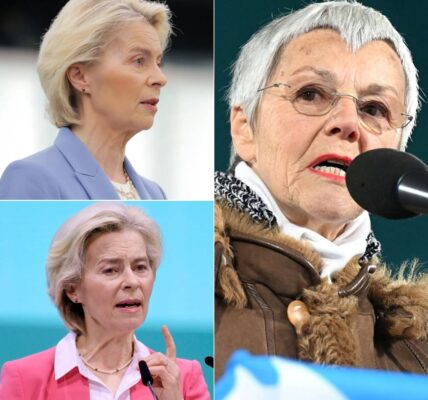
A slew of former PMs are warning Andy Burnham over rejoining (Image: Getty)
Everything you need to know about the former PMs warning Andy Burnham against rejoining the EU
- Six former Prime Ministers have warned Andy Burnham against rejoining the EU, including Rishi Sunak, Theresa May, Boris Johnson, David Cameron and Liz Truss.
- Mr Burnham’s recent “reset” deal with the bloc has drawn sharp criticism after reports Brussels made the deal contingent on talks to give EU students cheaper, domestic-rate UK university fees, which could cost taxpayers around £450million.
- Sir Tony Blair cautioned against rejoining unless the EU adapts to the technology revolution, noting any potential return must be “heavily conditioned” with the willingness to walk away from talks.
- Rishi Sunak argued that talking about rejoining would be “divisive” and insisted the UK’s financial and tech sectors benefit from operating outside EU rules.
- Theresa May dismissed further negotiations by saying: “People voted for Brexit. Brexit is done. Just accept Brexit and move on.”
- Boris Johnson labelled the push to reopen the debate “utterly shameful and irresponsible”. He accused Brussels of plotting to “punish and bully the UK”.
- Lord Cameron warned Mr Burnham that initiating the conversation would trigger a “very long and painful” decade-long debate.
- Liz Truss dismissed the EU as a “failing, undemocratic superstate” and described the idea of rejoining as “sheer lunacy”.
The 6 Former Prime Ministers Who’ve Warned Andy Burnham Not to Rejoin the EU
Andy Burnham is facing an extraordinary political challenge after six former British prime ministers raised concerns about his plans to reopen the debate surrounding Britain’s relationship with the European Union. From Conservative leaders who experienced the difficulties of Brexit negotiations firsthand to former Labour Prime Minister Tony Blair, the criticism has crossed traditional party boundaries and placed the government’s European strategy under intense scrutiny.
The six former prime ministers are David Cameron, Theresa May, Boris Johnson, Liz Truss, Rishi Sunak and Tony Blair. Although they do not share identical views about Brexit or Britain’s future relationship with Europe, they have all expressed reservations about reopening the question of EU membership or pursuing closer European integration without carefully considering the consequences.
Their interventions have created an unusual political situation for Burnham. Instead of facing criticism exclusively from the Conservative opposition or Reform UK, he must also respond to warnings from politicians who have previously occupied the highest office in the country.
The Prime Minister insists that Britain needs a more constructive relationship with its European neighbours. However, the growing criticism demonstrates that the question of Brexit remains deeply sensitive within British politics.
1. David Cameron: The former PM who started the referendum process
David Cameron occupies a particularly important position in the Brexit debate because he was the prime minister who called the 2016 referendum.
Cameron campaigned for Britain to remain in the European Union, believing that membership offered important economic and political advantages.
However, the referendum produced a Leave victory, forcing him to resign shortly afterwards.
His experience provides an important perspective on the difficulties of reopening Britain’s relationship with Europe.
Cameron has warned that attempting to return to the European Union would create a very long and painful political argument.
Rather than pursuing another membership debate, he has suggested that Britain should concentrate on developing a constructive relationship with its European neighbours.
His preferred approach is for Britain to become a strong friend, partner and neighbour of the European Union while maintaining its position outside the organisation.
The irony is that Cameron originally called the referendum to settle the European question within his own party.
Instead, the result transformed British politics and created years of uncertainty.
His warning to Burnham reflects the experience of a politician who discovered how difficult it can be to control the consequences of a referendum.
2. Theresa May: Accept Brexit and move on
Theresa May has delivered one of the clearest warnings to Burnham.
She became prime minister in July 2016, shortly after the referendum, and inherited the enormous task of negotiating Britain’s withdrawal from the European Union.
Her premiership was dominated by disagreements over the withdrawal agreement, parliamentary opposition and the future relationship between Britain and Brussels.
Despite spending years attempting to secure an acceptable settlement, May eventually resigned without successfully delivering her original Brexit agreement through Parliament.
Speaking to the BBC, she urged Burnham to accept the referendum result and move forward.
Her message was direct:
“People voted for Brexit. Brexit is done. Just accept Brexit and move on.”
May also expressed concern that reopening the debate could give voters the impression that politicians believed they had made the wrong decision in 2016.
Her argument is that the government should concentrate on making Britain successful outside the European Union rather than encouraging another divisive national argument.
For May, the experience of Brexit negotiations demonstrates how easily European discussions can consume the attention of an entire government.
3. Boris Johnson: Another warning about political distraction
Boris Johnson was one of the most prominent figures in the campaign to leave the European Union.
He became prime minister in July 2019 and secured an agreement that allowed Britain to leave the EU in January 2020.
Johnson subsequently argued that reopening the Brexit debate would be an unnecessary distraction.
He described making Brexit the government’s political priority again as madness and warned Burnham about the potential consequences.
Johnson’s position is particularly relevant because he experienced both the political difficulties of negotiating Britain’s departure and the challenges of implementing the resulting arrangements.
He believes the government should concentrate on domestic priorities rather than returning to arguments that previously dominated Westminster.
However, critics of Johnson point out that the arrangements negotiated under his leadership also created continuing disagreements over Northern Ireland, trade and regulatory cooperation.
Those disagreements are among the reasons Burnham argues that Britain’s relationship with Europe requires further attention.
4. Liz Truss: A warning about European regulations
Liz Truss has also criticised Burnham’s approach, particularly the possibility that Britain could become more closely aligned with European regulatory systems.
Her concerns focus on economic independence, competitiveness and Britain’s ability to develop policies suited to its own industries.
Truss has described the government’s European agreement as a surrender deal, arguing that accepting European rules could restrict Britain’s ability to innovate.
She has repeatedly emphasised the importance of developing industries such as biotechnology, artificial intelligence and advanced manufacturing.
Her argument is that Britain should use its position outside the European Union to create a more flexible regulatory environment.
Supporters of closer European cooperation disagree, arguing that common standards can reduce barriers for businesses exporting to European markets.
The disagreement illustrates an important question facing Burnham: how can Britain secure the economic advantages of cooperation without accepting obligations that could restrict future domestic policy choices?
Truss believes the government should be particularly cautious about making commitments that could affect Britain’s long-term competitiveness.
5. Rishi Sunak: Brexit must not become an all-consuming debate
Rishi Sunak became the sixth former prime minister to publicly question Burnham’s decision to reopen the Brexit debate.
Speaking to Sky News on November 23, 2026, Sunak warned that another national argument about European membership would be divisive and potentially all-consuming.
He said:
“I certainly wouldn’t reopen up this whole debate about rejoining the EU.”
Sunak argued that the previous Brexit negotiations demonstrated how much time and political attention the issue could consume.
He believes the government should instead concentrate on reducing taxes, controlling energy costs, improving economic growth and making Britain more competitive.
Sunak also questioned whether Britain would realistically return to the European Union within the next five years.
His position is particularly interesting because, during his premiership, he negotiated the Windsor Framework in 2023 to address outstanding post-Brexit arrangements involving Northern Ireland.
That experience demonstrated his preference for addressing specific problems through negotiations rather than reopening the question of membership.
However, Burnham argues that improving Britain’s relationship with Europe is necessary to address economic problems created by the existing arrangements.
6. Tony Blair: Rejoining depends on Europe’s willingness to reform
Tony Blair represents a somewhat different position from the other former prime ministers.
Unlike the Conservative leaders who have warned against reopening Brexit, Blair has consistently supported closer European integration.
Nevertheless, his support for Britain rejoining the European Union is conditional.
Speaking to The Sunday Times, Blair argued that Britain should not return to an organisation that might be moving in the wrong direction on technological innovation.
He has repeatedly emphasised the importance of artificial intelligence, digital technology and economic competitiveness.
His concern is that European regulatory approaches could make it more difficult for Britain to develop certain industries at the speed required to compete internationally.
Blair believes that any decision about rejoining must consider whether the European Union is prepared to reform itself.
His intervention is particularly significant because it demonstrates that even a former Labour prime minister who supports closer European integration does not necessarily agree with an unconditional return to membership.
His position is therefore more complicated than simply supporting or opposing Brexit.
He wants Britain to maintain strong European relationships while ensuring that future arrangements support innovation and economic growth.
Why are six former prime ministers concerned?
Despite their different political backgrounds, the six former prime ministers share several concerns about reopening the Brexit debate.
The first is political stability.
The previous negotiations demonstrated that disagreements about Europe can divide parliamentary parties and dominate government business for extended periods.
The second is economic uncertainty.
Businesses require predictable regulations and trading arrangements. A prolonged debate about future EU membership could create uncertainty about the rules that will apply in coming years.
The third concerns democratic accountability.
Millions of people voted in the 2016 referendum, and politicians remain divided about how much weight should be given to that decision when considering future arrangements.
Finally, there is the question of Britain’s international competitiveness.
Some former prime ministers believe that the country should concentrate on developing its own industries and global relationships rather than spending years negotiating another European settlement.
However, Burnham and his supporters argue that closer cooperation could reduce trade barriers, improve economic opportunities and strengthen Britain’s position.
Burnham refuses to listen to his predecessors
Burnham has responded to the criticism by describing his predecessors as being stuck in the past.
He argues that they were responsible for the political decisions that created Britain’s current Brexit arrangements and therefore should not prevent the country from considering improvements.
The Prime Minister believes that Britain cannot ignore the economic consequences of leaving the European Union.
His government has reached agreements covering food and agricultural trade, emissions trading and youth mobility.
Burnham claims that the wider agreement could generate approximately £17 billion annually for the British economy.
He has also insisted that Britain will not rejoin the European Union without another referendum.
This distinction is important because closer cooperation does not automatically mean restoring full EU membership.
Nevertheless, the debate about Britain’s long-term direction is likely to continue.
Conclusion: Britain’s European future remains unresolved
The warnings from David Cameron, Theresa May, Boris Johnson, Liz Truss, Rishi Sunak and Tony Blair demonstrate how complicated Britain’s relationship with Europe remains.
Although the six former prime ministers have different political backgrounds and do not agree on every aspect of Brexit, they have all expressed reservations about the direction of Burnham’s European strategy.
Their experiences provide important lessons about the difficulties of negotiating with Brussels, managing parliamentary divisions and protecting Britain’s economic interests.
Burnham, meanwhile, believes that the country must look forward rather than remain trapped in arguments about the 2016 referendum.
The government will need to demonstrate that closer European cooperation can produce measurable economic benefits while respecting the democratic decision to leave the EU.
Ultimately, the debate should be based on the practical consequences of different arrangements rather than political loy