A FIERCE Brexit row is erupting as Nigel Farage warns that Britain could face RIOTS if Andy Burnham attempts to reverse Brexit! . hyn

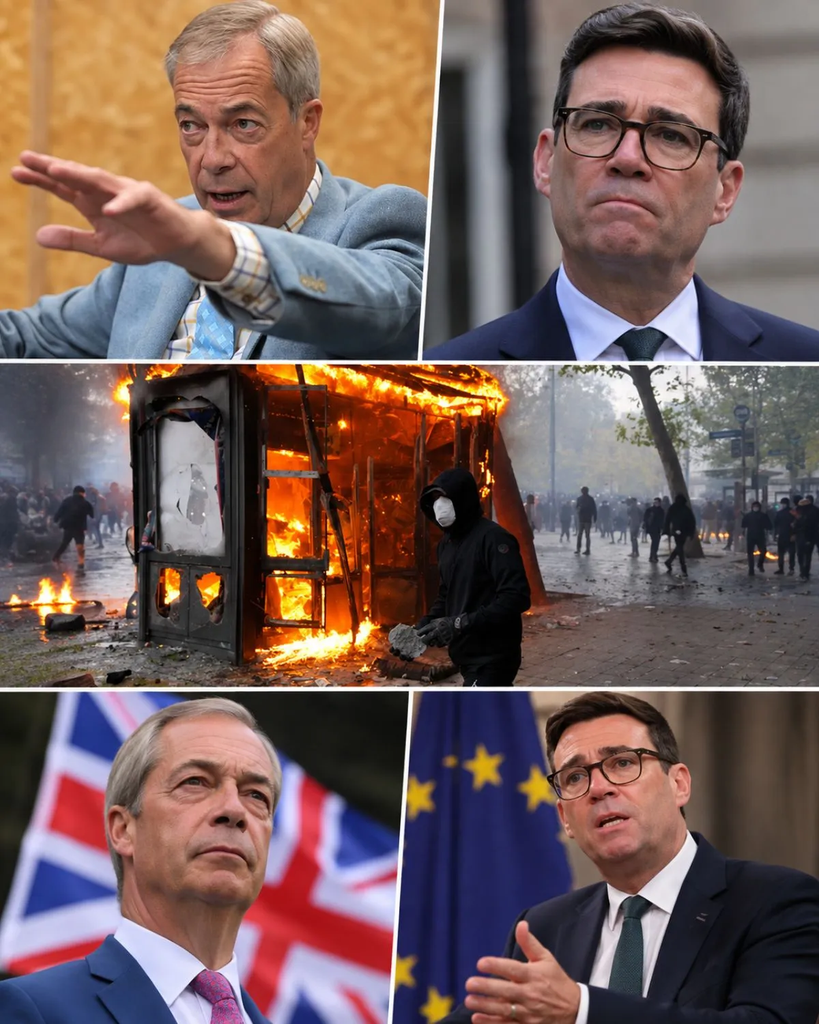
Europe has been struck by weeks of violent disorder, with historic buildings torched and shops looted
Nigel Farage has warned that Britain will face riots if Andy Burnham reverses Brexit just hours before the Prime Minister sits down with EU leaders in Brussels.
The Reform UK leader fumed about the “betrayal” of the British people, calling Mr Burnham’s mooted reset deal a “cynical” move to rejoin the bloc.
He cautioned that such a stark reversal of Britain’s democratic will, voting to leave the EU by 52 per cent to 48 per cent in 2016, would undermine the nation’s democratic principles.
“What really upsets me, makes me angry actually, is that the biggest democratic vote in history is about to be unravelled by a man with no mandate,” Mr Farage said.
He was referring to Mr Burnham’s path to replacing Keir Starmer as Prime Minister: winning the Makerfield by-election and ultimately the keys to No10 with just 24,927 votes in the Manchester seat.
Mr Farage argued that successive administrations had “betrayed” the result of the 2016 referendum, leaving democracy at “a very fragile point”.
“What is the point of voting if governments do the opposite to what they say they’re going to do again and again and again?”
He warned that a growing number of young people were contemplating “direct action” as an alternative to the ballot box.
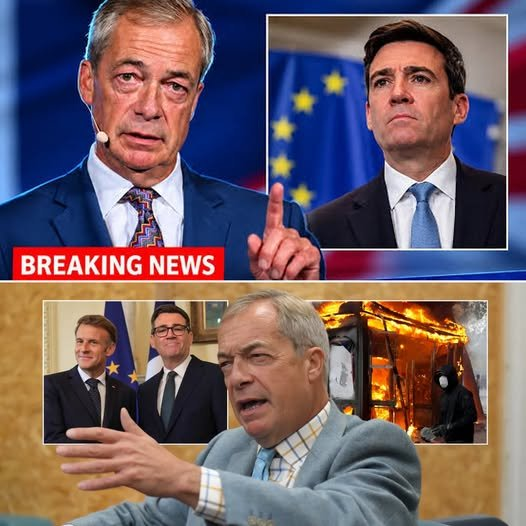
Nigel Farage has warned Andy Burnham’s Brexit betrayal could spark riots in the UK
| GETTY
His remarks come in the shadow of weeks of violent disorder across the European continent, where thousands were arrested after buildings were burned down and shops looted across France and beyond.
Mr Burnham reignited the Brexit debate by floating the possibility of standing on a manifesto commitment to rejoin the EU at the next general election.
In September, the Prime Minister went so far as to say “we could go all the way” to full membership.
Downing Street sought to distance itself from those remarks, insisting today that Burnham has “not proposed rejoining the EU”.
LATEST DEVELOPMENTS
“Maybe he’ll pull back. It’s too late.
He has let the genie out of the bottle… This debate is back,” Mr Farage said
“I’m the only person you even trusted. I’ve never wavered. I have never changed my view,” he added.
The Prime Minister has ruled out restoring freedom of movement during this parliamentary term but has left the door open to doing so in the future.
However, Mr Burnham will discuss granting 100,000 EU visas as part of the Youth Mobility Scheme, which would permit a set number of under-30s to live and work in the UK, at tomorrow’s summit.
Mr Farage slammed the proposal as “the beginning of total open door immigration”.
The Reform leader also addressed his party’s recent polling slump, which dropped to 19 per cent in the latest More in Common survey.
It puts Reform in a distant third, behind Labour at 29 per cent and the Tories at 25 per cent.
When pressed on whether he had “blown” his shot at power, Mr Farage was defiant.
“No, far from it,” he declared.
A Fierce Brexit Row Erupts as Nigel Farage Warns Britain Could Face Riots if Andy Burnham Attempts to Reverse Brexit
Political tensions in Britain have intensified following warnings from Nigel Farage about the possibility of serious public unrest if the country attempts to reverse Brexit. The debate has reignited disagreements over national sovereignty, democracy, immigration and Britain’s future relationship with the European Union. At the centre of the controversy is Andy Burnham, whose position on closer relations with Europe has attracted political attention and criticism from supporters of Brexit. The dispute highlights how deeply Brexit continues to influence British politics, even several years after the historic referendum.
Nigel Farage, one of the most recognisable figures in the campaign to leave the European Union, has repeatedly argued that the 2016 referendum represented a clear democratic decision by the British people. In his view, any attempt to reverse that decision without another public vote could create widespread frustration. His warning about possible riots reflects concerns that some Brexit supporters might regard a reversal of the country’s departure from the EU as a betrayal of their democratic choice. However, such predictions should be understood as political warnings rather than established facts.
The 2016 referendum remains one of the most significant events in modern British political history. Approximately 17.4 million people voted to leave the European Union, while around 16.1 million voted to remain. The result divided the country geographically, politically and socially. Some voters believed that leaving the EU would restore national sovereignty and allow Britain to control its laws, borders and trade policies. Others feared that departure would damage the economy, weaken international cooperation and reduce Britain’s influence in Europe.
For many Leave supporters, Brexit was about much more than trade or economic regulations. It represented the principle that important decisions affecting Britain should be made by British institutions rather than European organisations. They believed that the country should have greater freedom to establish immigration policies, negotiate international agreements and determine its own political priorities. Consequently, any suggestion of returning to the European Union can provoke strong emotional reactions among people who consider Brexit a fundamental democratic achievement.
On the other hand, supporters of closer European integration argue that the circumstances surrounding Brexit have changed. They point to trade difficulties, administrative barriers and economic challenges affecting businesses that operate between Britain and the European Union. They believe that stronger cooperation could improve commercial relationships, encourage investment and provide opportunities for scientific research and technological development. Some also argue that cooperation with European countries is essential for addressing international challenges such as climate change, organised crime and security threats.
Andy Burnham has become an important figure in discussions about Britain’s future relationship with Europe. His political position has attracted attention because of his influence within the Labour Party and his involvement in debates about economic development and public policy. However, discussions about improving relations with the European Union should be distinguished from an actual proposal to reverse Brexit. Greater cooperation does not necessarily mean rejoining the EU, and different political arrangements could involve different levels of economic and regulatory integration.
One of the most controversial aspects of Farage’s warning is the suggestion that reversing Brexit could lead to riots. Such language demonstrates the intensity of feelings surrounding the issue. Political disagreements are a normal part of democracy, and citizens have the right to protest peacefully against government decisions. Nevertheless, violence and public disorder should never be encouraged or treated as an acceptable response to political disagreement.
The possibility of social unrest also raises questions about the responsibility of political leaders. Politicians have considerable influence over public attitudes, particularly when discussing controversial national issues. Their statements can encourage constructive debate, but they can also increase tensions if they rely on inflammatory language. Leaders from all political parties should therefore communicate carefully and make clear that disagreements must be resolved through democratic and lawful means.
Another important issue concerns the democratic legitimacy of changing Britain’s relationship with Europe. Some Brexit supporters argue that the 2016 referendum settled the question and that politicians should respect the result. They believe that any attempt to reverse the decision would require another referendum to obtain public consent. From this perspective, the government should not make fundamental constitutional changes without giving voters an opportunity to express their views.
However, democracy also involves the ability of future governments and generations to reconsider political decisions. A referendum result does not necessarily prevent Parliament from debating alternative policies when circumstances change. Britain’s political institutions must balance respect for previous democratic decisions with the principle that elected representatives have responsibilities to address new challenges. If a future government proposed a major change to Britain’s relationship with Europe, transparency and public consultation would be essential.
Immigration is another major factor contributing to the Brexit debate. Many people who voted Leave wanted Britain to regain control over its borders and establish an immigration system based on national priorities. They believed that EU freedom of movement had limited the government’s ability to manage migration independently. Today, immigration remains a highly controversial issue, particularly in relation to irregular Channel crossings, asylum accommodation and pressure on local public services.
However, immigration also provides economic benefits. International workers contribute to the NHS, social care, agriculture, construction and other important industries. British businesses also depend on international trade and access to skilled workers. Therefore, any future discussion about relations with Europe must consider the economic consequences of different immigration arrangements rather than relying exclusively on political arguments.
The economic consequences of Brexit remain another important source of disagreement. Supporters of leaving the EU believe that Britain can develop independent trade agreements and create regulations that encourage innovation. They argue that national independence provides greater flexibility and allows the country to pursue opportunities beyond Europe. Critics, however, highlight additional paperwork, trade barriers and uncertainty affecting businesses that rely on European markets.
Neither economic independence nor closer integration guarantees prosperity by itself. Britain’s long-term economic performance also depends on productivity, education, infrastructure, technological investment and the effectiveness of government policies. Consequently, political leaders should examine reliable economic evidence before making claims about the benefits or costs of alternative arrangements.
The media has played a significant role in keeping the Brexit debate alive. Television interviews, newspaper headlines and social media discussions frequently turn political disagreements into dramatic confrontations. Strong language can attract public attention, but it may also create confusion between political predictions and verified information. The public should therefore examine the actual statements made by politicians and distinguish between established facts, personal opinions and speculative warnings.
Furthermore, the government should focus on improving the quality of public debate. Citizens who voted Leave and those who voted Remain should both be treated with respect. Neither group should be automatically portrayed as unreasonable or disloyal. The referendum reflected different experiences, economic circumstances and political priorities across the country. A mature democracy must recognise these differences while searching for common ground.
Ultimately, Britain’s future relationship with Europe should be determined through careful consideration of national interests, democratic principles and economic realities. Political leaders must explain their proposals clearly and allow citizens to understand the possible consequences. If major constitutional changes are considered, Parliament should provide proper scrutiny and ensure that public opinion is taken seriously.
In conclusion, Nigel Farage’s warning about possible riots if Brexit were reversed has intensified an already sensitive political debate. His comments reflect the strength of feeling among some supporters of Brexit, while the wider controversy demonstrates that Britain’s relationship with Europe remains unresolved in the public conversation. Andy Burnham and other political figures face the challenge of explaining their positions without deepening divisions. Ultimately, disagreement over Brexit must be addressed through peaceful democratic debate, transparent decision-making and respect for the rule of law. Britain’s future should not be shaped by threats of disorder or political intimidation, but by informed discussion and the democratic participation of its citizens.