UK–EU Relations Under Scrutiny as Claims of an Expensive Brexit Reset Raise Political Questions . HYN

A Controversial Claim About Britain’s Relationship With Europe
Britain’s post-Brexit relationship with the European Union remains one of the country’s most politically sensitive issues.
A strongly worded commentary now claims that the EU has presented Britain with an 11-page list of demands as the two sides pursue closer cooperation.
According to the account, the proposals involve immigration arrangements, foreign prisoners, university tuition fees, fishing access and participation in European energy markets.
The commentary portrays these alleged demands as evidence that Brussels is seeking substantial concessions in exchange for improved relations.
However, the supplied material does not include the alleged 11-page document, an official negotiating text or independent confirmation that these proposals form a single EU ultimatum.
It also repeatedly identifies Andy Burnham as the British leader conducting negotiations, without establishing that he holds the governmental authority described.
These issues make it essential to separate legitimate policy questions from unsupported political claims.
Who Is Actually Responsible for UK–EU Negotiations?
Andy Burnham is a prominent Labour politician who has served as Mayor of Greater Manchester since 2017.
He has previously held senior government positions, including health secretary.
Nevertheless, the circulating commentary does not establish that Burnham is leading the UK government or conducting formal negotiations with the European Commission.
International agreements are negotiated through the relevant national government institutions and their authorised representatives.
This distinction matters because the commentary attributes statements, decisions and diplomatic responsibilities to Burnham without identifying reliable supporting evidence.
The reference to a summit on 20 November also requires confirmation.
Without an official announcement establishing its date, participants and agenda, it would be premature to describe the supposed meeting as a confirmed diplomatic event.
What Is the Alleged 11-Page List?
The most striking element of the commentary is its description of an extensive document supposedly outlining Brussels’ conditions.
It claims that the EU wants Britain to change its approach to deportations, expand opportunities for young Europeans, adjust university fees and make financial concessions.
Yet no document title, publication date or official source is provided.
Even if a negotiating paper exists, its contents would need careful examination.
There is a significant difference between an initial proposal, a preferred negotiating position and a legally binding agreement.
Governments routinely exchange proposals that are subsequently revised, rejected or narrowed.
Presenting every opening request as an agreed obligation risks misleading the public about how diplomacy works.
The key question is not simply what one side may have requested, but what both sides have actually accepted.
Youth Mobility and Immigration Concerns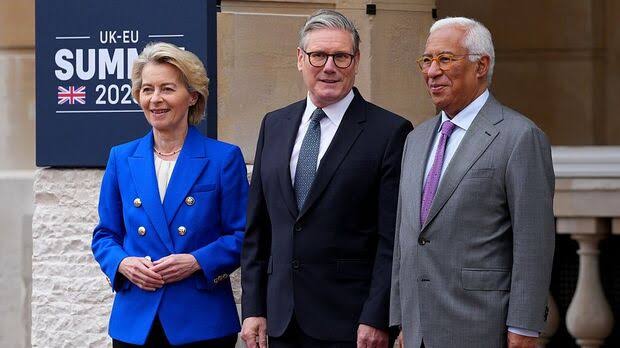
One claim concerns a proposed arrangement allowing young Europeans to live temporarily in Britain for study, volunteering or travel.
Youth mobility has been a subject of UK–EU discussion because Brexit ended the previous system of free movement between Britain and EU member states.
Supporters of a structured youth mobility scheme argue that it could improve cultural exchange, educational opportunities and professional development.
Critics question whether such arrangements could increase migration pressures or weaken existing immigration controls.
The details would be decisive.
Age limits, eligibility requirements, duration, numerical caps and access to public services could all affect the scheme’s practical consequences.
The commentary claims that participants would be permitted to stay for up to three years without a cap.
However, that specific description is not supported by an authenticated negotiating document in the material provided.
It should therefore be treated as an allegation rather than an established policy.
University Fees and the Cost of Education
Another disputed issue involves university tuition fees.
Following Brexit, many EU students lost access to the same fee arrangements previously available to domestic students at British universities.
International tuition fees can be considerably higher, depending on the institution and course.
A proposal to offer more favourable terms to EU students could potentially encourage educational exchanges and strengthen university partnerships.
However, it could also raise questions about university funding and fairness to other international applicants.
The commentary claims that students from all 27 EU member states would receive the same fee treatment as British students.
No verified agreement establishing that outcome has been supplied.
Any assessment would need to consider whether the proposal concerns all students, selected programmes or particular exchange arrangements.
Fishing Rights Remain Politically Sensitive
Fishing has been one of the most contentious elements of the post-Brexit relationship.
Although the industry represents a relatively small proportion of Britain’s overall economy, it carries considerable economic and cultural importance for coastal communities.
Access to fishing waters, catch quotas and long-term resource management remain important negotiating subjects.
The commentary alleges that Brussels wants additional fishing rights in the Celtic Sea.
However, it does not identify the proposed quota changes, affected fleets or legal arrangements.
For fishing communities, those details matter far more than broad political descriptions.
Any future agreement would need to balance economic interests, sustainability and the practical requirements of fishing businesses.
Energy Cooperation and Financial Contributions
The commentary also raises concerns about participation in European electricity markets.
Britain and continental Europe remain connected through electricity interconnectors, making energy cooperation relevant to both sides.
Supporters of closer coordination argue that it could improve market efficiency, strengthen energy security and support the integration of renewable electricity.
Critics may question the costs, regulatory obligations and implications for national decision-making.
The commentary suggests that Britain would have to contribute money to support poorer EU regions before gaining market access.
That is a specific financial allegation requiring documentary confirmation.
Participation fees, infrastructure investments and regional development contributions are different types of expenditure.
They should not be treated as interchangeable without evidence.
Deportations, Criminal Justice and Border Cooperation
Perhaps the most politically charged claim concerns the deportation of foreign prisoners.
The commentary alleges that Brussels wants Britain to stop deporting certain foreign offenders.
It does not identify the legal provision supposedly being proposed or explain which individuals would be affected.
Immigration enforcement, criminal justice cooperation and human rights obligations involve complex legal arrangements.
Different rules may apply to foreign national offenders, asylum seekers and people facing removal after immigration proceedings.
A restriction concerning one category cannot automatically be described as a general prohibition on deporting foreign criminals.
The commentary also argues that Britain requires European cooperation to tackle irregular Channel crossings.
Cross-border information sharing and return arrangements can be important elements of migration enforcement.
However, seeking international cooperation does not necessarily mean surrendering control over national borders.
The effectiveness of any arrangement would depend on its specific terms and implementation.
Ursula von der Leyen and the Politics of Brexit
European Commission President Ursula von der Leyen is also criticised in the commentary.
The author suggests that she views closer UK–EU relations as a personal political victory.
However, the account provides no verified statement demonstrating that interpretation.
It also refers to no-confidence votes and other political setbacks without sufficient context to assess their relevance to the alleged negotiations.
European Commission decisions involve institutions, member states and established legal procedures.
Reducing complex negotiations to the personal ambitions of one politician risks overlooking the broader interests involved.
For the EU, relations with Britain concern trade, security, energy, research and regional stability.
For Britain, the central questions concern economic benefits, national autonomy and public accountability.
What Would a Fair Agreement Look Like?
A credible assessment of any UK–EU agreement must examine both its benefits and costs.
Closer cooperation could potentially reduce administrative barriers, improve security coordination and create opportunities for students and businesses.
At the same time, new commitments could involve financial contributions, regulatory obligations or politically sensitive compromises.
Neither outcome should be assumed in advance.
A fair public debate requires the publication of relevant documents, clear explanations from negotiators and scrutiny by elected representatives.
Citizens should be able to distinguish proposals from commitments and political interpretations from verifiable facts.
The same standard should apply to both supporters and opponents of closer European cooperation.
Conclusion: The Details Matter More Than the Rhetoric
The circulating commentary reflects genuine concerns about Britain’s post-Brexit future, particularly regarding immigration, public spending, fishing and national sovereignty.
These are legitimate subjects for political debate.
However, the account’s central claims remain inadequately substantiated.
The alleged 11-page EU demand list has not been provided, the reported summit details have not been established, and Andy Burnham’s supposed negotiating role is unsupported by the supplied information.
There is therefore no reliable basis for concluding that Britain has accepted the concessions described or that Brussels has issued the precise ultimatum alleged.
Any future UK–EU agreement should be judged by its published terms, economic consequences and legal obligations.
For voters, the most important question is not whether a summit produces dramatic headlines, but whether the eventual arrangements serve the country’s interests.
That judgement requires evidence, transparency and informed scrutiny—not speculation presented as settled diplomatic fact.