Outside the Room: What Farage Said, What Actually Happened, and the One Detail That Is Not What It Seems . HYN

Outside the Room: What Farage Said, What Actually Happened, and the One Detail That Is Not What It Seems
A long-read explainer on Reform UK’s exclusion from cross-party social care talks, the separate donations and security stories that became entangled with it online, and a viral quotation for which there is no reliable evidence.
Reading time: about 30 minutes
Editor’s note on standards and sources
This article is written from the short teaser supplied for it — a post claiming that Nigel Farage had “broken his silence”, that Reform UK had been left out of key discussions while other parties were invited behind closed doors, and that allegations, security concerns and a controversial social media post had raised further questions.
That teaser gave no date, no place, no policy subject and no named source.
It promised that “one detail” was drawing attention, and directed readers elsewhere to find it.
Because of that, this article does two things at once. First, it reports the verifiable story that the teaser appears to refer to: the decision in July 2026 not to invite Reform UK to initial cross-party talks on adult social care in England, and Mr Farage’s public response to it. Second, it separates that story from three other, distinct developments that were later mixed with it in viral posts — an undercover investigation into political donations, security incidents and security arguments around Reform UK events and public figures, and a proposal to ban full-face coverings in public.
Where a claim is supported by contemporaneous reporting from several outlets, or by a direct quotation reported in the same terms by several outlets, it is presented as reported fact and attributed.
Where a claim comes from one party, one campaign or one social media account, it is presented as that side’s claim. Where a claim — above all, the dramatic quotation at the centre of the viral graphics — could not be verified from a transcript, a recording, or reliable reporting, it is labelled unverified. An allegation is not treated as a finding. An investigation is not treated as guilt. A social media post is not treated as proof of what it asserts.
That distinction is not a technicality. In this story, it is the story.
Prime Minister Andy Burnham invited the Conservatives and the Liberal Democrats to cross-party talks on reforming adult social care in England on 29 July 2026. Reform UK was not invited. Neither were the Green Party, the Scottish National Party, or several other parties represented at Westminster.
Nigel Farage, the leader of Reform UK, responded publicly.
In words reported by Sky News, The Sun, The Times’ reporting of the day, and a series of regional and national news reports on 29 July, he described the talks as “the uniparty in action” and said Mr Burnham was “conspiring behind closed doors with the failed political establishment to foist further tax rises on the country”.
The Conservatives accepted the invitation while pressing Mr Burnham to rule out tax rises and increased borrowing to pay for reform. The Liberal Democrats accepted, with their leader, Sir Ed Davey, joining remotely. The Green Party’s response, as reported at the time, was notably different in tone from Reform’s: its leader suggested the priority should be the care crisis itself, not politicians’ egos.
Weeks later, in September 2026, a separate controversy overshadowed Reform’s annual conference in Birmingham.
An undercover investigation by Channel 4 News and the investigative group Verbatim alleged that senior Reform-linked figures had discussed ways to channel foreign money to the party and to pay for polling through third parties. Two senior figures, Dan Jukes and James Orr, stepped back or were suspended. The Metropolitan Police opened a criminal investigation into allegations concerning donations. Reform denied wrongdoing, said no illegal foreign donation had been taken, and later published an internal investigation which concluded that it had not breached electoral law and that a proposed £500,000 donation discussed in the footage did not take place. No finding of criminal guilt has been reported.
The same conference period involved a security alert that delayed proceedings, with reports of a sweep involving sniffer dogs and a protest banner stunt. That incident was chronologically and substantively separate from the social care talks.
Separately again, Mr Farage moved during 2026 from calling for a debate about face coverings in public to calling for a ban on all full-face coverings in public spaces, including coverings worn for religious reasons such as the burqa and niqab.
Supporters and opponents disagree sharply about whether such a ban would protect public safety and social interaction, or infringe religious freedom and isolate the women affected.
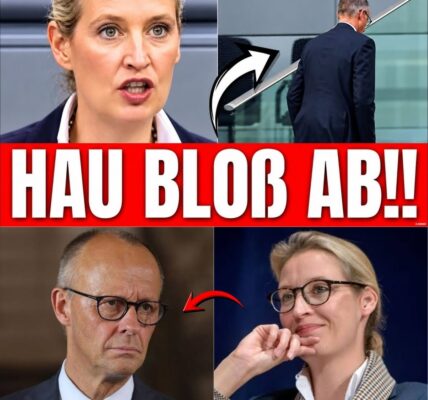
The “one detail” that viral posts attached to Mr Farage’s image — a short, inflammatory phrase in capital letters about Muslims — is not supported by a transcript, a recording, or reliable contemporaneous reporting as a quotation from Mr Farage in connection with the social care talks, or at all in the reporting examined for this article. Presenting it as his words would not meet a basic journalistic standard. Understanding why it spread, however, helps explain how three real controversies and one unverified quotation became a single, misleading narrative.
1. The teaser, and what a reader could — and could not — learn from it
The post that prompted this article is a familiar form.
It opens with alarm symbols and a headline in capital letters: a well-known politician has “broken his silence”.
It says a controversial development followed. It says one party was left out while others were invited “behind closed doors”. It hints at “allegations”, “security concerns” and a “controversial social media post”, without naming any of them. It asks three questions — why was the party excluded, what sparked the response, and what is the one detail everyone is talking about — and it answers none of them. It ends by directing the reader to a first comment for the “full story”.
As a piece of promotion, it is effective. It creates curiosity, urgency and a sense that something important is being withheld. As a piece of information, it is almost empty.
A reader who saw only that post could not tell whether the discussions were about social care, national security, electoral law, immigration, or something else entirely.
They could not tell when the exclusion was supposed to have happened, who had done the excluding, which other parties had been invited, what the allegations concerned, whose security was said to be at risk, or what the social media post said, who wrote it, or whether it was genuine.
A newspaper-standard account has to pull them apart before it can put the picture back together honestly. That is what the rest of this article does, in chronological order.
2. What actually happened on 29 July 2026
The verifiable starting point is not a social media post. It is a policy announcement about one of the longest-running failures in British public policy: adult social care in England.
On Wednesday, 29 July 2026, Mr Burnham — less than two weeks into his premiership, according to contemporaneous reporting — relaunched a bid he had first made as Health Secretary in 2009 and 2010, under Gordon Brown, to create a national approach to care for older and vulnerable adults.
Speaking at a Jewish Care facility in north London, and later visiting a care home alongside Baroness Louise Casey, who is leading the government’s independent review of adult social care, he said governments had for decades treated reform as “too risky, too difficult, and too complicated”, and that he intended to “put everything I’ve got” into fixing the system.
It was the guest list for those talks that caused the row.
Mr Burnham invited Kemi Badenoch, the leader of the Conservative Party, and Sir Ed Davey, the leader of the Liberal Democrats. He did not invite Mr Farage. He did not invite Zack Polanski of the Green Party. Reporting and commentary at the time also noted that other Westminster parties, including the Scottish National Party — which subsequently criticised its own exclusion from talks on an English system — were not in the initial round either.
The meeting that followed was, in personnel terms, less grand than the invitation suggested.
Mrs Badenoch did not attend in person. She had already written to Mr Burnham challenging him to rule out tax rises or increased borrowing to pay for reform, and she sent Stuart Andrew, the shadow health secretary, to represent the Conservatives instead. Mr Andrew said, as reported at the time, that the Conservatives were “ready to work with Labour on measures that improve social care provided they are not reliant on yet more tax rises and borrowing”. Sir Ed Davey joined via Zoom, explaining on social media that he was in France with his family. Reporting at the time noted his personal experience of care, as someone who had cared for his dying mother and who cares for a disabled wife and son, a background he has spoken about publicly for many years.
In other words, the initial talks were not a summit of every party except one.
They were a small, selective, and in part remote meeting between a Labour government and the two parties that, between the 2010s and the 2024 general election, had most often formed or supported governments at Westminster, convened to test whether any cross-party position on funding was possible at all.
3. Mr Farage’s response, in his own reported words
Mr Farage’s response was not a silence broken after weeks of restraint. It was a same-day political intervention, delivered for quotation and for video, and reported in very similar terms by outlets that do not share an editorial line.
The most widely reported version ran as follows. Mr Farage criticised the prime minister for not extending an invitation to a party which, he said, “led over 300 national opinion polls and represents thousands of councillors and millions of Britons across the country”.
He claimed the exclusion was “uniparty in action”, adding: “It’s now clear that Burnham is conspiring behind closed doors with the failed political establishment to foist further tax rises on the country.”
A second, fuller version reported by The Sun added a preceding sentence: “If Andy Burnham is serious about putting politics aside to solve Britain’s biggest problems, it’s remarkable that he’s chosen to ignore Reform.” And it continued, after the “conspiring” line: “The fact Ed Davey and Kemi Badenoch are going along with this tells you all you need to know. This is the uniparty in action.”
A short video promoted by Reform, posted on Facebook on 29 July and described in detail in the platform summary consulted for this article, showed Mr Farage outdoors, speaking directly to camera, making the same core point in simpler form: the prime minister had invited the leaders of the Conservatives and the Liberal Democrats to discuss social care, he had not invited Reform UK, and that, in Mr Farage’s telling, was the political establishment — the “uniparty” — in action.
He suggested, in that clip, that Reform’s opposition to placing what its opponents in past decades called “death taxes” on the table was likely the main reason for the exclusion.
Three things should be noted about those quotations, because they are the authentic centre of the story.
First, they are political rhetoric, clearly marked as such. “Conspiring” in this context is not a report of a criminal conspiracy; it is a politician’s accusatory characterisation of opponents meeting without him. “Uniparty” is a campaign term Reform has used for several years to argue that Labour, the Conservatives and the Liberal Democrats are, on the issues that matter most to Reform voters, effectively indistinguishable. Readers may agree or disagree with either characterisation. A neutral account reports them as Mr Farage’s argument, not as established descriptions of what the other parties intended.
Third, no quotation reported by a reliable outlet on 29 July contained the inflammatory phrase later attached to Mr Farage’s image in viral graphics.
That absence is not, by itself, proof that a person never said something in private. But journalism does not publish a quotation as fact on the basis that it cannot be disproved in private. It requires positive evidence: a recording, a transcript, a witness account from a credible source, or reporting that can be checked. For that phrase, as examined in detail below, that evidence has not been produced in the sources consulted.
4. Why social care keeps defeating governments
Social care is not a new crisis. Adult social care in England — residential and nursing homes, home care, supported living and unpaid family care — is means-tested, unlike NHS health care. People with assets above a threshold can face costs that consume a lifetime’s savings, sometimes averaging about £80,000 a year for some families, as The Times’ reporting noted.
Total expenditure in England in 2024-25 was reported, using King’s Fund figures quoted at the time, at £34.5 billion, against a background of workforce shortages, low pay, high turnover, providers handing back uneconomic contracts, and hospitals unable to discharge patients who have nowhere safe to go.
Baroness Casey, who leads the government’s independent review and whom Mr Burnham accompanied on a care home visit, called dementia a “hidden problem” within the system. Mr Burnham, whose father has Alzheimer’s disease and lives in a care home according to reporting of his speech, framed it personally — for “my dad and the millions like him” — and warned the NHS itself would be placed under intolerable strain if care were not fixed.
The political difficulty is funding, and Mr Burnham first met it as Health Secretary in 2009-10.
Every source of money creates losers: general taxation spreads the cost but means higher tax or borrowing; a levy on estates was dubbed a “death tax” before the 2010 election and has haunted care politics since; a cap on individual costs protects homeowners but is expensive and benefits asset-holders most; means-testing protects public funds but leaves middle-income families exposed. That is why prime ministers seek cross-party cover — a settlement several parties helped design is harder for any one of them to campaign to repeal.
Mr Burnham’s gamble, in his own phrase, was to “build that spirit of collaboration from the start”, expedite the Casey review to report the following year, and accept “difficult decisions” on tax.
The counter-claim — made not only by Reform — was that a collaboration that begins by choosing its collaborators is not as open as it claims, and that a settlement agreed by three parties can still be attacked from outside as a stitch-up.
Both points can be true. A small group may be more likely to reach agreement. A small group is also easier to portray as a closed circle.
5. Who else was outside, and how they reacted
Reform’s reaction attracted the most attention, in part because Mr Farage is an experienced broadcaster who understands how to frame a clip for social media, and in part because Reform’s whole political identity is built around the claim that an established consensus excludes the voters it represents. But Reform was not alone in noticing its absence.
The Green Party, also uninvited, responded differently.
Mr Polanski, as reported in summaries of his remarks to Newsnight and in other reporting at the time, said he would welcome an invitation, but added, in the version quoted by commentators on the exclusion row, that “the point here is not politicians’ personal egos, the point is adult social care is a ticking time bomb”. That response did two things. It registered disagreement with the guest list without making exclusion the centre of the story, and it implicitly contrasted the Greens’ tone with Reform’s — a contrast several commentators then used to argue that being left out did not, by itself, dictate how a party had to respond.
The SNP’s criticism, reported later, raised a different constitutional point. Social care is devolved, and the talks were about England. An SNP argument that it should be consulted on an English funding settlement raises questions different from those raised by an England-wide or UK-wide party with English councillors and English voters.
Including that criticism in the same list as Reform’s, without explanation, would again inflate a selective guest list into a claim that everyone else in British politics was either inside the room or protesting outside it. The record is more mundane, and more revealing: different parties had different reasons to want a seat, different reasons to accept not having one, and different political benefits from complaining loudly or quietly.
That distinction was largely absent from viral posts, which tended to present exclusion as if it were either proof of corruption or a simple administrative accident. In reality it was a deliberate political choice, with foreseeable consequences that the government either accepted or misjudged, and an opposition opportunity that Reform was entitled to take and skilful in taking.
6. How separate stories merged online
What happened next is best understood as a case study in how contemporary political communication compresses time.
Two later developments were particularly susceptible to that treatment, because each involved Mr Farage, each generated dramatic images and short clips, and each touched on themes — money, power, identity, security — that many voters already associate with Reform, for or against.
The first was the donations investigation in September. The second was the face-covering proposal, which developed over the summer and into the autumn. A third strand, security, ran through both: a security alert at the conference where the donations story broke, arguments about the safety of MPs and candidates when controversial material is posted online, and a social media post by Mr Farage himself raising a national security allegation about a figure connected to the governing party.
When those strands were presented separately, with dates, they were complicated stories requiring caution. When they were presented together, without dates, they became a simple story requiring only outrage.
Compression also explains the power of the unverified quotation.
A short phrase in capital letters, placed over a photograph, does not need a date, a venue, or a context. It can be attached to July, September, or any future row. If a reader already knows that Mr Farage really did propose a ban that includes religious face coverings, a fabricated phrase that sounds like an exaggerated version of that position may feel, at a glance, plausible. Plausibility, however, is not verification, and the distance between a real proposal to ban face coverings and a claim that a politician said a ban would “finish” a religious group is not a small difference of tone. It is a difference between a policy that can be debated within electoral politics and a statement of intent toward a community that, if genuinely made, would be a major national news event in its own right, reported everywhere, with recording and reaction.
The absence of that reporting is itself information.
7. The donations investigation: allegations, denials, police, and an internal report
The donations story is, in legal terms, the most serious strand in this article, and therefore the one where precise language matters most.
United Kingdom law on political donations is governed principally by the Political Parties, Elections and Referendums Act 2000. In broad outline, parties may accept donations only from permissible donors — principally individuals registered on a United Kingdom electoral register and certain United Kingdom-registered companies and other bodies — and donations above specified thresholds must be reported to the Electoral Commission. Attempting to evade those controls, for example by channelling a foreign donor’s money through an intermediary to disguise its source, can be a criminal matter for the police, not merely a regulatory matter for the Commission.
The Commission itself, in material quoted by Channel 4 News during its reporting, made that distinction: information about a potential attempt to evade donation controls is “for the police to consider”.
On Thursday, 3 September 2026, according to the reporting consulted, Channel 4 News broadcast findings from a year-long undercover investigation conducted with Verbatim, an investigative group. Undercover reporters had posed as a wealthy American financier and his United Kingdom-based son, interested in supporting Reform. Footage was reported to show senior Reform-linked figures discussing how money from a foreign source might be routed to benefit the party, including a proposed donation of £500,000 through the son or another United Kingdom intermediary, and discussions about paying for opinion polling through a third-party company.
The polling element was specific. Reports put the cost of three polls discussed or commissioned earlier in the year at £32,500 in total. That figure recurred across many accounts, attributed to the undercover material.
The donation element was larger and, by definition, hypothetical in a different way: a proposed donation discussed on camera is not the same thing as a donation received, banked and spent. Which of those things, if any, happened is the factual question at the heart of any investigation.
The immediate institutional consequences were real. Dan Jukes, a long-serving senior aide to Mr Farage, and James Orr, Reform’s head of policy, stepped back from their roles or were suspended, according to reports that used both formulations in the days that followed. Reform’s own later account, and reports of its internal investigation published on 7 and 8 October, described both men as having been suspended pending investigation. Mr Farage was reported to have said that Reform had taken no illegal money, that the conversations in the footage did not represent authorised fundraising, and that, in a phrase quoted in several summaries, the optics “doesn’t look good”.
Reform said it would cooperate with inquiries.
The Metropolitan Police response escalated in stages, and those stages should not be blurred. Initially, the police said they were aware of the reporting and would assess information provided. Labour, the Liberal Democrats and the Greens said they had referred or would refer the matter to the police or the regulator. By 9 and 10 September, Channel 4 News and BBC reporting cited by other sources reported that the Metropolitan Police had opened a criminal investigation into Reform UK donations, to be integrated, according to some reporting, with an existing inquiry into party finances. That reporting identified the Special Enquiry Team as involved. Those details should be attributed to the reporting that carried them; police investigations can change scope, and an announcement of investigation is not a charge.
On 7 October, Reform published its internal report.
As reported by Channel 4 News and in newspaper reporting summarised by The Free Library archive consulted for this article, the 27-page internal investigation concluded that the party did not breach electoral law, that the proposed £500,000 donation from a foreign source discussed in the Channel 4 report “did not take place”, that Reform had not commissioned polls paid for by undercover reporters, and that it had found “no evidence” either Mr Jukes or Mr Orr had done anything to facilitate an illegal donation, with Mr Jukes said to have commissioned the polls in question on his own account and not on behalf of the party. A Reform spokesperson was reported to have criticised the production company involved.
Any article that omitted the denial and the internal report would be unfair to Reform. Any article that omitted the police investigation or presented the internal report as a court verdict would be misleading in the opposite direction.
And any article that used the donations story to explain the July social care exclusion — an event that predated the broadcast by more than a month — would be confusing cause, effect and time.
8. Security: three different arguments that share one word
The word “security” in the teaser could mean at least three distinct threads in the material consulted. They should not be treated as one.
The first is physical security at a political event. Reform’s annual conference opened in Birmingham on 4 September 2026, the day after the Channel 4 broadcast. Reporting describes a preliminary security alert requiring a sweep with sniffer dogs, a Greenpeace banner stunt during deputy leader Richard Tice’s speech, protests at the venue, and a brief delay to Mr Farage’s appearance. A sweep is evidence that a report or precaution was taken seriously enough to check.
Without a police statement identifying a suspect or a plot, it is not evidence of who was responsible or what they intended.
The second is the safety of politicians online. In a BBC Breakfast exchange reported on 27 October, the presenter pressed Mr Farage about an ally’s remarks about another party leader and raised the personal security of MPs and material posted on social media. Mr Farage replied, in the words quoted in that reporting: “Nobody in Parliament gets more death threats than me. Every single day. Don’t talk to me about security.” That is his claim about his own experience, reported here as such. It sits within a wider reality — MPs across parties have reported threats and abuse at levels that have changed British politics since the murders of Jo Cox in 2016 and Sir David Amess in 2021.
It does not follow that because one politician receives threats, a post about another raises no security issue; nor does raising a security issue settle whether a post was racist or otherwise unacceptable. Those are separate judgments.
The third is the controversial social media post itself. A Facebook post attributed to Mr Farage, dated 19 October in the platform summary consulted, accused a woman connected to a senior national security figure in Labour circles of defending or supporting proscribed organisations, labelling the situation “utterly insane” and criticising Labour over national security. It appeared, according to comments in the same summary, just after a television exposé about Reform — which led supporters to treat it as a legitimate counter-question, and opponents to treat it as deflection.
This article does not repeat that personal allegation as fact. The material consulted includes no independent verification of it, no response from the person named, and no major-outlet reporting establishing it.
An allegation of association with terrorism is among the most serious claims that can be made about a person. What can be reported is that the post was made in those terms, that it drew a polarised response, and that neither the post nor the vehemence of its comments proves what it asserts. The same rule applies in reverse to posts alleging wrongdoing by Reform figures.
No single, dramatic security incident connected to the social care exclusion is established in the record consulted.
9. Face coverings: how a single MP’s question became a leader’s proposal
This strand began inside Reform. Sarah Pochin, then a newly elected Reform MP, used her first Prime Minister’s Questions to ask whether Britain should follow France, Denmark and Belgium in banning the burqa in the interests of public safety. Reform had no such policy in its 2024 manifesto and clarified afterwards that a ban was not party policy.
Its then chairman, Zia Yusuf, publicly criticised the intervention. Mr Farage at that stage took a more cautious line: Britain deserved a debate about face coverings in public, he said, pointing to protesters concealing their faces and to accountability and public order.
By September 2026, according to reporting in The Times as summarised in several accounts and a newspaper piece by Mr Farage himself quoted in Senedd reporting in October, he had moved much further: full-face coverings should be banned in public “once and for all”, including coverings worn for religious reasons. His newspaper formulation is the most reliable version because it was written under his name. Facial coverings were, he wrote, “not the British way” and undermined the trust needed for a “free and open society”. He pointed to “balaclava-clad youths” on e-bikes “terrorising residents”, and concluded: “Which is why Reform UK is calling for a ban on all full-face coverings in public spaces.
No ifs, no buts. And yes, that includes religious ones too.”
A Reform motion in the Senedd later put it as: “full-face coverings are against British values”. Home Office minister Sarah Jones, in the wider debate as reported, drew the government’s distinction: police have powers over coverings at protests, including mask-free zones, but “when people are going about their daily business, it is absolutely fine to wear them for religious reasons, and that will continue”. Britain, at the time of reporting, had no general ban on religious clothing in public.
Supporters of a general ban argue, at their strongest, on identification in secure and civic settings — the analogy, used by Mr Farage in earlier debates, of removing a helmet or balaclava in a bank — on communication and cohesion, on consistency with rules for masked protesters and offenders, and on protecting women who may face patriarchal pressure to veil.
Opponents argue, at their strongest, on freedom of religion, on the small number of women affected and the absence of a general safety threat from veiled women comparable to masked offending, on the risk that a ban isolates the women it claims to help, and on the practical exemptions any law would still need for health, work, weather and worship.
France, Belgium and Denmark have adopted general prohibitions; many other European states have only partial rules, or none. Presenting Europe as uniform, or Britain as uniquely out of step, would be inaccurate either way.
What is established is a real, far-reaching policy proposal, made clearly in a party leader’s own name, opposed by the government in the terms reported. It can be debated on those words.
It does not need an invented quotation to be controversial — and, as the next section shows, an invented quotation makes the real debate harder.
10. The one detail everyone is talking about — and why it does not stand up
It is now possible to name the detail the teaser withheld, in a way that does not repeat its error.
In viral graphics that circulated after the social care row and the face-covering debate became entangled, a phrase in capital letters was placed over or beside images of Mr Farage. In the version identified in the explainer reporting consulted for this article, it read: “THIS WILL FINISH MUSLIMS”.
That phrase is the detail. It is short, alarming, and memorable. It is also, on the evidence available, unverified.
The checks that lead to that conclusion are straightforward, and they are the checks any newsroom should be able to describe to its readers.
First, source. No transcript of a speech, interview, press conference or parliamentary contribution containing that phrase, as a statement by Mr Farage, was found in the reporting consulted. No recording was identified. No reputable outlet was found reporting the phrase as a direct quotation with a time, place and context.
Second, context. The phrase was not reported in the 29 July coverage of the social care response, where Mr Farage’s actual words were quoted extensively and consistently. It was not part of the reported wording of his later newspaper piece on face coverings, where his actual concluding line — “No ifs, no buts. And yes, that includes religious ones too” — referred to a ban applying to religious coverings, not to a community itself. Those are different sentences, with different subjects: coverings, in one case; people, in the other.
Third, reaction.
Had a British party leader, in public, used language of that kind about Muslims as a group, the expected consequences are not hard to predict, because less inflammatory remarks by senior politicians routinely produce them: immediate reporting by every national news organisation, calls for apology or resignation from other parties and from community organisations, statements from the police or regulators if a hate-crime threshold were said to be crossed, and a response — denial, clarification or defence — from the politician himself addressed to that specific quotation. No such chain of reporting and reaction to that specific phrase was found in the sources consulted. Instead, the phrase appears in the context of viral graphics and in an explainer warning that it is not supported by reliable evidence.
Why, then, did the unverified phrase spread? Part of the answer is technological.
An image with large text is faster to read than an article, easier to share than a link, and exempt, in practice, from the corrections process that applies to a news report: there is no headline to amend, no byline to be held responsible, and often no original poster who can be identified months later. Part of the answer is psychological. The phrase confirms, in a single line, what a critic of Mr Farage may already believe about the direction of his politics, and what a supporter may already believe about how his opponents caricature him. Either belief can be a reason to share it: as condemnation, in the first case, or as evidence of a smear, in the second. In both cases the sharing itself makes the phrase more familiar, and familiarity can be mistaken for evidence.
There is a final reason to be precise about this detail, and it concerns the people who are not politicians in this story.
Muslim women who wear a veil, Muslim families who do not, and non-Muslim neighbours, colleagues and carers all live with the consequences when a debate about a proposed law is replaced by a claim that a political leader intends to “finish” a community. Language of elimination, even when fabricated, increases fear among those it targets and increases cynicism among everyone else when it is shown to be unfounded. Precision is not neutrality between a quotation and its invention. It is the condition for debating the real proposal — a ban on face coverings — on its merits, for and against, without either side having to deal first with a phantom.
11. What to watch: the questions that remain open, and how they will be answered
On social care, the question is whether the Casey review, on its expedited timetable, produces a funding and workforce proposal detailed enough to be legislated, and whether the cross-party talks that began with two parties expand, publish terms, or produce a text that Parliament can amend.
If they do, the argument about who was invited to the first meeting will matter less than the argument about what the settlement costs, who pays, and what entitlement it creates. If they do not, the exclusion row will be reread — by Reform, certainly — as an early warning that a process presented as national was in fact partial. Watch for a published review, a government response with figures, and a Commons debate, not for further exchanges about the guest list.
On political donations, the questions are legal. Has the Metropolitan Police investigation concluded, and if so, with what outcome — no further action, advice, a referral for charging decisions, or charges? Has the Electoral Commission published any finding within its remit? Have Mr Jukes and Mr Orr’s positions been finally resolved, and has any court or independent inquiry tested the competing accounts of the £500,000 discussion and the £32,500 in polling in a way an internal party report, by definition, cannot?
Until those answers appear from the institutions that own them, the honest position is the one stated above: allegations, denials, an internal finding of no breach, and no reported finding of guilt.
On face coverings, the question is legislative. A newspaper piece and a devolved motion are not a bill. If Reform, or any other party, brings forward draft legislation for a general ban, its exemptions, enforcement, penalties, compatibility with human rights obligations, and treatment of schools, hospitals, courts and places of worship will be the substance. If the government maintains its reported distinction — powers at protests, freedom in daily life — the debate will remain one of principle and party positioning unless an incident or a court case forces a sharper choice. Either way, the debate should proceed from the words politicians have actually put their names to.
Timeline: separate events, in order
2009–2010 — Andy Burnham, as Health Secretary under Gordon Brown, proposes a national approach to social care.
A funding levy is attacked by opponents as a “death tax”. No durable settlement is enacted.
29 July 2026 — Prime Minister Andy Burnham, speaking in north London, relaunches social care reform, expedites Baroness Casey’s review, proposes a National Care Service, and invites the Conservatives and Liberal Democrats to cross-party talks. Reform UK and the Green Party are not invited, nor are several other Westminster parties. The Conservatives send Stuart Andrew for Kemi Badenoch, who presses for no tax rises or extra borrowing. Sir Ed Davey joins remotely. Mr Farage responds with the “uniparty in action” and “conspiring behind closed doors” quotations reported above.
Late July–August 2026 — Commentators note that Reform was not the only party excluded, and debate whether exclusion reflected seats, polling, votes, or political choice. The Green Party’s response stresses the care crisis over politicians’ egos. The SNP later criticises its own exclusion.
3–4 September 2026 — Channel 4 News broadcasts the Verbatim undercover investigation into Reform-linked discussions about foreign donations and polling payments.
Dan Jukes and James Orr step back or are suspended. Reform’s Birmingham conference opens; Mr Farage’s appearance is affected by a security alert and protest disruption.
9–10 September 2026 — Reporting by Channel 4 News and the BBC, as cited by other outlets, says the Metropolitan Police have opened a criminal investigation into Reform UK donations, integrated in some reporting with an existing inquiry. The Electoral Commission is reported to have said attempts to evade donation controls are for the police. Reform denies wrongdoing.
September 2026 — Mr Farage’s reported position on face coverings hardens into a call for a ban on all full-face coverings in public, including religious coverings, in a newspaper piece quoted as “No ifs, no buts. And yes, that includes religious ones too.”
7–8 October 2026 — Reform publishes an internal investigation concluding it did not breach electoral law, that the proposed £500,000 donation did not take place, and that it found no evidence the two suspended figures facilitated an illegal donation.
No finding of criminal guilt is reported.
2–5 November 2026 — Mr Farage makes separate interventions on citizenship and settlement rules and on polling methodology. These are new arguments, not new evidence about the July talks, and are recirculated online alongside older graphics.
Verified, disputed, and unverified — at a glance
Reported by multiple outlets, in consistent terms: the social care announcement and its main elements on 29 July; the invitation to the Conservatives and Liberal Democrats; the non-invitation of Reform, the Greens and others; Mr Farage’s “uniparty” and “conspiring behind closed doors” response; the Conservative condition on tax and borrowing; Mr Davey’s remote participation; the Channel 4/Verbatim broadcast and the stepping back of Mr Jukes and Mr Orr; the opening of a police investigation as reported in September; Reform’s denial and its internal report’s conclusions in October; Mr Farage’s later call, in his own newspaper piece, for a ban on all full-face coverings including religious ones.
Disputed, in the sense that parties offer competing interpretations of agreed facts: whether the guest list was a pragmatic attempt to reach agreement or an anti-democratic stitch-up; whether Reform’s polling and council representation entitled it to a seat; whether cooperation on care amounts to “uniparty” convergence; whether the donations footage shows an attempt to evade the law or unauthorised conversations that led to no illegal donation; whether a general face-covering ban would protect cohesion and safety or infringe freedom and isolate women.
Unverified, and not to be presented as fact: the capital-letter phrase about Muslims attributed to Mr Farage in viral graphics; any claim that the social care exclusion was caused by the later donations broadcast; any claim that the Birmingham security alert proves a specific plot by a specific actor, without a police statement to that effect; and the personal national-security allegation in the mid-October social media post, in so far as the material consulted does not independently establish it.
Conclusion: outside the room
There is a real story underneath the teaser, and it does not need embellishment.
A new prime minister chose a notoriously difficult issue — how to pay for dignity in old age and disability — and chose, as his first move, to talk to two parties and not to others. One of those others, led by a politician whose career has been built on the argument that the established order excludes the people he speaks for, recognised the opportunity instantly, named it memorably, and turned a meeting about care funding into a national argument about legitimacy. That argument contained a kernel any democrat should take seriously: decisions made by a narrow circle, however well intentioned, struggle for consent if large numbers of voters feel their views were never in the room.
Weeks later, that party faced a genuinely serious test of its own, about money and the rules that protect elections from foreign influence.
It answered with denial, the suspension of senior figures, and an internal report that cleared itself — answers its supporters accept, its critics do not, and only independent legal process can finally settle. At its conference it dealt with protest and a security alert of the kind that now routinely accompanies divisive politics. And on a different front, its leader adopted a clear proposal about what people may wear on their faces in public, engaging real questions about safety, trust, freedom and coercion, which the government in the reporting consulted opposes for daily life.
Each story deserves reporting on its own evidence. None is strengthened by being fused with the others. And none is served by the one detail that travelled furthest: a phrase for which no reliable evidence was found, presented as if it were the key that explained everything.
If there is a key, it is less dramatic, and more useful.
It is the distinction between a quotation and a graphic, between an invitation list and a conspiracy, between an investigation and a verdict, and between breaking a silence and simply — as Mr Farage did on 29 July, on the record, for quotation — making an argument voters are free to accept or reject.
Sources and reporting consulted
This article was prepared from the supplied teaser and from contemporaneous reporting and platform summaries found in research on 7 November 2026, including: reporting of the 29 July 2026 social care announcement and Farage response by The Times, The Sun, Sky News as cited by other outlets, Radio News Hub (29 July 2026), the Gazette & Herald national report (29 July 2026) and CARE’s analysis of why politicians struggle to fix social care (31 July 2026); a Facebook video post by Nigel Farage on the social care talks (29 July 2026); Channel 4 News topic reporting on Nigel Farage and the Reform donations investigation (September–October 2026), including its report that Reform published an internal report clearing itself (7 October 2026) and that the Metropolitan Police launched a criminal investigation after the Channel 4 report (9 September 2026); newspaper summaries of that internal report (8 October 2026); reporting and summaries of the Birmingham conference security alert and suspensions of Dan Jukes and James Orr (September 2026); reporting of Farage’s face-covering newspaper piece and the Senedd motion debate (October 2026); a summary of a Facebook post attributed to Nigel Farage raising a national security allegation (19 October 2026), treated as an unverified allegation; reporting of a BBC Breakfast exchange on MP security (27 October 2026); and an explainer that first identified the viral capital-letter phrase and warned it was unsupported by reliable evidence.
Where a source was a low-authority aggregator or a social platform summary, it was used only in so far as it was corroborated by, or consistent with, reporting from a second source, and the article labels the resulting claim accordingly.
Corrections: if a transcript, recording or official statement emerges that materially changes the verification status of any quotation or allegation described above, that status should be updated and the change noted. An investigation’s later outcome, a police decision, or a court judgment should likewise supersede the interim position described here.