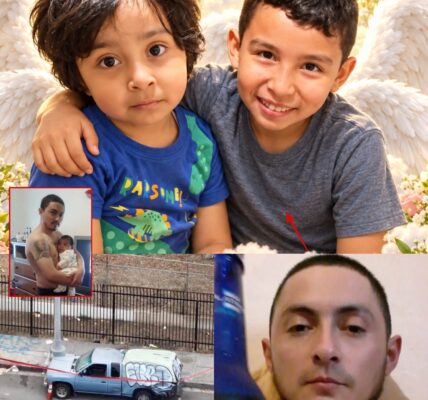
ICE Officer in Maine Fatal Shooting Had Reported History of Violence and Mental Health Struggles, Family Says.937

The ICE officer who fatally shot a Colombian man during an immigration operation in Maine is facing intense scrutiny after relatives and court records revealed years of allegations involving violent behavior, domestic abuse and serious mental health struggles. The officer, identified by family members as 37-year-old David Brouillette, shot and killed Johan Sebastián Durán Guerrero in Biddeford on July 13, 2026. The Department of Homeland Security has said the officer fired after Durán Guerrero’s vehicle attempted to flee and the officer feared for public safety, while Brouillette has reportedly told relatives that he acted in self-defense. The shooting is now under investigation as questions grow over how Brouillette was vetted before being given a federal law-enforcement role.

Durán Guerrero, a Colombian national in his mid-20s, was inside a vehicle near his home when the confrontation unfolded. DHS has not publicly named the officer involved, but Brouillette’s former wife Ashley Brouillette and their daughter told reporters that he personally acknowledged firing the fatal shots. According to Ashley, Brouillette told her the shooting was justified because he believed Durán Guerrero was trying to strike him with the vehicle. His daughter said he gave her a similar explanation, insisting that he “had to protect himself.”
But as investigators examine what happened on the street that morning, attention has also shifted toward Brouillette’s past.
Several relatives told The Associated Press that his behavioral and mental health problems began long before he joined ICE. Family members described a history of volatility, threats and alleged violence toward women in his life. His first ex-wife said their relationship became physically abusive after she became pregnant with their daughter. She alleged that on one occasion he threw boiling water toward her while she was holding their child, an incident also recalled by her mother.
Court records reviewed by AP reportedly contain additional allegations from another former wife, including claims that Brouillette stalked and harassed her and physically and verbally abused members of the family. In one request for a protective order, she wrote that he needed counseling for PTSD and depression. A judge granted a temporary protection order in 2021. Brouillette previously denied accusations made by his former wife and accused her of slandering him.

His eldest daughter, Madison Brouillette, also described witnessing episodes of instability while growing up. She told AP that on one occasion her father said he had sat outside with a gun pointed at himself. Her view was that he repeatedly struggled with serious personal problems but resisted seeking sustained help.
An unnamed immediate relative told AP that Brouillette had been diagnosed during childhood with bipolar disorder and attention deficit disorder and had experienced psychiatric hospitalizations and suicide attempts when he was young. Those claims came from family members rather than a publicly released medical record, but they have intensified questions surrounding his later employment in positions involving firearms and law-enforcement authority.
His military history stretches back nearly two decades.
Brouillette served in the Maine Army National Guard beginning in 2007 before joining the regular Army in 2010. Military records cited by AP show that he later worked as a human intelligence collector and deployed to Afghanistan from May 2012 until February 2013. He left the Army as a sergeant in 2015. One relative believes his deployment significantly worsened emotional problems he already had, though that assessment represents the relative’s opinion rather than an official military finding.

Ashley Brouillette poses for a portrait at a park in Harrison, Mich., on Thursday, July 16, 2026. (AP Photo/Mike Householder)
After leaving the Army, Brouillette moved through a series of jobs, several connected to government or public safety. He worked at the Maine Correctional Center and for the state Department of Health and Human Services. Court records also indicated that he worked as a police officer at a Department of Veterans Affairs medical facility in 2019.
His career later became less stable. He enrolled in firefighter training but suffered a head injury when a steel beam struck him during an accident. According to a lawsuit he later filed, the incident resulted in a concussion and post-concussive symptoms including headaches, memory problems, vertigo and cognitive difficulties. The lawsuit was eventually settled.
At other times he reportedly worked as a delivery driver, truck driver and real-estate agent before telling relatives in late 2025 that he had joined ICE.
Ashley Brouillette said she initially did not believe him.
Because of his history, she assumed his claim that he had become an ICE officer might be connected to another mental health episode. She said she only realized he had actually joined the agency after video footage from the Biddeford shooting began circulating.
That revelation is now at the center of wider concerns about federal hiring practices.
ICE said the officer involved in the shooting had nearly a decade of federal law-enforcement experience and had completed required training, including use-of-force training. The agency declined to confirm Brouillette’s identity, saying it would not participate in efforts to identify individual officers.
The controversy grew further because of a voicemail Brouillette allegedly left for Ashley in late 2025, around the period when she says he joined ICE. She provided the recording to AP. In it, he reportedly insulted her repeatedly and said that she and female members of her family deserved to have their throats cut, while explicitly denying that he himself was threatening to do it.
Ashley said she had largely stopped communicating with him until after the Maine shooting.
When she contacted his current wife following the incident, Brouillette eventually spoke with her. According to Ashley, he acknowledged killing Durán Guerrero and asked whether she could speak positively about his character rather than discuss the abuse allegations from their marriage.
She refused.
The shooting itself remains the most important unresolved issue.
DHS maintains that the vehicle attempted to flee and that an officer fired because of concerns about public safety. Brouillette’s relatives say he described the confrontation as self-defense. But local officials and members of the public have demanded an independent and transparent review of exactly what happened.
Biddeford Mayor Liam LaFountain said Maine authorities should be fully involved in the investigation and publicly criticized the lack of body cameras on the federal officers involved. The mayor said the community deserves clarity about the officer’s identity, hiring history, training and the circumstances surrounding Durán Guerrero’s death.
The absence of body-camera footage could make other evidence especially important, including witness videos, surveillance recordings, forensic evidence and the positions of the vehicle and officers at the time shots were fired.

No public finding has yet established that Brouillette committed a crime in the shooting. His claim of self-defense remains subject to investigation, and allegations from relatives about his past are separate from the legal question of whether the shooting itself was justified.
Still, the revelations have created another question that goes beyond the events of July 13: how was someone with such a complicated personal history evaluated before being entrusted with federal law-enforcement powers?
That concern comes at a particularly sensitive moment as ICE expands operations and hiring amid the Trump administration’s immigration enforcement campaign. Brouillette’s case is now being cited by critics as an example of why psychological screening, background investigations and oversight matter when agencies place armed officers into potentially volatile encounters.
For Durán Guerrero’s family, however, those policy debates come after an irreversible loss.
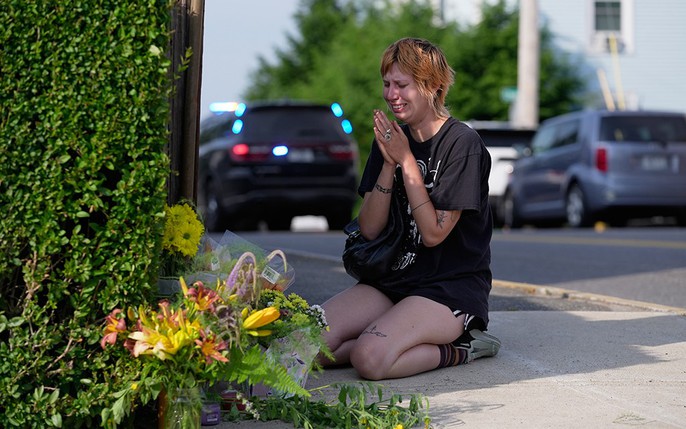
A memorial has formed near the location of the shooting, where mourners have left flowers and gathered to remember him. Local leaders have emphasized that the investigation must remain focused on determining exactly why the encounter became deadly and whether the use of lethal force was justified.
Brouillette’s own daughter offered perhaps one of the most revealing glimpses into his mindset after the shooting. She said she does not believe her father views himself as someone who unlawfully killed another person. According to her, he genuinely believes he did what was necessary.
That belief, however, will not decide the outcome.
Investigators will have to determine what actually occurred in the seconds before Brouillette fired, whether Durán Guerrero presented an immediate threat, whether other options existed and whether the officer’s actions complied with federal use-of-force standards.
At the same time, records from Brouillette’s past are raising uncomfortable questions about what authorities knew—or could have known—before he ever joined ICE.
A fatal shooting on a quiet Maine street has therefore evolved into something larger: an investigation not only into one officer’s decision to pull the trigger, but also into the system that placed him there with a badge and a gun.
And until investigators release a complete account of what happened that morning, the most difficult questions surrounding Johan Sebastián Durán Guerrero’s death—and David Brouillette’s path into federal law enforcement—remain unanswered.