78-Year-Old Georgia Woman Says Pharmacy Mix-Up Left Her Using Fentanyl Patches for Weeks.938

A 78-year-old Georgia woman says a pharmacy mistake nearly cost her life after she was allegedly given fentanyl patches intended for another customer instead of her own prescription. Betty Thomas, of the Atlanta area, says she unknowingly used the powerful opioid medication for nearly three weeks before her family discovered the mix-up, by which point she had become seriously ill and required hospital treatment.
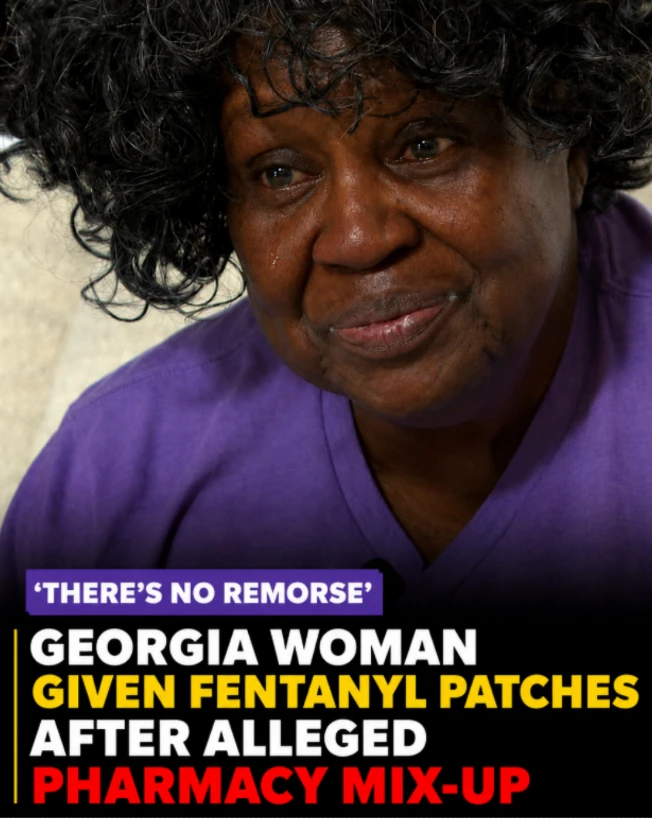
Thomas said she picked up what she believed was her normal medication from a Publix pharmacy in Decatur. She says she had no reason to believe anything was wrong. The package had been handed to her by the pharmacy, and she assumed the patches inside were connected to her regular hormone treatment.
So she began using them as directed.
But over the following days, Thomas said her health steadily deteriorated. She began suffering from severe nausea, vomiting, dizziness and constipation. At first, she did not know why she felt so sick.
“I’m throwing up, I’m nauseous, I’m dizzy, I can’t go to the bathroom, I’m sick,” Thomas recalled.
The symptoms continued, and her family became increasingly concerned. Eventually, her son came to check on her and decided she needed medical attention. It was during that frightening period that the family finally examined the prescription more closely.
That is when they discovered the medication apparently was not meant for Betty Thomas at all.
According to the family, the fentanyl patches had been prescribed to another customer named Betty Davis. Thomas says she had apparently received that woman’s prescription instead of her own.
The discovery immediately raised alarm because fentanyl is not an ordinary medication.
Fentanyl is a powerful synthetic opioid commonly used to treat severe pain, particularly in patients who already have a tolerance to opioid medications. Prescription fentanyl patches slowly release the drug through the skin over an extended period. Because of their strength, they can be dangerous for someone who has not been prescribed the medication or whose body is not accustomed to opioids.
For Thomas, however, none of that was known when she began applying the patches.
She believed she was following legitimate medical instructions.
Her granddaughter, Deanna Thomas, later recalled how frightened the family became as Betty’s condition worsened.
“We were all afraid we were going to lose you,” she told her grandmother.
That fear was especially painful because the family had recently suffered another major loss. Thomas said her children had just lost their father and were suddenly facing the possibility that their mother could also die.
“My children just lost their father, and then to turn around and have to go through losing their mom,” Thomas said.
For the family, the emotional impact of the incident went far beyond a simple pharmacy error.

They say Betty Thomas trusted the medication she was given because it came from a professional pharmacy. Like millions of older Americans who take multiple prescriptions, she relied on the system to make sure the correct medication reached the correct patient.
When that process allegedly failed, the consequences were immediate.
Thomas said she continued using the patches because she believed they were part of her normal treatment. Without realizing it, she was repeatedly exposing herself to a drug far more powerful than the medication she expected to receive.
The family believes the mistake explains the severe symptoms that eventually sent her to the hospital.
After discovering the prescription discrepancy, Thomas received medical treatment and began the process of recovering from the exposure.
But for Deanna Thomas, the physical recovery was only one part of the problem.
She began contacting Publix’s corporate office seeking answers about how the alleged mistake happened and what the company intended to do about it.
According to the family, Publix eventually sent an email dated July 7 offering Betty Thomas $4,000 as compensation related to the incident and her medical expenses.
Rather than reassuring the family, the offer angered them.
Deanna described it as insulting considering what her grandmother had experienced.
“It was straight up a slap in our face, and there was no remorse,” she said.
According to Deanna, the communication suggested that the amount was already greater than what the company normally offered in similar situations. The family felt the response failed to reflect the seriousness of what had happened.
To them, this was not simply a mistaken product handed across a counter.
It was a powerful opioid medication given to an elderly woman who says she had never been prescribed it.
The family’s concerns also raise broader questions about pharmacy safety.
Prescription errors can happen for a variety of reasons. Patients may have similar names, medications can be stored near one another, labels can be misread and busy pharmacy environments can increase the risk of human error. That is why pharmacies typically use multiple checks before a prescription is released.
Names, dates of birth, medication information and other identifiers are generally used to help ensure that the person receiving the medicine is the person for whom it was prescribed.
In this case, the two customers apparently shared the first name Betty, but their surnames were different.
The family wants to know how that difference failed to prevent the alleged mix-up.
They also want to know whether stronger safeguards could have caught the mistake before Thomas left the pharmacy.
The situation is particularly concerning because fentanyl patches are considered high-risk medications. Even when correctly prescribed, they require careful handling. A person who accidentally receives them may not immediately recognize the danger, especially if they trust that the medication handed to them matches what their doctor ordered.
That appears to be exactly what happened to Thomas.
She did not intentionally take someone else’s medication. She says she did not knowingly use fentanyl. She simply believed the patches were hers.
By the time the truth was discovered, she had reportedly been using them for nearly three weeks.
News outlet 11Alive said it contacted Publix seeking a response to the family’s allegations but had not received a statement at the time of its report.
Without a response from the company, several important questions remain unanswered.
It is not publicly clear exactly how the prescriptions were mixed up, whether Publix has completed an internal investigation, whether disciplinary action was taken or whether procedures at the pharmacy have since been changed.
It is also unclear whether the customer whose fentanyl prescription Thomas allegedly received obtained the wrong medication in return.
Those details could become important if the incident leads to further legal or regulatory review.
The family says it has already taken steps to make sure the remaining fentanyl patches cannot accidentally harm someone else.
Betty Thomas and her granddaughter turned the patches over to police for proper disposal.
That decision is significant because unused fentanyl patches can still contain enough medication to be dangerous. Improper disposal can create risks for children, pets or anyone who accidentally comes into contact with them.
For Thomas, however, the immediate focus is now on recovering.
At 78 years old, she says the experience has taken a serious toll on her body. The nausea, dizziness and other symptoms she endured did not simply disappear the moment the medication error was discovered.
She expects recovery to take time.
Her family, meanwhile, continues to struggle with the idea that an ordinary trip to pick up medication could have ended so differently.
Thomas walked into a pharmacy expecting the medicine she had been prescribed. She walked out, according to her account, with fentanyl patches carrying another woman’s name.
For weeks, she trusted what she had been given.
Then her body began telling her something was terribly wrong.
Only after she became sick enough to require medical care did her family uncover the alleged prescription mix-up.
Now they are demanding answers—not only about how it happened, but about why they believe the response afterward failed to acknowledge how close the situation may have come to tragedy.
For Betty Thomas, the experience has changed something as routine as taking medication into a source of fear.
And the most troubling part may be how ordinary the beginning of the story was: an elderly woman picked up a prescription, trusted the label, and went home believing she was taking the medicine meant for her.