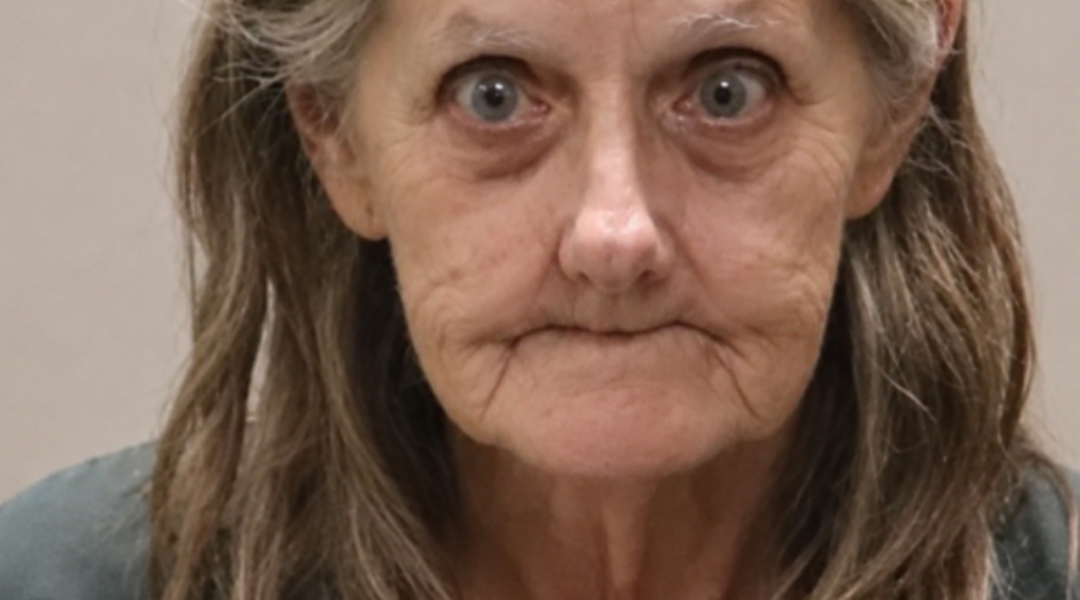
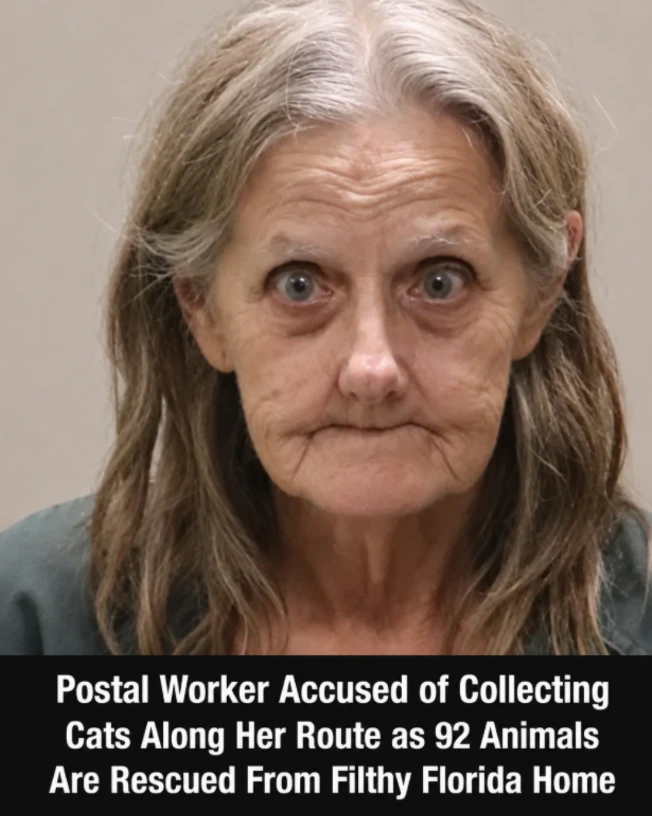
Postal Worker Accused of Collecting Cats Along Her Route as 92 Animals Are Rescued From Filthy Florida Home.942

A 77-year-old Florida postal worker has been arrested after authorities rescued 80 cats and 12 dogs from her home, uncovering what the local sheriff described as the worst animal-hoarding case he has encountered during his career. Gail Giustino, who worked as a mail carrier, came under investigation after authorities received a complaint alleging that she was taking or collecting cats while traveling along her postal route. What initially began as an investigation into potentially missing animals eventually led deputies to a home filled with cages, overwhelming odors, extreme heat and, in some areas, animal waste reportedly piled nearly a foot deep.
The investigation began after reports surfaced that a postal worker was collecting cats while working in areas including Port Salerno and Coral Gardens in Martin County. Sheriff John Budensiek said investigators ultimately came to believe Giustino was primarily gathering feral cats rather than deliberately stealing known household pets. Still, the discovery that some of the rescued animals were microchipped — and that several have since been connected with their families — has left local residents with missing pets searching desperately for answers.
Authorities did not immediately enter Giustino’s home. According to the sheriff, Animal Control officers attempted for roughly a week to gain access so they could determine how many animals were inside and evaluate their living conditions. Giustino allegedly refused to cooperate and would not allow officers to inspect the residence. Eventually, investigators sought and obtained a search warrant.
When deputies, Animal Control personnel and Martin County Fire Rescue finally entered the property, the situation was far worse than officials expected.
The odor could reportedly be detected before rescuers even made their way through the home. Sheriff Budensiek said the residence had no working air conditioning and almost no ventilation, creating dangerously hot and stagnant conditions inside. In some areas, investigators found animal waste accumulated to depths approaching a foot. The environment was considered hazardous enough that a specialized hazardous-materials team was called to help ventilate the property before rescue personnel could safely work inside.
Dozens of animals were being kept in cages. The sheriff described the residence as an “animal jail,” saying the animals had apparently spent prolonged periods confined inside without being taken outdoors. Although authorities said food was present, the lack of ventilation, extreme heat, sanitation problems and long-term confinement raised immediate concerns about their welfare.
By the time the rescue operation was completed, authorities had removed 92 animals — 80 cats and 12 dogs. They were transported to the Humane Society of the Treasure Coast for veterinary examinations, treatment and identification.
Shelter workers soon began documenting the physical toll the conditions appeared to have taken. Reports indicated that many cats were underweight, while some had missing patches of fur that shelter officials believed could be related to stress. Other reports said the cats arrived severely dehydrated, with one shelter worker describing animals drinking continuously after being given water. The dogs were also being medically evaluated, with dental problems reported among them and several placed in quarantine because of kennel cough.
Despite the disturbing conditions, authorities have made an important distinction regarding Giustino’s alleged intentions. Sheriff Budensiek said investigators did not believe she was deliberately trying to hurt the animals. Instead, officials believe she may have thought she was rescuing or helping them but had accumulated far more animals than she could properly care for.
That does not mean authorities considered the situation acceptable.
Giustino was arrested and faces misdemeanor charges related to animal cruelty and improper confinement or care of animals. Budensiek explained that authorities potentially could have pursued a far larger number of charges based on the number of animals involved, but the immediate goal was to gain legal authority to remove the animals from dangerous conditions and prevent them from being returned to the same environment.
The case also revealed that this was apparently not Giustino’s first encounter with local authorities over animal-related conditions.
Sheriff officials said code enforcement had become involved with her property approximately a decade earlier. Budensiek said she had received dozens of civil citations connected to animals being kept at the home. At one point, officials reportedly worked with her to improve conditions, including dealing with ventilation and removing accumulated material that interfered with access to parts of the residence.
Court records cited by local media show that Giustino received more than 40 citations in 2015 concerning improper animal care or treatment, although that case was ultimately dismissed. The sheriff said that despite earlier intervention, the problems had apparently returned over the years.
For investigators, that history raises questions about how the situation was able to escalate to the point where nearly 100 animals were living inside the property.
But another question has become increasingly important to people living nearby: Were all of these cats actually feral?
Authorities initially emphasized that investigators believed Giustino was gathering feral cats rather than intentionally stealing family pets. However, once the animals arrived at the Humane Society, workers began scanning them for microchips and checking them against reports of missing pets.

That process quickly produced results.
Many of the animals were found to have microchips, and at least five owners had already been identified shortly after the rescue. Some cats have already been reunited with their families.
One reunion was particularly emotional. A Stuart resident learned that her cat, which had been missing since January, was among the animals recovered from Giustino’s home. After approximately seven months without her pet, she had reportedly lost hope of ever seeing him again. The microchip identification changed that.
Stories like that have intensified interest from residents who have lost cats in neighborhoods associated with Giustino’s postal route. People are now comparing photographs of the rescued animals and contacting authorities in hopes that a pet they believed was permanently gone may actually be among the 92 animals removed from the house.
The Humane Society faces a complicated process. Every rescued animal must be evaluated medically, checked for identification and assessed for temperament. Some may be feral and require specialized placement, while others are reportedly friendly and could eventually become candidates for adoption if no owner can be located.
For animals with microchips, officials have a much clearer path toward finding their families. But for those without identification, establishing ownership may prove considerably more difficult.
Authorities also hope the criminal case can lead to help for Giustino herself. Sheriff Budensiek said officials want the court process to include an evaluation and appropriate support, while also ensuring that she is not allowed to return to keeping dozens of animals under similar conditions.
Giustino has been accused, not convicted, and the charges against her must still proceed through the legal system. Authorities have also been careful not to portray the case as one involving someone who intentionally set out to cause suffering. Their description is instead of an apparent attempt to help animals that spiraled into an extreme hoarding situation where the sheer number of animals overwhelmed any ability to provide sanitary and safe care.
Still, the conditions discovered inside the house were severe. Eighty cats, 12 dogs, stacked cages, extreme Florida heat without working air conditioning, overwhelming odors and animal waste reportedly reaching nearly a foot deep in some places confronted rescuers when they finally entered.
Now that the animals are safe, the investigation has taken on another dimension. Microchips are being scanned, missing-pet reports are being compared and families who lost cats months ago are suddenly being given a reason to hope.
And that may ultimately produce one of the most important answers in the case: how many of the animals believed to have been collected as strays were actually beloved pets whose families had been searching for them all along?