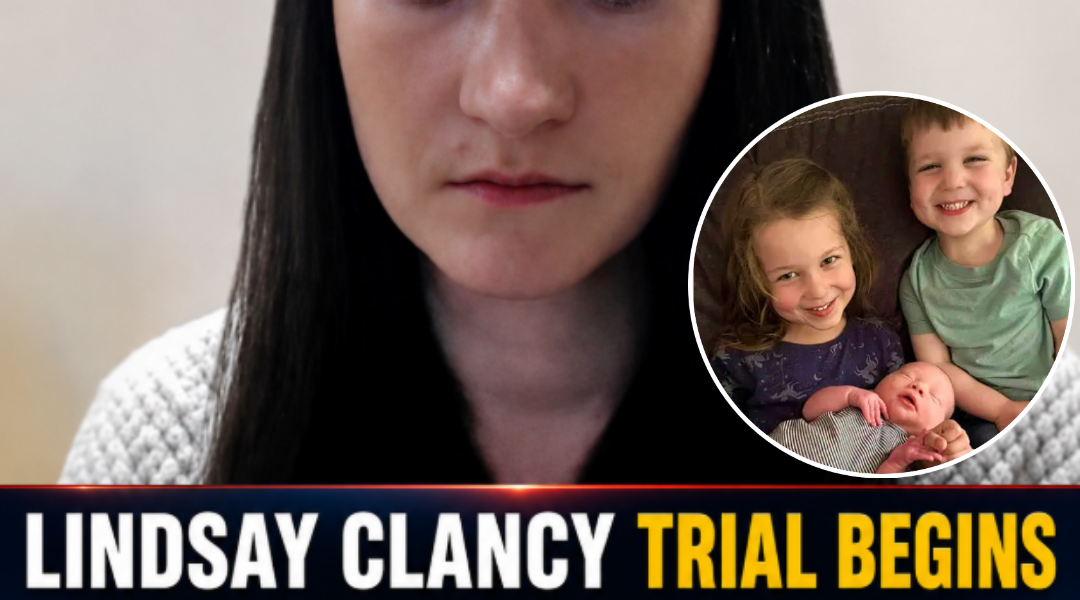
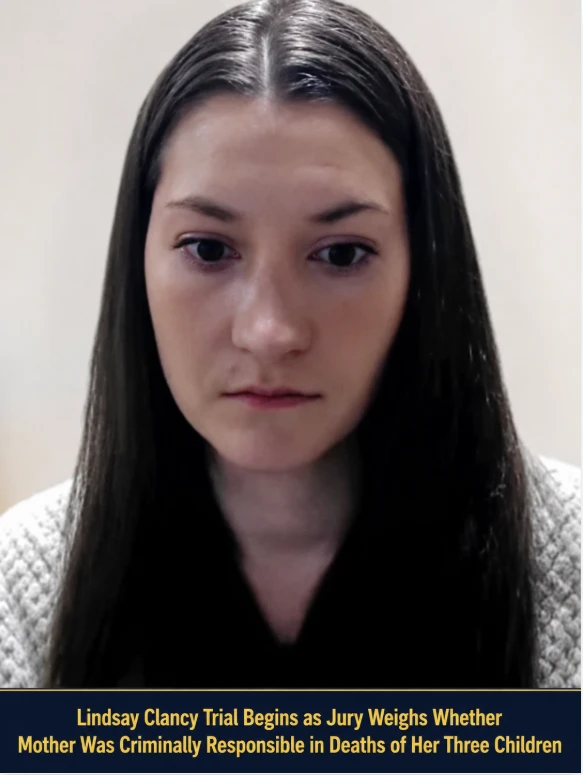
Lindsay Clancy Trial Begins as Jury Weighs Whether Mother Was Criminally Responsible in Deaths of Her Three Children.943

Jury selection is underway in Massachusetts in the closely watched trial of Lindsay Clancy, the former labor and delivery nurse accused in the January 2023 deaths of her three young children. Clancy, now 35, has pleaded not guilty to three counts of first-degree murder. Her defense does not dispute that she caused the children’s deaths. Instead, her attorneys argue that she was suffering from severe postpartum mental illness and was not criminally responsible for her actions at the time. Prosecutors sharply disagree, arguing that the evidence shows planning, awareness and intentional conduct.
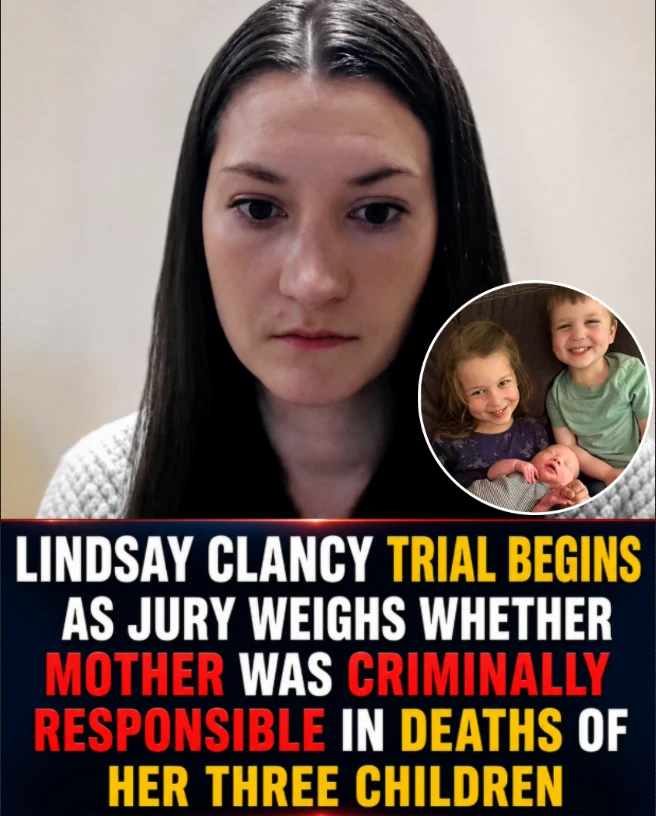
The children were Cora, 5, Dawson, 3, and Callan, 8 months old. Prosecutors allege that on January 24, 2023, Clancy arranged for her husband, Patrick Clancy, to leave their Duxbury home to pick up takeout food and a prescription. While he was gone, investigators say she used exercise bands in the acts that caused the children’s deaths. She then jumped from a second-story window in an apparent attempt to take her own life, suffering spinal injuries that left her paralyzed.
When Patrick returned home, he encountered a scene that would permanently change the family. The children were rushed for emergency medical treatment, but Cora and Dawson were pronounced dead that night. Callan survived initially but died several days later. The case immediately attracted enormous national attention, in part because Clancy had been receiving psychiatric treatment in the months before the tragedy and because questions quickly emerged about her mental condition, medications and postpartum care.
Those issues are now expected to dominate the trial.
Clancy’s attorneys say she had developed postpartum psychosis, a rare but severe psychiatric condition that can involve delusions, hallucinations, confusion and an impaired connection with reality. The defense contends that she was in the grip of serious mental illness and had also been prescribed numerous medications in the months before the children died. Her attorneys say those circumstances are essential to understanding why she should not be held criminally responsible in the conventional sense.
The defense has acknowledged the physical acts while arguing that Clancy’s state of mind is the central legal question. That makes this trial unusual: jurors are not simply being asked whether Clancy was involved. They are being asked to decide whether, because of mental disease or defect, she lacked the criminal responsibility required under Massachusetts law.
Prosecutors intend to present a very different picture.
The Commonwealth argues that Clancy’s actions show evidence of premeditation and planning. Prosecutors point to the fact that Patrick was sent away to complete specific errands, allegedly creating a period when Clancy was alone with the children. They are expected to focus on the sequence of events, her communications before and after the deaths, the method prosecutors say was used, and other evidence they believe demonstrates that she understood what she was doing.
The prosecution therefore faces an unusual task. Because the defense concedes Clancy caused the deaths, the battle will largely revolve around her mental state rather than identity or basic causation. Expert psychiatric testimony is expected to play a major role, with each side attempting to explain Clancy’s condition to jurors in dramatically different ways.
Even before opening statements, that battle had already begun.
In the final days before jury selection, the two sides fought over which expert witnesses would be allowed to testify. Judge William Sullivan rejected a defense request to call women who had personally experienced postpartum psychosis, ruling against that proposed testimony. Prosecutors also challenged several expert witnesses who they said had been disclosed too late or without sufficient supporting documentation.

The emotional difficulty of choosing a jury has been obvious from the beginning. The judge plans to seat 18 jurors, including six alternates, because of the expected length and emotional intensity of the proceedings. Nearly 90 prospective jurors appeared during the first day of selection. Five were seated on Monday, and the process continued through the week. By Wednesday, 17 jurors had reportedly been selected, leaving the court close to completing the panel.
Defense attorney Kevin Reddington has described the case as one of the most emotionally difficult he has handled in decades of criminal trials. That challenge is obvious: prospective jurors must confront the deaths of three very young children while also remaining open to complex evidence about psychiatric illness, medication and legal responsibility.
Patrick Clancy is expected to become one of the most important witnesses for the defense.
In the years since the deaths, Patrick has publicly expressed forgiveness toward his wife. Rather than portraying her as someone acting out of hatred toward their children, he has described a woman who had been struggling severely with her mental health. His testimony could be crucial because he witnessed her condition before the tragedy and interacted closely with her doctors, medications and treatment decisions.
Patrick has also taken legal action against medical providers involved in Lindsay’s care. Both he and Lindsay have pursued lawsuits alleging that healthcare professionals failed to adequately diagnose or treat her postpartum psychiatric problems. The family’s claims reportedly focus in part on the number of medications prescribed to her and on warning signs that they believe should have prompted a different level of intervention.

Reports indicate that Clancy had been prescribed nearly 10 different medications during the months leading up to the children’s deaths. Her family has said she experienced severe psychiatric symptoms, including thoughts and perceptions that they believe were signs of a deeper postpartum disorder. Patrick has claimed that she reported hearing voices telling her to harm herself and the children. Those allegations are expected to be examined closely during testimony.
Prosecutors, however, are expected to challenge whether those symptoms explain what happened on January 24. They may argue that even if Clancy was mentally ill, illness alone does not automatically eliminate criminal responsibility. The key question will be whether her condition was so severe that she could not appreciate the wrongfulness of her actions or conform her behavior to the requirements of law.
That distinction will likely become the heart of the case.
Jurors could hear from psychiatrists, prescribing physicians, family members, police officers, emergency responders and others who interacted with Clancy before and after the incident. The prosecution has also been granted permission for jurors to visit the family’s Duxbury home, meaning the physical setting where the events occurred may itself become part of the evidence.
The trial is expected to last several weeks and potentially longer. Unlike many murder trials, there is relatively little disagreement over the basic fact that Clancy caused the deaths. Instead, virtually everything turns on why she did it, what she understood in that moment and whether mental illness legally removed her criminal responsibility.
For Patrick Clancy, the proceedings place him in an almost unimaginable position. He lost all three of his children in a single night, yet he is expected to testify in support of the woman accused in their deaths. His public forgiveness and continued insistence that severe postpartum illness played a central role have made him a uniquely powerful figure in the case.
For prosecutors, however, sympathy cannot replace legal accountability. They argue that the circumstances show deliberate steps taken before the children died and that the evidence will demonstrate Clancy knew exactly what she was doing.
For the defense, the same timeline tells a different story: a mother experiencing a catastrophic psychiatric crisis after childbirth, struggling through medication changes and severe symptoms until reality itself allegedly became distorted.
Now 18 jurors will be asked to decide which interpretation the evidence supports.
The case is therefore about far more than whether Lindsay Clancy caused the deaths of Cora, Dawson and Callan. That fact is largely undisputed. The question that could determine whether she spends the rest of her life in prison or is found not criminally responsible is much narrower—and much harder: Was this a calculated act by a mother who understood what she was doing, or the catastrophic result of a severe postpartum psychiatric illness that had taken away her ability to understand reality?