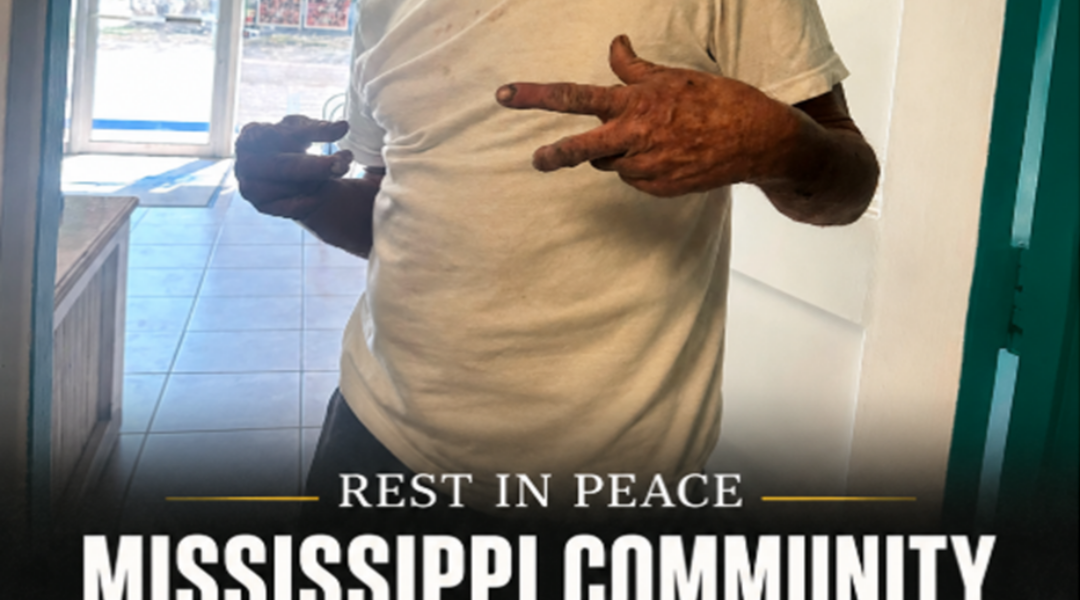
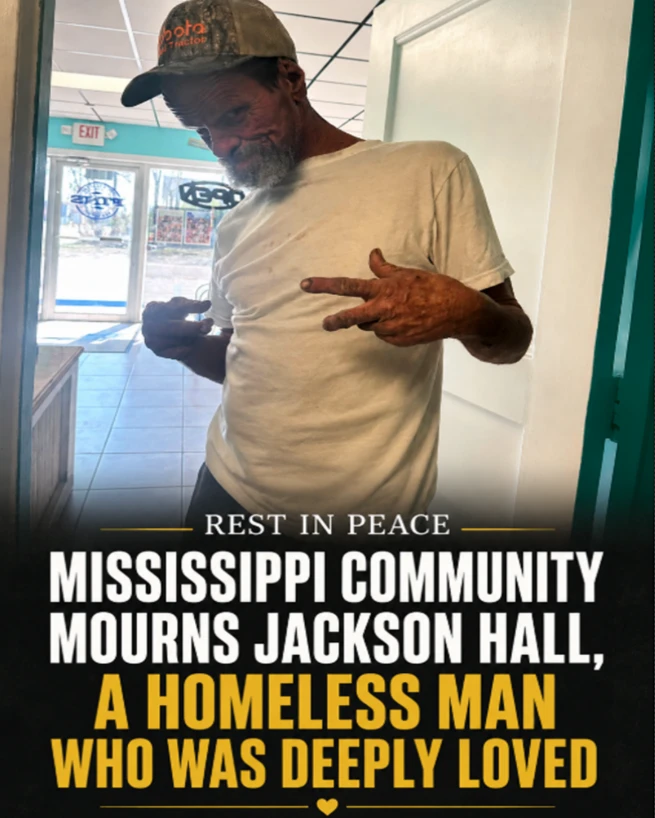
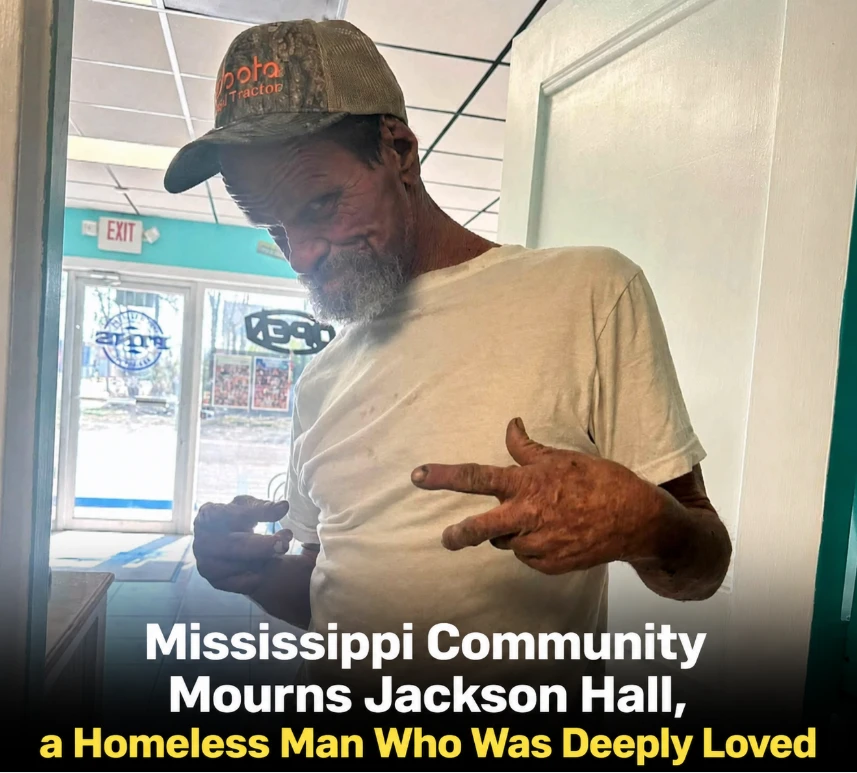
Mississippi Community Mourns Jackson Hall, a Homeless Man Who Was Deeply Loved.962

The Laurel and Jones County community is mourning the heartbreaking loss of 61-year-old Jackson Lee Hall, a man whose life may have been marked by homelessness, but whose death has revealed just how deeply he was loved. Hall was struck by an 18-wheeler while walking along Interstate 59 on Monday, July 20, 2026. He suffered severe injuries and was taken to the hospital, where he died two days later on Wednesday night. What initially appeared to be another tragic highway accident has since become a powerful story about dignity, community, and the importance of remembering people whose lives are too often overlooked.
According to the Mississippi Highway Patrol, troopers responded to the crash shortly before 7 a.m. Monday after a 2000 Peterbilt semi-truck traveling southbound on I-59 struck Hall. Authorities said Hall was walking along the interstate at the time. The Jones County Sheriff’s Department reported finding a damaged bicycle at the scene, and MHP later confirmed that Hall had been walking with the bicycle when the collision occurred. He was transported by ambulance to a hospital with serious injuries. The driver of the 18-wheeler was not hurt.
For the next two days, Hall fought for his life. But on Wednesday, July 22, authorities confirmed that he had died from his injuries. The Mississippi Highway Patrol has said the crash remains under investigation, and officials have not publicly announced a final determination regarding exactly what caused the collision or whether anyone will face charges. For that reason, it would be premature to assign blame to either Hall or the truck driver while investigators continue reviewing the circumstances.
But in the hours after Hall’s death was announced, the focus quickly shifted away from the highway and toward the man himself.
The Laurel Salvation Army said Hall had been experiencing homelessness, but he was far from unknown or forgotten. He had become familiar to churches, local businesses, charitable organizations and residents throughout the community. Salvation Army Capt. Karen Felton described him simply as “a character,” someone with a personality people remembered. She said Hall was known for beginning conversations with the words, “I have a question,” and for wanting to live life on his own terms.

Those small details offer a glimpse of the person behind the tragedy. Hall was not merely “a homeless man” mentioned in a police report. He had habits people recognized, a personality people remembered and relationships that stretched across the community. Many had encountered him repeatedly over the years, whether through local churches, businesses or organizations serving people experiencing homelessness.
That is why his death has affected so many.
Homelessness can make a person seem invisible to the wider world. People may pass someone on a sidewalk or see them outside a store without ever knowing their name, their story or the people who care about them. But Hall was clearly not invisible in Laurel. His death brought together people from different parts of the community who wanted to make sure that his life would be remembered with the same dignity afforded to anyone else.
Felton explained that this was especially important to those organizing Hall’s memorial. She said people wanted to make sure his life was recognized and that other unhoused residents understood that their lives mattered too. Her comments captured something larger than one man’s death: the belief that someone’s housing status should never determine whether they are mourned, respected or remembered.
The Salvation Army began organizing a memorial service for Hall at its Laurel chapel. According to WDAM, visitation was scheduled for the morning of Saturday, August 1, followed by a service at 11 a.m. and a community lunch afterward. A fundraiser was also established to help cover the expenses associated with celebrating Hall’s life, while volunteers were sought to assist with providing the meal.
The effort says a great deal about the relationships Hall had built.
People wanted him to have a real funeral.
They wanted others to gather, share memories and say goodbye.
They wanted his death to be marked rather than quietly passing into a statistic.
That response matters because individuals experiencing homelessness often live with tremendous instability. Shelter, transportation, food, medical care and personal safety can become daily challenges. In Laurel, organizations such as the Salvation Army have been working to provide shelter and reduce barriers for unhoused residents, including opening facilities during dangerous weather and offering meals, showers and other basic necessities. Earlier in 2026, community leaders also formed the Jones County Housing & Hope Initiative in an effort to coordinate more support for people experiencing homelessness throughout the area.
Hall’s death now puts a human face on those efforts.
Before this tragedy, he was one of the people living through those challenges every day. He moved through the community with his bicycle, interacted with people and developed connections despite not having stable housing. To strangers, he might have appeared to be just another man struggling on the streets. To the people who actually knew him, however, he was Jackson.
And Jackson mattered.
There is also a painful symbolism in the fact that Hall was walking with his bicycle when he was struck. For many people without reliable housing or transportation, a bicycle can be far more than a recreational item. It may be one of the only practical ways to move between shelters, businesses, churches or other places offering support. Traveling on foot or by bicycle can also place people in extremely vulnerable situations, particularly around high-speed roads designed almost entirely for motor vehicles.
Interstate 59 is such a roadway. Large commercial trucks travel the highway alongside passenger vehicles, and even a momentary collision involving a pedestrian can have devastating consequences. That was tragically the case for Hall. But while investigators work to establish exactly how the crash happened, the community is focusing on something no investigation can change: a man they knew is gone.
His death has also sparked a broader reflection on dignity.
It can be easy to judge someone based on where they sleep or what they own. Yet Hall’s story demonstrates how incomplete those measurements can be. He may not have owned a home, but he had relationships. He may not have had financial security, but he had people who remembered his personality. He may have spent parts of his life without stable shelter, but he still belonged to a community that now feels his absence.
That may be the most powerful part of his story.
A life is not made meaningful by an address.
It is made meaningful by the connections someone leaves behind.
Hall was known by churches. He was known by businesses. He was known by the Salvation Army. He was known by people who remembered his questions, his personality and his desire to live according to his own choices.
And when he died, those people refused to allow his life to disappear without recognition.
What happened on I-59 remains under investigation. There may eventually be additional details about the collision, and authorities may provide more information about the moments leading up to the impact. But whatever those findings show, they will not alter the human loss at the center of this story.
Jackson Hall was 61 years old when his life ended.
On Monday morning, he was still moving through the community with his bicycle. By Wednesday night, he was gone. In just a matter of days, familiar encounters became memories, and people who expected to see him again were instead preparing to attend his memorial.
The Laurel community is now making sure he receives something everyone deserves: a proper goodbye.
Rest in peace, Jackson Hall.
He may have lived without a permanent home, but he did not live without people who cared about him. And perhaps the clearest evidence of a life’s impact is not what someone possessed, but how many people stop, remember and grieve when that person is no longer there.
For Jackson Hall, the answer is clear.
He was seen. He was known. And he was deeply loved.