
🚨 20-Year-Old Co-Pilot Nathalia Filgueiras Killed in Plane Crash — Why Are People Blaming Her?.9397

She was only 20 years old, with a passion for flying, a promising career, and an entire lifetime of dreams ahead of her. Yet after Nathalia Filgueiras tragically lost her life in a plane crash in Palm Beach County, Florida, some people chose to question her abilities rather than mourn her death. The wave of criticism directed at a young woman who can no longer defend herself has sparked an important conversation about compassion, responsibility, and the dangers of rushing to judgment before the facts are known.
Nathalia was serving as first officer alongside Captain Jeffrey Gregory, 55, an experienced aviator who had spent decades in the aviation industry. Both lost their lives in the Sunday crash, leaving behind grieving families and unanswered questions about what caused the aircraft to go down. While aviation investigators work to establish the circumstances of the tragedy, online speculation has already placed an unfair burden on the memory of the young co-pilot.
The most troubling part of the public reaction has been the assumption that Nathalia’s age somehow made her responsible for the accident. Commenters questioned why someone so young was allowed to serve in the cockpit of a private aircraft, while others suggested that she must have lacked the experience necessary to handle an emergency. These accusations overlook an essential fact: investigators have not established that Nathalia caused or contributed to the crash.
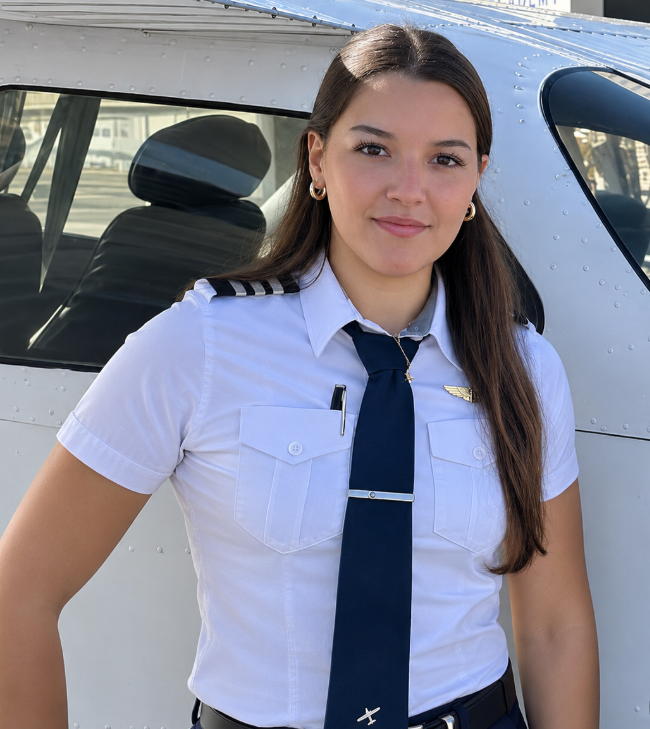
A Young Woman Who Dedicated Her Life to Flying
Long before the tragedy, Nathalia had already developed a serious commitment to aviation. According to accounts shared following her death, she had accumulated approximately 88 flight hours by the age of 17, an impressive beginning for someone still in her teenage years. By the time she reached 20, she reportedly had around 1,300 hours of flight experience, reflecting years of dedication to the profession she loved.
Those figures, if confirmed, demonstrate that Nathalia was far more than an inexperienced young person simply sitting beside a pilot. Accumulating flight hours requires considerable time, effort, training, and exposure to different flying conditions. Her reported experience challenges the assumption that her age alone should determine how people judge her professional abilities.
Aviation is a highly regulated profession in which pilots must satisfy applicable licensing, training, medical, and aircraft-specific requirements. The qualifications necessary for a particular flight depend on several factors, including the aircraft, its operation, and the crew members’ assigned responsibilities. Being young does not automatically mean someone is unqualified, just as being older does not guarantee that a person can prevent every emergency.
Captain Gregory brought decades of aviation experience to the cockpit, while Nathalia served in the first officer’s position. Their different ages and career histories should not be treated as evidence of wrongdoing. Until investigators examine the available records and determine what happened, assigning blame to either crew member would be premature.
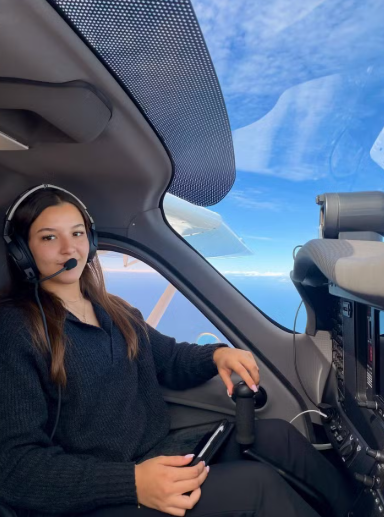
The Terrifying Final Moments of the Flight
One of the most heartbreaking aspects of the tragedy involves reports about Nathalia’s communication with air traffic controllers during the aircraft’s final moments. According to accounts circulating after the crash, she continued relaying important information as the flight encountered an increasingly dangerous situation. Her reported actions have drawn admiration from people who recognize how difficult it can be to communicate clearly during an aviation emergency.
Imagine being inside an aircraft that is rapidly losing altitude, knowing that the situation is becoming more dangerous with every passing moment. The sounds, movements, and uncertainty alone could overwhelm even a person with considerable experience. Yet pilots are trained to prioritize aircraft control, communicate essential information, and work through emergencies as effectively as circumstances allow.
Reports describing the aircraft’s steep descent have intensified public interest in the final communications. However, the exact flight path, cockpit actions, and sequence of events must be established through official investigative evidence rather than speculation. It is also impossible to know precisely what Nathalia understood or felt during those final moments.
What makes the reported communications significant is their potential value to investigators. Radio transmissions can help establish what the flight crew observed, what problems were reported, and how the emergency developed. Combined with other evidence, those communications may eventually help explain the sequence of events leading to the crash.

Courage Should Not Be Replaced by Cruelty
For many people, the thought of facing a life-threatening emergency aboard an aircraft is almost impossible to imagine. Fear can affect concentration, judgment, and the ability to communicate, even among people who have received extensive training. That is one reason aviation professionals practice emergency procedures repeatedly, preparing themselves to respond under extraordinary pressure.
Nathalia’s reported efforts to communicate during the emergency deserve to be considered with respect and care. They should not be transformed into exaggerated claims about what she knew, nor dismissed simply because she was young. If investigators confirm that she continued performing her assigned duties as the situation deteriorated, those actions will form an important part of understanding the crew’s response.
Instead, some online discussions have focused almost entirely on her age. The implication that a 20-year-old could not possibly possess meaningful aviation experience is both simplistic and unfair. Professional competence must be evaluated through documented qualifications, training, performance, and the circumstances of a particular flight.
There is also a deeply human side to this tragedy that online criticism too often ignores. Nathalia was not merely a name in a news headline or a photograph accompanying a crash report. She was someone’s daughter, a young woman with relationships, ambitions, and people who loved her.
Imagine What Her Family Is Going Through
Consider what it must feel like for a parent to lose a daughter who was just beginning her adult life. One moment, the family has a future filled with possibilities to look forward to; the next, they are confronted with the devastating news that she will never return home. The grief alone is difficult enough without strangers publicly assigning blame before investigators have reached their conclusions.
Now imagine opening social media and finding countless comments suggesting that your daughter was responsible for the accident that killed her. Imagine seeing people dismiss years of dedication simply because she was 20 years old. For grieving relatives, such statements can turn an already unbearable loss into an even more painful experience.
No family should have to defend the humanity of someone they have just lost. Questions about aviation safety are legitimate, and thorough investigations are essential after fatal accidents. But there is a fundamental difference between asking what caused a tragedy and declaring someone responsible without sufficient evidence.
The same compassion should extend to Captain Gregory and his loved ones. He, too, lost his life in the crash, and his family deserves answers based on evidence rather than speculation. Remembering both crew members with dignity does not interfere with the investigation; it simply recognizes that human lives were lost.
Why the Investigation Matters
The National Transportation Safety Board investigates aviation accidents to determine what happened and identify safety lessons that may prevent similar tragedies. Investigators can examine aircraft maintenance records, weather conditions, pilot qualifications, communications, operational procedures, and available physical evidence. Depending on the aircraft and circumstances, additional information may come from recorded data, radar records, or other technical sources.
Such investigations require patience because aviation accidents rarely can be understood through a single observation or assumption. A steep descent, an emergency radio call, or the age of a crew member does not independently establish the cause of a crash. Investigators must evaluate how different factors may have interacted before reaching supported conclusions.
That process is especially important when public speculation begins immediately after an accident. Early accounts can be incomplete, witness descriptions may differ, and technical information may require careful interpretation. A responsible discussion should distinguish confirmed facts from allegations, assumptions, and details that remain unknown.
The purpose of an investigation is not simply to identify someone to blame. Its central safety mission is to understand the circumstances of an accident and determine whether changes could reduce the risk of another tragedy. Lessons learned from one flight can sometimes help protect countless passengers and crew members in the future.

Remember Nathalia for More Than Her Age
Nathalia Filgueiras was 20 years old, but her age should never become the defining feature of her life or the sole basis for judging her career. She reportedly pursued aviation from her teenage years and accumulated substantial flying experience before her death. Those achievements deserve recognition, even as investigators continue examining the circumstances of the fatal flight.
Her story is also a reminder that young professionals should not automatically be dismissed because they have not reached an age that others associate with expertise. Dedication, training, judgment, and experience matter far more than assumptions based on appearance or birth date. The aviation community depends on both experienced professionals and younger pilots who are developing their careers.
If the accounts of Nathalia’s final communications are confirmed, they may offer a powerful example of someone attempting to fulfill her responsibilities under extraordinary pressure. But her dignity does not depend on proving that she acted heroically in her final moments. She deserves compassion because she was a human being whose life ended tragically.
There will be time for investigators to determine what went wrong, and their findings should be examined seriously. If evidence eventually identifies mistakes, those findings should be discussed accurately and responsibly. Until then, accusations presented as established facts only add unnecessary suffering to families already experiencing profound grief.

A Final Message for Those Quick to Judge
Before posting another cruel comment about Nathalia, consider the reality behind the headline. A young woman who loved aviation has died, an experienced captain has also lost his life, and two families are facing a future without people they cherished. No amount of online speculation can change that heartbreaking reality.
It is possible to demand answers, support aviation safety, and respect the investigative process without attacking the people who died. Compassion does not require ignoring facts, and accountability does not require cruelty. Both can exist together when people choose patience over assumptions.
Nathalia Filgueiras should not be remembered through unproven accusations or reduced to the number 20. She should be remembered as a young woman who pursued her passion for flying and whose life ended far too soon.
May her family find comfort in the memories they shared, and may Captain Gregory’s loved ones receive the same compassion and respect. As investigators continue their work, the most meaningful response is to seek the truth while honoring the lives that were lost.
Rest in peace, Nathalia Filgueiras and Captain Jeffrey Gregory. Your lives mattered, your families deserve compassion, and your stories deserve to be told with dignity. ❤️🕊️