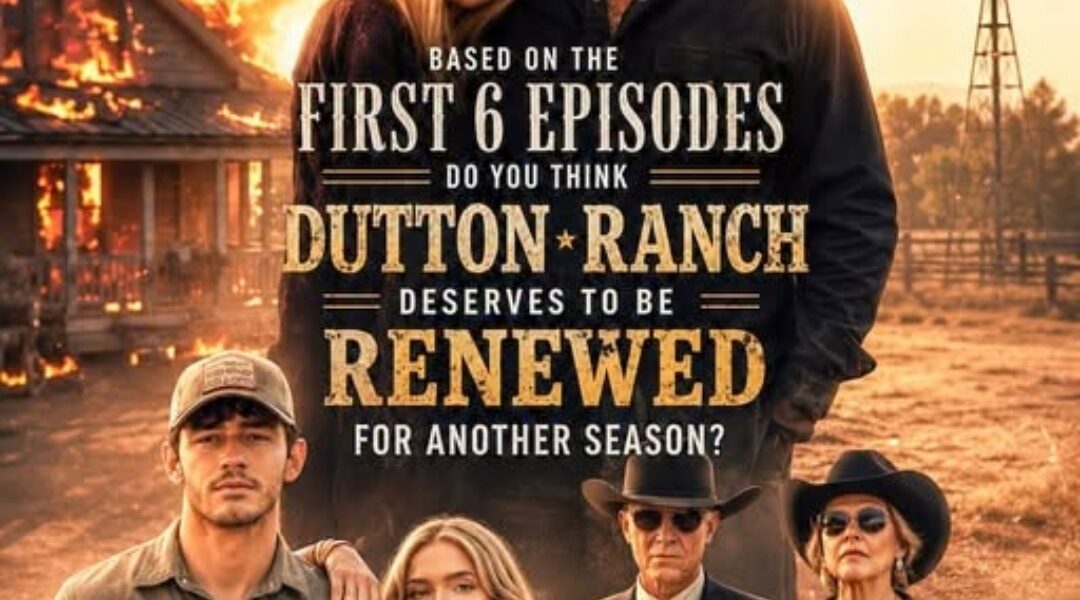

After six episodes, one thing has become impossible to ignore:
Dutton Ranch still has far too much unfinished business to ride into the sunset.
The series has already introduced fragile alliances, buried family wounds, uncertain loyalties, and a growing battle for control. Every apparent victory feels temporary. Every peaceful moment carries a warning. And every secret that comes to light seems to expose an even more dangerous truth underneath.
That does not mean the show is perfect.
Fans can reasonably debate the pacing, the direction of certain storylines, and whether every new character has received enough development. Some viewers may feel the series is still searching for an identity beyond the shadow of Yellowstone.
But after six episodes, the strongest argument for another season is not simply that audiences want more action.
It is that Beth, Rip, Carter, and the people surrounding them have only begun to reveal who they may become in this new world.
The ranch has been established.
Now the real war can begin.
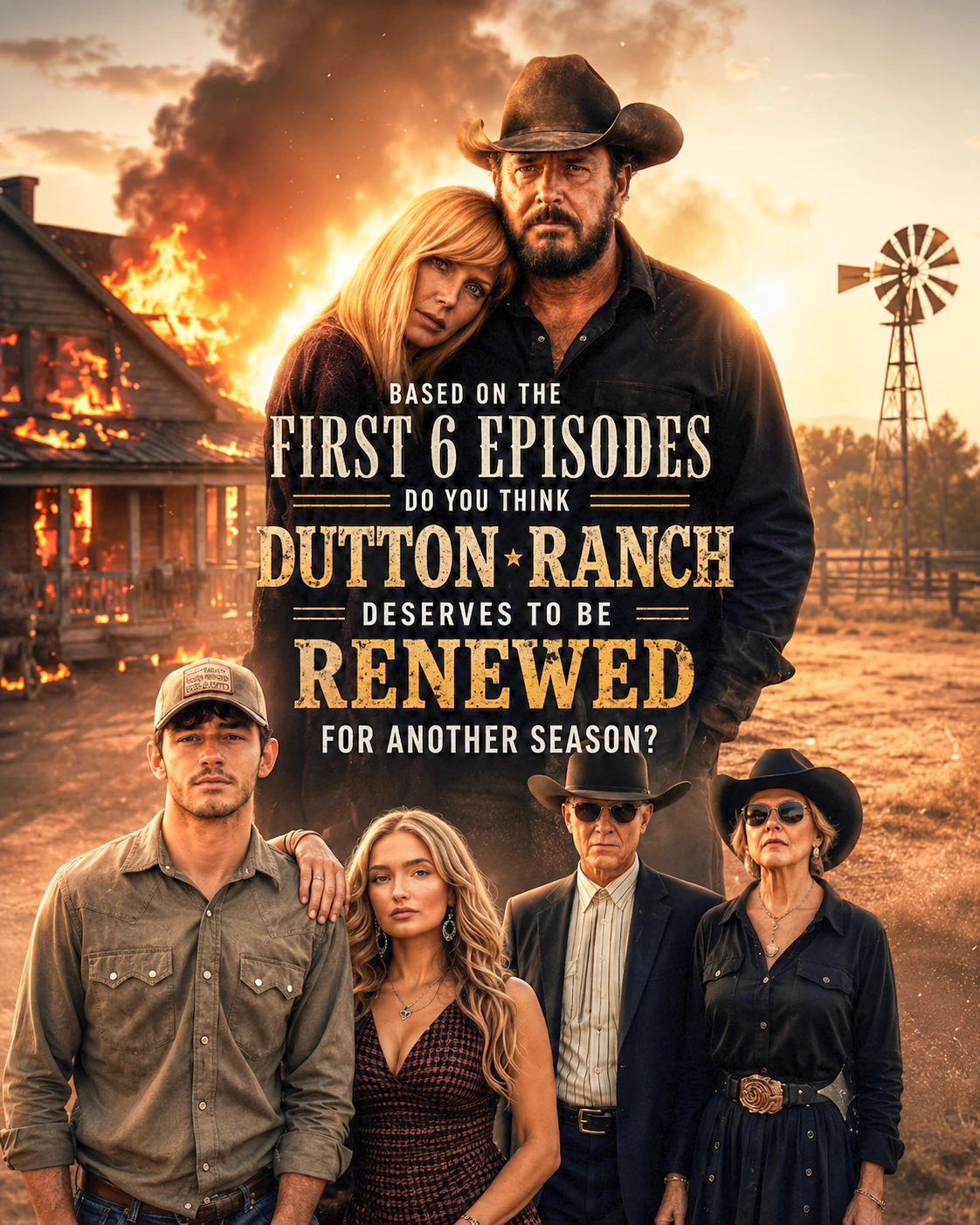
Beth and Rip remain the emotional center of the series, and their relationship is the clearest reason the story deserves more time.
For years, they survived inside someone else’s legacy.
Rip devoted his life to protecting John Dutton’s ranch, carrying out difficult orders and accepting responsibilities that demanded silence. Beth fought corporate enemies, political threats, and members of her own family while using anger as armor against everything she feared losing.
Their new ranch gives them something neither has truly possessed before:
A future chosen for themselves.
But building that future is proving far more complicated than defending the past.
Beth understands financial warfare, manipulation, and the hidden motives behind polished business proposals. Rip understands cattle, land, loyalty, and the kind of danger that announces itself from horseback. Together, they appear almost unstoppable.
Yet their greatest conflict may come from the fact that they protect the ranch differently.
Beth is willing to gamble if the reward secures their long-term survival. Rip believes survival begins with protecting what is already standing. She looks several moves ahead. He responds to the threat directly in front of him.
Those differences could eventually strengthen their partnership—or tear open wounds that love alone cannot heal.
A second season could explore what happens when two people who would die for each other cannot agree on how they should live.
👇 Do you think Beth and Rip’s love is strong enough to survive running the ranch together?
One of the most compelling elements of the first six episodes is the way the past continues haunting their new beginning.
Beth and Rip may have left familiar ground behind, but they have not escaped the lessons, trauma, and habits created at Yellowstone. Rip still expects loyalty to be absolute. Beth still attacks before anyone can discover how vulnerable she feels.
Their enemies may change, but their instincts remain the same.
That creates a powerful question for the future of the series:
Can Beth and Rip build something new without repeating the methods that destroyed so much of the old world?
If the show answers that question too quickly, it risks wasting its strongest emotional conflict. Another season would allow their development to feel earned rather than rushed.
Carter’s journey is another major reason the story should continue.
He is no longer simply the troubled boy who entered Beth and Rip’s lives needing food, shelter, and direction. He is becoming old enough to decide what the ranch means to him—and whether he wants to inherit the responsibilities attached to it.
Carter represents hope, but he also represents danger.
Beth and Rip want to give him the family neither of them experienced in a healthy way. Yet both are still learning how to offer affection without turning it into discipline, control, or fear.
Rip may see hard work as the path toward becoming a man. Beth may believe emotional toughness is the only defense against a cruel world. Carter, however, may need something they do not know how to provide openly: reassurance that his place in their family does not depend on constant obedience or usefulness.
A second season could place Carter at the center of the ranch’s future.
Perhaps he begins challenging Rip’s authority as he develops his own beliefs. Maybe he becomes emotionally closer to Beth while questioning why she hides compassion beneath cruelty. He could form a bond with a new ranch hand, make a dangerous mistake, or discover information connected to one of the family’s enemies.
Whatever path the writers choose, Carter should not remain only a symbol of Beth and Rip’s softer side.
He deserves his own identity.
His choices could eventually determine whether the ranch continues the Dutton cycle—or finally breaks it.
❤️ Is Carter the true future of the ranch, or should he be allowed to build a life away from it?
The supporting cast has also expanded the story in meaningful ways.
New alliances rarely feel permanent. Friendly conversations often carry hidden motives. Characters who appear dependable in one episode may be protecting their own interests in the next.
That uncertainty is essential because Beth and Rip are entering a world where reputation alone will not guarantee loyalty.
At Yellowstone, nearly everyone understood what the Dutton name meant. Some feared it. Some respected it. Others wanted to destroy it.
At the new ranch, Beth and Rip must establish power from the beginning.
Neighboring ranchers may resent their arrival. Investors may see an opportunity to gain influence. Local leaders could demand cooperation while quietly working against them. Even the people employed inside the operation may be deciding whether loyalty to Beth and Rip is worth the danger attached to them.
This is where the series can create its own identity.
It should not simply repeat Yellowstone with different scenery.
The new location needs its own culture, rivalries, economic pressures, and unwritten rules. Beth and Rip should occasionally feel like outsiders, despite their experience. They should make mistakes because they assume every conflict operates according to the world they already know.
A drought, a cattle crisis, a financial collapse, or a regional land dispute could threaten the ranch without feeling like a recycled storyline. A rival family could become both an enemy and a necessary ally. Someone close to the operation could sell information, believing the betrayal is the only way to protect their own family.
These conflicts would give another season the opportunity to build a larger world while keeping the drama personal.
The best threats are not dangerous only because they may take the land.
They are dangerous because they force characters to reveal what they value most.
Beth may sacrifice trust to maintain control.
Rip may risk the future to defend someone in the present.
Carter may choose loyalty even when the adults around him have not earned it.
And an apparent enemy may become the only person willing to tell Beth and Rip the truth.

The first six episodes have also succeeded in creating questions audiences genuinely want answered.
Who can Beth trust when every alliance appears transactional?
Can Rip lead a ranch without becoming another version of John Dutton?
Will Carter embrace the cowboy life or reject the burden attached to it?
Which hidden relationships will reshape the balance of power?
And how long can Beth and Rip protect their future before one of them is forced to make a sacrifice the other cannot forgive?
These are not questions that should be resolved through a rushed finale.
They are the foundation of a longer story.
Of course, renewal alone would not guarantee improvement. Another season would need to reward the audience’s patience. The mysteries should lead somewhere meaningful. Supporting characters must become more than potential betrayers or temporary allies. Emotional consequences should last beyond a single episode.
Most importantly, Beth and Rip need to evolve.
The show cannot rely forever on Beth delivering devastating threats while Rip answers every danger with physical force. Those qualities are part of what fans love, but a continuation should challenge them to become more than the versions of themselves who survived Yellowstone.
Beth must learn that control is not the same as security.
Rip must recognize that loyalty offered through fear is not the same as loyalty freely given.
Together, they must discover whether a home can be protected without turning it into another battlefield.
That is the story worth continuing.
Not simply another war over land.
Not simply another powerful corporation or ruthless rival.
But the emotional journey of two damaged people attempting to build something that does not require everyone around them to suffer.
After six episodes, Dutton Ranch has not answered all of its questions.
That is not necessarily a weakness.
It may be the clearest sign that the series has only begun exploring its true potential.
The world is worth expanding.
The characters are worth following.
The conflicts are growing more personal.
And the ranch still holds enough secrets, danger, and emotional possibility to fuel a much larger chapter.
So, has the story already peaked?
Not yet.
The fences may be standing, but the foundations are still being tested. Beth and Rip have survived the beginning. Now they must prove that what they built can survive success, betrayal, family conflict, and the arrival of enemies who understand exactly where to hurt them.
Season 1 can establish the dream.
Season 2 should reveal its price. 🤠🔥