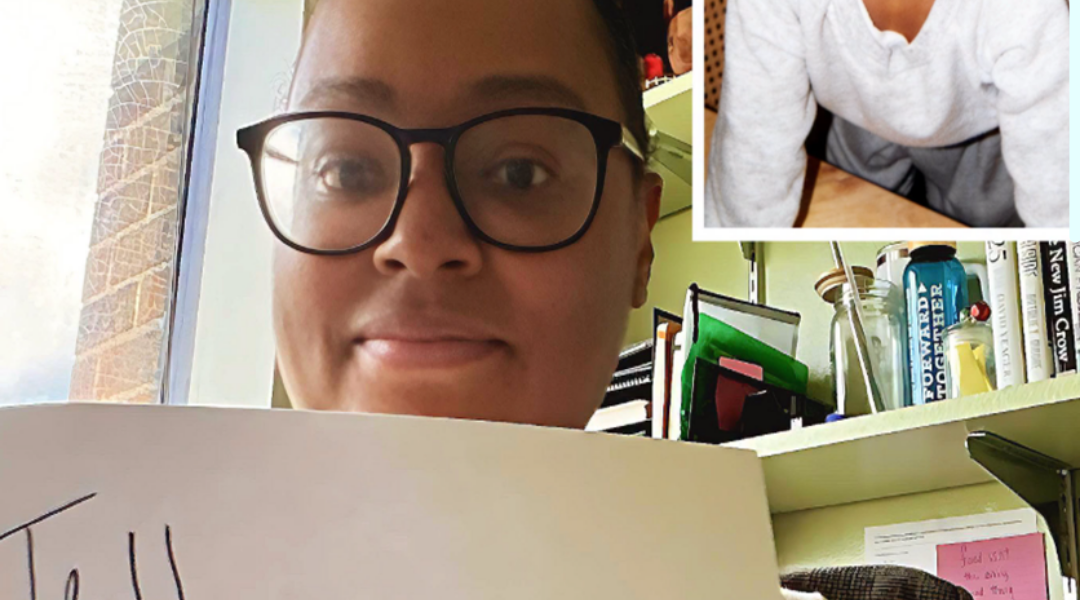
“I Thought It Was Normal”: A Survivor’s Story of Childhood Sexual Abuse, Silence and Reclaiming Her Life.992

For years, she lived with memories she could barely acknowledge. On the outside, she appeared successful: a high-achieving student whose parents proudly celebrated her accomplishments. But beneath that seemingly ordinary childhood was an experience she says began when she was only four years old. In a deeply personal account shared as part of the #TellSomebody message, the woman says her father sexually abused her between the ages of four and seven—and that because she was so young and had no frame of reference for what was happening, she initially believed his behavior was normal.
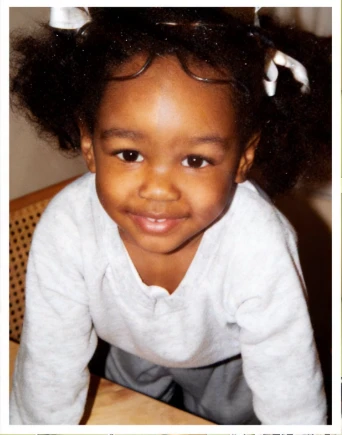
She recalls that boundaries around privacy were repeatedly blurred inside her home. Her father, she says, regularly walked around naked and encouraged her to do the same. She alleges that the abuse also occurred while he was putting her to sleep and during moments disguised as ordinary parental discipline. As an only child, she had no sibling beside her to compare experiences with and no understanding that what was happening crossed a fundamental boundary. For a small child who depends entirely on adults to define what is safe and normal, recognizing abuse can be extraordinarily difficult—especially when the alleged abuser is a parent.
Her understanding began to change in elementary school. During a sex-education lesson, she watched a video that suddenly gave meaning to experiences she had never known how to describe. The realization overwhelmed her. She remembers panicking and repeatedly telling her best friend, “I didn’t know I wasn’t supposed to do that.” Yet even then, she cannot remember clearly explaining what had happened to her.
That uncertainty became part of a much longer silence.
For approximately 25 years, she says she lived in denial about what she had recognized that day. There were moments when the truth seemed close to emerging. She vaguely remembers saying something to her mother, or perhaps asking a series of questions that hinted something was wrong, without ever making a complete disclosure. She also remembers approaching her father indirectly, asking hypothetical questions about what would happen if a parent behaved inappropriately with a child.
According to her account, his response was to tell her she was “crazy” and needed psychiatric help. In a family where mental-health problems carried heavy stigma, those words frightened her. Instead of helping her understand her memories, they made her question herself.
Eventually, she says, she stopped consciously thinking about what had happened.
But the uncomfortable absence of boundaries continued. She recalls her father routinely being naked around her in the mornings before school, including while she was using the bathroom to prepare for the day. Then came a moment that, in retrospect, represented an important attempt to reclaim control over her own body.
One morning, she wrapped a towel around herself.
Her father allegedly demanded that she remove it, arguing that she should not be ashamed of her body. She insisted that shame had nothing to do with it—she simply wanted to keep herself covered. The disagreement escalated until her mother woke up and came to see what was happening.
What followed was dramatic. According to the survivor, her mother later confronted her father with a knife during an argument that took place in front of her. She says that after this confrontation, her father never sexually touched her again.

The alleged abuse had stopped, but its effects had not.
As she grew older, she appeared to move forward. She performed well academically and built a life that looked successful from the outside. Her achievements even became a source of pride for her parents. There was little visible indication that she was carrying unresolved childhood trauma.
Yet she now believes that trauma was influencing her life in ways she did not understand at the time.
She describes developing compulsive or addictive patterns involving relationships, sex, shopping and achievement, eventually extending to alcohol. These behaviors did not immediately appear connected to childhood experiences she had spent decades suppressing. But as adulthood progressed, the patterns became harder to ignore.
At 32, she found herself in an abusive relationship.
That experience forced her to confront a painful question: How had she arrived there?
The answer did not come immediately. Instead, she began a long process of examining her past through both traditional and nontraditional therapy, somatic bodywork and mindfulness practices. She explored her childhood, relationships, trauma and the coping mechanisms she had developed over the years.
Slowly, pieces began connecting.
She came to believe that experiences she could not always consciously recall had nevertheless influenced how she responded to relationships, boundaries, stress and emotional pain. Her description captures one of the most complicated aspects of trauma: a person may spend years trying not to think about what happened while still struggling with its emotional consequences.
For her, healing required something different from simply forgetting.
She left the abusive relationship. She stopped drinking. And instead of continuing to construct a life around avoiding the past, she began deliberately rebuilding one that acknowledged it.
That distinction became central to her recovery. Moving forward, in her telling, did not mean pretending childhood abuse never occurred. It meant accepting that it had happened while refusing to allow those experiences to dictate the rest of her life.
Her story also illustrates why conversations about childhood sexual abuse cannot depend solely on expecting children to make clear, immediate disclosures. A four-, five- or six-year-old may not possess the language necessary to identify abuse. When inappropriate behavior comes from a trusted caregiver, the confusion can become even greater. A child may know that something feels uncomfortable without understanding why, or may assume that because an adult is doing it, it must be normal.
Sometimes disclosure appears indirectly: unusual questions, sudden fear, behavioral changes or attempts to establish boundaries that adults may not initially understand. In this woman’s account, even after learning enough to suspect that something was wrong, she still struggled to articulate it.
That is why teaching children accurate, age-appropriate information about bodily autonomy and safe boundaries can matter. Children need to understand that they are allowed to want privacy, that uncomfortable touching should not be kept secret, and that they can tell a trusted adult when something feels wrong. Equally important, adults need to listen seriously when children speak—even when their words are incomplete or confusing.
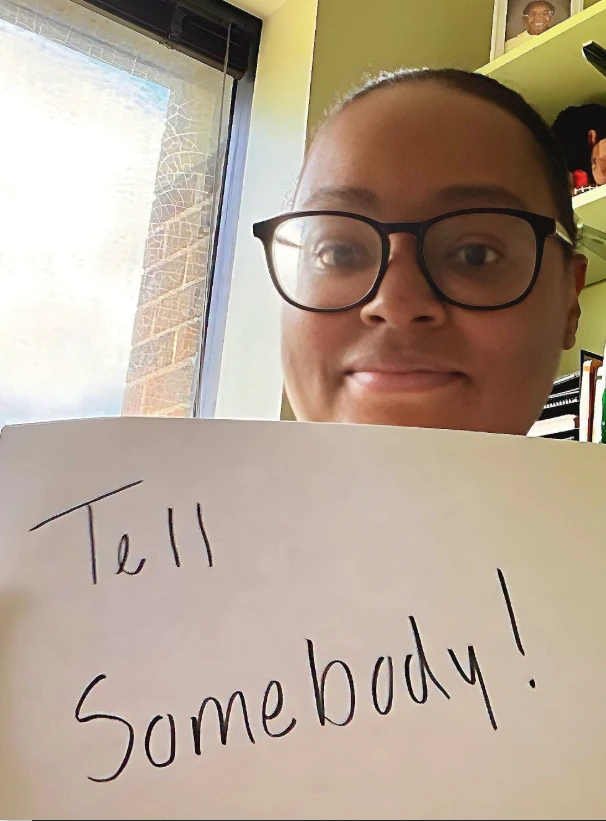
The survivor’s decision to share her experience through #TellSomebody transforms an intensely private history into a message aimed at protecting others. The campaign promotes resources designed to help children recognize inappropriate behavior and speak to trusted adults.
Her account is not ultimately only about what she says happened between the ages of four and seven. It is also about the decades afterward: the confusion, denial, coping mechanisms, unhealthy relationships and eventual decision to confront memories she had spent much of her life trying not to see.
At 32, she began asking how her life had reached such a painful point. The answer led her back to a childhood she had tried to bury—but it also gave her a path forward.
She left the relationship that was hurting her. She quit drinking. She began working through her trauma. And perhaps most importantly, she stopped requiring herself to pretend that the past was unreal simply because remembering it was painful.
Her message now is contained in two simple words: Tell somebody.
Because sometimes the first step toward protecting a child is giving them the words to describe what should never have been happening in the first place.