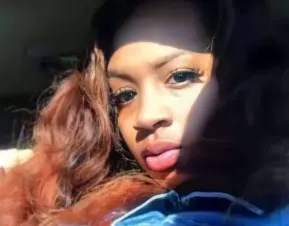
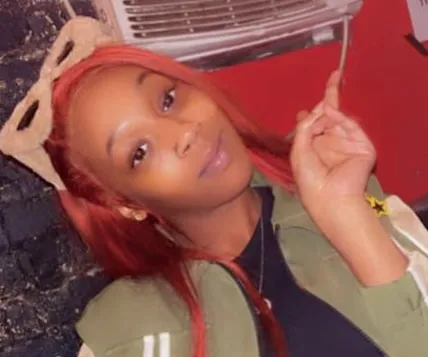
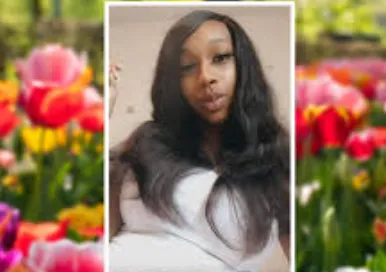
The message lit up a phone in the dark, early hours of February 25, 2024. It was short, sharp, and terrifyingly clear, the kind of text that doesn’t leave room for misinterpretation. On the screen, three lines of words carried a weight that could crush an entire family.
For the people who loved twenty-year-old Mahogany Jackson, that was the moment the world split in two. There was the life they had known before 2:00 a.m., with its routines, arguments, laughter, and everyday worries. And then there was the life after that message, a new reality defined by fear and urgency.
Mahogany was young enough to still be building her future. She was old enough to know what real danger felt like and to understand that this wasn’t a misunderstanding or a bad joke. In those final moments of freedom, she did the bravest thing she could—she tried to be found.
Her words weren’t random. They were precise, calculated, written by someone who knew she might not get a second chance. “Don’t call” meant she believed every sound, every ring, every vibration could put her in more danger.
Her family read the message and felt the bottom drop out of their world. Panic wanted to take over, to make them scream, call, run, do something reckless. Instead, they did exactly what she asked.
They didn’t call. They reported her missing and reached out to authorities, pushing the system into motion as fast as they could. At the same time, they began their own desperate search, racing against a clock they couldn’t see.
Minutes suddenly felt like hours. Phones were clutched in shaking hands, screens checked so often the glass blurred. Every buzz, every notification, every unknown number sent hearts slamming into ribs.
Hope flickered with each passing second. Someone might have seen something. Someone might have heard something.
But as dawn began to lighten the sky, hope started changing shape. It didn’t disappear, but it grew heavy, weighed down by what wasn’t happening. Because when someone says, “I’ve been kidnapped,” silence starts to feel like violence.
The absence of answers became a scream that never left their throats. They checked doors, windows, streets, messages, and memories, as if one detail might unlock a way to her. Sleep became impossible; breathing felt like work.
Sometimes, families are saved by quick responses and lucky breaks. Sometimes, someone notices something strange at a gas station, or a witness decides not to stay silent. This was not one of those nights.
Around 2:00 a.m. on February 26, roughly a day after her message was sent, the silence finally broke. It broke not with her voice, but with the worst kind of news a family can receive. Officers found a body on Laurel Avenue in Birmingham, Alabama.
Locals had a grim name for that road. They called it “dead man road,” a nickname that hinted at the history it carried. Now it would hold one more tragedy, one more life stolen.
The body was identified as Mahogany Jackson. She had been shot in the back of the head. Her body had been discarded on the roadside as if her life meant nothing.
Even seasoned investigators felt the cruelty of it. They were used to violence, used to walking crime scenes that broke other people’s hearts. But something about the way she was left, and the words she had sent before her death, lodged deep under their skin.
As detectives began to work backward from Laurel Avenue, they uncovered something far worse than the location of her body. This was not a sudden act of rage or a random robbery gone wrong. It was the end of a prolonged nightmare.
Authorities revealed that Mahogany had been abducted. She was held against her will, terrorized and abused. The hours that passed between her text message and her death were filled with cruelty no one should ever face.
She was tortured. She was forced to perform sexual acts at gunpoint. Her humanity was treated like something to be broken.
And then came the detail that stunned even hardened detectives. Her attackers recorded parts of the assault. They didn’t just commit the crime—they documented it.
They filmed her suffering. They captured her pain as if it were entertainment or proof of power. Then they shared parts of that video online.
Birmingham Police Chief Scott Thurmond spoke publicly with visible anger and grief. “The facts of this case are deplorable and sickening,” he said. “Saddest of all, they were made public by the suspects’ decision to videotape portions of this horrific act.”
The investigation moved fast, driven by outrage, evidence, and a determination not to let this case slip into a cold file. Digital trails were traced, electronic devices analyzed, and social media activity combed through. Witness accounts, phone records, and video footprints began to form a map of horror.
Within days, arrests began. Names were matched to faces, and faces to actions. One by one, warrants were issued, handcuffs clicked shut, and suspects were taken into custody.
Not one. Not two. Eight.
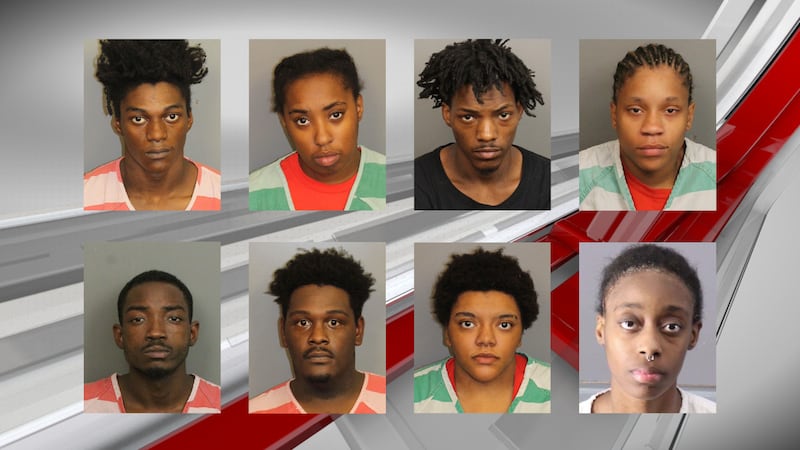
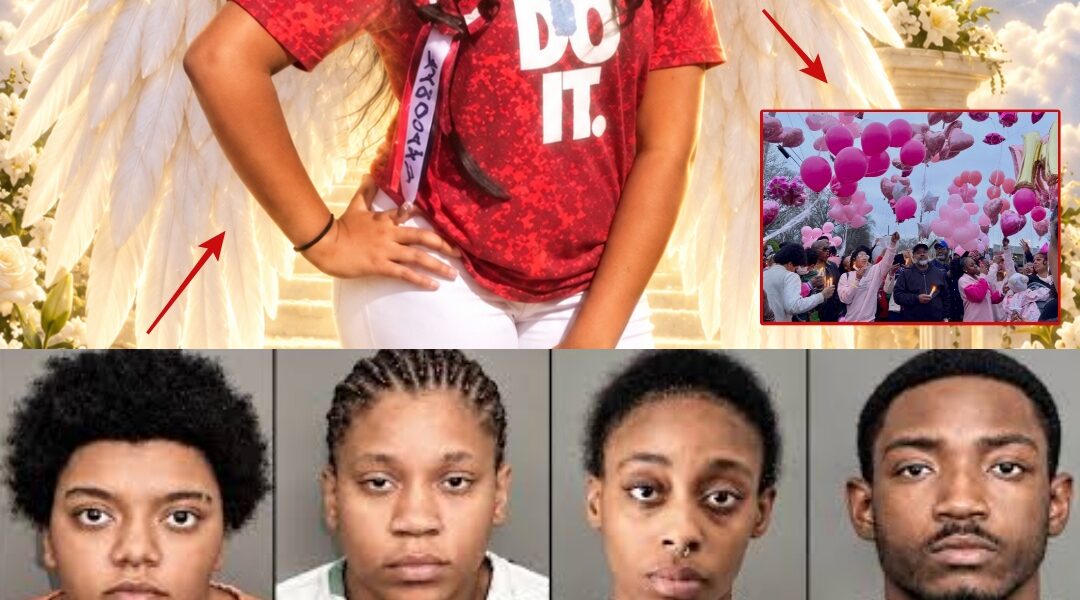
Eight people were arrested in connection with Mahogany’s abduction and murder. They were identified as Brandon Pope, 25; Francis Harris, 25; Jeremiah McDowell, 19; Blair Green, 26; Si’Niya McCall, 24; Teja Lewis, 26; Giovannie Clapp, 24; and Airana Robinson. A group large enough to be called a crowd, all charged in the death of one young woman.
The number itself was chilling. Eight people, not just watching, but allegedly participating, enabling, or failing to stop what was happening. Eight people, each with separate lives, choices, and histories, now tied together by one act of unimaginable brutality.
Prosecutors did not hesitate. They moved forward with capital murder charges for all eight suspects. The state announced it would seek the death penalty in each case.
For some, that announcement felt like strength. A declaration that what happened to Mahogany would be treated with the full weight of the law. A signal that the justice system would not look away.
But for her family, justice could never mean relief. No arrest could undo the hours she spent in terror. No sentence could pull her back from that road on Laurel Avenue.
They had to live with one unbearable truth. Mahogany knew she was in danger. And even then, she tried to save herself.
That text message became everything. Three lines that carried her fear, her awareness, and her refusal to disappear silently. “I’ve been kidnapped. Send help. Don’t call.”
Those words were proof. Proof that she understood what was happening. Proof that she was still fighting, even surrounded by people trying to erase her.
She did not simply vanish. She did not go quietly into some anonymous missing person’s file. She reached out, and in doing so, she wrote her own final testimony.
The hours between her message and her death haunt everyone who hears her story. Each minute now feels like a question mark. Each second feels like something that should have changed the ending.
Her family has spoken about the agony of waiting. Of checking doors and windows as if she might somehow walk back through them. Of scrolling through messages, replaying every conversation, wondering what they missed.
They talk about driving streets they never used to think about. About looking into alleys, abandoned lots, stretches of road at odd hours, hoping and fearing at the same time. About trying to hold onto hope while something inside them already knew.
Friends remember Mahogany as vibrant and full of life. She was the kind of person who laughed easily, whose joy could pull other people out of their bad moods. She was not just a victim of a crime—she was a human being with plans, interests, and people who loved her.
Some recall her dancing at gatherings, unbothered by who was watching. Some remember late-night talks, secrets shared, future dreams spoken aloud as if they were guaranteed. Now, every memory carries a shadow.
Her name now joins a list no family ever wants to see. A list of women taken by extreme violence. Lives ended not by illness or accident, but on purpose.
Deliberate cruelty leaves a different kind of scar. It forces communities to confront questions about who they are and what they allow. It shakes the sense of safety in ways that linger long after the headlines fade.
The brutality of this case rocked Birmingham. People who had never met Mahogany felt anger and grief on her behalf. Her story was shared, reposted, talked about in living rooms, workplaces, and late-night phone calls.
It forced conversations about safety for women. About how easily violence can be wielded against them. About how often their fears are dismissed until it’s too late.
It also raised questions about filming and sharing harm. How did we arrive at a place where cruelty is turned into content. Where someone’s worst moments can be replayed by strangers.
And yet, amid the horror, Mahogany’s courage remains undeniable. Her final act was not surrender. It was resistance.
She tried to be found. She tried to be saved. She refused to vanish without leaving a trace.
Her message now echoes far beyond the people who knew her personally. Strangers stop scrolling when they read her words. Parents, sisters, brothers, and friends feel a cold chill when they imagine that text appearing on their own phones.
“I’ve been kidnapped.” Four words that should set everything in motion. Four words that should always lead to a rescue, not a recovery.
Those words now demand remembrance. They demand that people pay attention when someone says they are in danger. They demand that we take fear seriously, even when it comes in a text at an inconvenient hour.
Mahogany Jackson mattered. Her life mattered long before the night of February 25. Her dreams, her laughter, her worries, her ordinary days all mattered.
Her fear mattered too. It deserved every response, every resource, every possible effort. It deserved a different ending.
Her story is now part of a larger conversation. About how we respond to cries for help. About how we hold systems accountable when they fail to save someone who tried to save herself.
Remembering her is not enough to undo what happened. But forgetting her would be another kind of harm. Because forgetting allows patterns to repeat.
Her name must not fade into silence. It must live in conversations about justice, safety, and change. It must be spoken with respect, not just horror.
Because the final injustice would be to treat her as just another case file. Just another headline in a long line of tragedies. She was more than that, and she deserved more than that.
Remembering is the least the world owes her. Saying her name is a small act, but it is an act of refusal—refusal to let her be erased. Refusal to let what happened to her be absorbed into the noise.
Somewhere, her family still carries the weight of that text. They still see it when they close their eyes. They still live in the space between what they hoped for and what actually happened.
We cannot rewrite their story. We cannot change those hours between her message and her death. But we can choose not to look away.
We can remember that Mahogany Jackson was here. That she fought to be heard. That even surrounded by unimaginable terror, she reached for help.
Her life mattered. Her fear mattered. And her name should never be allowed to disappear into the quiet.