
SHE WAS ONLY 18—THREE YEARS LATER, HER FAMILY FINALLY HEARS THE JURY’S DECISION.9328

SHE WAS ONLY 18—THREE YEARS AFTER DEJAH HOOD’S TRAGIC DEATH, HER FAMILY FINALLY HEARS THE VERDICT THAT WILL CHANGE EVERYTHING
Dejah Hood was only 18 years old, standing at the beginning of a life filled with possibilities, dreams, and experiences she deserved the chance to discover. She was someone’s daughter, someone’s sister, and a young woman whose future should have been shaped by the choices she made, the people she loved, and the memories she had yet to create. Instead, her family was forced to endure a devastating loss that would leave an emptiness in their lives for years to come.

For the people who loved Dejah, the passage of time did not make her absence any easier to accept. Birthdays came and went, family gatherings continued without her, and ordinary moments became painful reminders that someone who should have been there was missing. While the world moved forward, her family continued carrying the weight of a tragedy that changed their lives forever.
Three years after losing Dejah, her loved ones returned to court, hoping that the legal proceedings would bring a measure of justice for the young woman they could never replace.
The case reached a major turning point on October 23, 2026, when a jury in Tyler, Texas, sentenced 22-year-old Jamaurea Jermaine Britton to death for Dejah’s 2023 killing. Britton had been convicted of capital murder, and jurors heard evidence concerning the circumstances surrounding the young woman’s death before reaching their sentencing decision.

According to prosecutors, Dejah had been beaten and stabbed before her body was concealed behind an apartment complex. The allegations described a horrifying crime involving a young woman whose life ended long before she had the opportunity to fulfill her ambitions or experience the many milestones that awaited her.
For her family, learning the details of what happened could not undo the loss. No courtroom decision could return Dejah to the people who missed her, restore the future that had been taken from her, or erase the memories of the painful days that followed her death.
Yet the sentencing marked an important moment in a case that had followed them for three years.
Behind every court proceeding was a family that had spent years learning how to live with grief while waiting for the justice system to reach its decision.
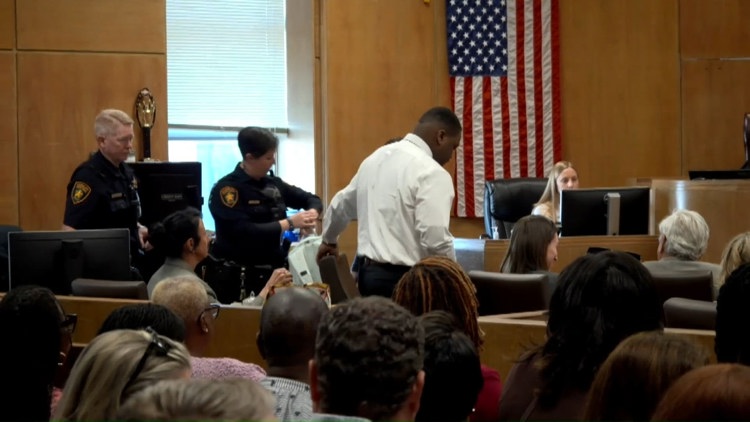
During the sentencing proceedings, Dejah’s brother, D’Shawn Hood, spoke about the emotional impact his sister’s death had on their family. His words reflected a pain that extended far beyond the courtroom, touching every part of their lives since the day they learned that Dejah would never come home.
Losing a sibling can change the way a family experiences the world. The person who once shared childhood memories, family traditions, jokes, and everyday conversations suddenly becomes someone whose presence can only be felt through photographs, stories, and the memories that loved ones hold close.
For D’Shawn, his sister was not simply the victim identified in a criminal case. She was a member of his family, someone whose life had been connected to his own through experiences that could never be recreated with anyone else.
There were undoubtedly moments when he wished he could speak with her again, tell her about something that had happened, or hear her voice during an ordinary day. Such moments can become especially painful because they are often the simplest things that grieving families miss the most.

The case may have reached a sentencing decision, but the emotional consequences of Dejah’s death would not disappear when the courtroom emptied.
A verdict can determine a legal outcome, but it cannot measure the years of love, memories, and future experiences that a family has lost.
For Dejah’s parents and siblings, the three years leading up to the sentencing may have brought a complicated mixture of emotions. There was the pain of remembering her final days, the strain of following a serious criminal case, and the uncertainty of waiting for a jury to decide the punishment.
There may also have been moments when the family simply wanted to remember Dejah as she had been before the tragedy: a young woman with her own personality, relationships, hopes, and dreams.
That distinction matters because a victim’s life should never be reduced to the circumstances of her death. Dejah deserved to be remembered for more than the crime that ended her life. She deserved the chance to grow older, discover new opportunities, develop lasting relationships, and determine for herself what kind of future she wanted.
At 18, so much remained possible. She had barely entered adulthood, and the years ahead should have offered her opportunities to learn from mistakes, celebrate achievements, and build a life that reflected her own ambitions.
Instead, those possibilities became part of the future her family would never get to witness.

For those who loved her, remembering her life means holding on to the person she was, even while confronting the painful circumstances that brought them into the courtroom.
Dejah’s name deserves to be remembered not only because of the verdict, but because she was a young woman whose life mattered long before her case made headlines.
The jury’s decision to impose the death penalty on Britton represented a significant legal milestone. However, the sentence itself does not mean that the family’s grief has ended, nor does it erase the difficult journey they have endured since 2023.
Capital cases can involve further legal proceedings and appeals, meaning that a sentencing decision may not be the final chapter of the judicial process. For families, that possibility can bring another period of uncertainty even after a major verdict has been delivered.
Still, the decision gave the case a new chapter and marked the conclusion of an important stage in the pursuit of justice.
For D’Shawn and the rest of Dejah’s loved ones, the challenge now remains deeply personal. They must continue navigating life without someone who should have had decades ahead of her, finding ways to preserve her memory while facing days that may feel heavier than others.

Grief does not follow a courtroom schedule. It can return unexpectedly through a familiar song, an old photograph, a remembered conversation, or a moment when someone instinctively reaches for the phone to call the person they have lost.
Sometimes, the hardest part is realizing how many future memories will never exist.
Dejah’s family cannot change what happened in 2023. They cannot give her back the years that were taken from her, and no sentence can make their loss disappear. What they can do is continue speaking her name, protecting her memory, and reminding others that behind every criminal case is a human life with people who loved and needed that person.
At the center of this case is an 18-year-old woman whose family will always wish they had been given more time with her.
As the legal process moves forward, Dejah Hood’s story remains a heartbreaking reminder of how one act of violence can affect an entire family for generations. Her brother’s words in court reflected the lasting emotional toll of a loss that no verdict can fully resolve.
For those who knew her, Dejah will always be more than a name in a legal record. She will remain a daughter, a sister, and a young woman whose life ended far too soon.
And as her loved ones continue to grieve, one question remains: How does a family begin to rebuild its future when the person they are fighting for is someone they can never bring home again?