PATRIOT PLATFORM FIRES BACK: Movement Sends Defiant Message to Government as It Vows ‘This Is Just the Beginning’ . hyn

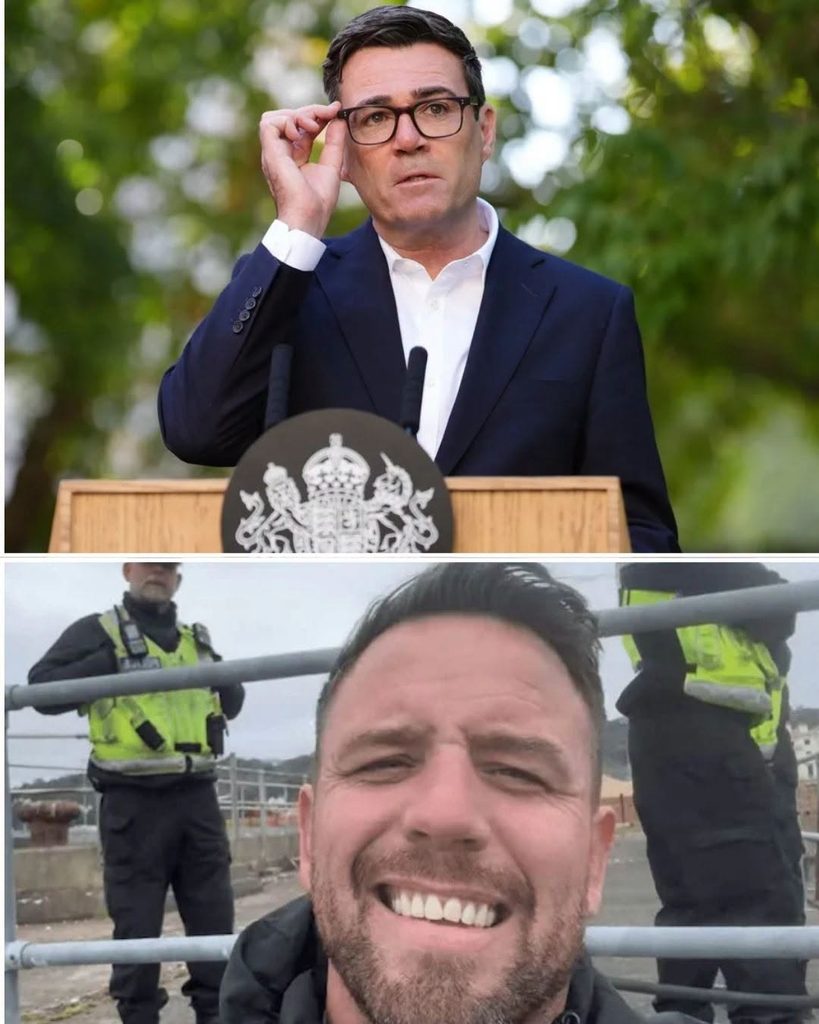
Patriot Platform has delivered a defiant new message to the Government, declaring that its campaign will continue despite founder Danny Tommo being remanded in custody ahead of his trial next year.
The anti-migration movement gathered again without Tommo as its members outlined what they called “Stage Two” of their campaign — an 18-month drive to expand, organise and investigate issues surrounding Britain’s borders and political establishment.
In a stark message directed at the Prime Minister, Home Secretary and Government, speakers insisted that Tommo’s detention would not bring their activities to an end.
“This movement will not disappear. It will grow,” the group declared.
“This is just the beginning of the Patriot Platform.”
‘Enough is enough’
At the centre of the group’s message was Britain’s continuing argument over small-boat crossings.
“This is Britain, a country with borders, a country with laws, a country where the people should feel safe,” a speaker told supporters.
The group accused successive politicians of failing to deliver promises to control Channel crossings and demanded stronger enforcement and greater accountability over border policy.
It also rejected suggestions that questioning immigration policy or demanding tougher border controls should automatically be treated as extremism.
“Asking questions is not extremism. Demanding accountability is not extremism,” the speaker said.
“And documenting what is happening is not going to stop because somebody gets arrested.”
‘Stage Two starts now’
Patriot Platform then revealed what it described as the next stage of its development.
After an initial recruitment phase, the organisation said it intended to spend the next 18 months attempting to become a more organised and active political movement.
The group pledged to research, document and investigate issues it believes politicians are failing to address.
“We will not rely on rumours. We will not rely on rage,” supporters were told.
“We will deal only in evidence.
We will research and we will document and we will investigate and we will organise.”
Where evidence of wrongdoing could be established, the group said it intended to publicise it and demand accountability from politicians.
Crucially, the speaker explicitly rejected violence.
“We are not calling for violence. We are not calling for a civil war,” the statement said.
Instead, the organisation said it wanted controlled borders, meaningful enforcement of the law and a political system in which ordinary citizens could challenge those in power.
‘You cannot silence millions’
The strongest language came as the group addressed those it believes are attempting to marginalise its supporters.
“You can ignore us. You can dismiss us. You can put labels on us,” the speaker said.
“But you cannot make the questions disappear.”
The organisation insisted that its campaign was bigger than Tommo himself and argued that his detention would not prevent supporters from continuing to organise.
“This is not about one person. It is not about one arrest,” the statement continued.
“It’s about whether ordinary British people still have the confidence to stand up and organise and demand accountability.”
The speech concluded with another declaration of intent.
“We will be watching. We will be researching. And we will be documenting.”
“Britain deserves secure borders. Britain deserves a government who cares about its own people. Britain deserves a voice.”
Tommo remains behind bars
The renewed activity comes while Tommo, whose real name is Daniel Thomas, remains in custody.
The 37-year-old founder of Patriot Platform has pleaded not guilty to criminal damage after allegedly slashing a dinghy in the English Channel on September 22 while an emergency responder was aboard.
He has also denied an allegation of failing to provide police with the PIN to his mobile phone.
A judge refused his bail application at Portsmouth Crown Court, and a provisional trial date has been set for March 1, 2027.
Tommo has therefore not been convicted of the criminal damage allegation, and claims from supporters that his prosecution is politically motivated remain their interpretation of the case rather than an established fact.
Can Patriot Platform grow without its founder?
Tommo’s absence now presents the movement with a significant test.
Patriot Platform has already demonstrated an ability to mobilise hundreds of supporters at anti-migration demonstrations.
Supporters have also continued gathering since its founder was remanded.
The commentary accompanying the latest speech claimed the organisation had doubled in size since Tommo’s detention, although no independently verified membership figures were provided to substantiate that claim.
What is clear is that the group is attempting to demonstrate publicly that its campaign is not dependent on one man.
Its latest message represents an effort to shift from demonstrations and recruitment towards a more organised campaign focused on research, documentation and political pressure.
Whether Patriot Platform can maintain that momentum during the months leading up to Tommo’s trial remains uncertain.
But the message delivered by its supporters was unmistakable: they insist they are not disappearing — and say the next stage of their campaign has only just begun.
Patriot Platform Fires Back: Movement Sends Defiant Message to Government as It Vows “This Is Just the Beginning”
Political tensions in Britain have continued to attract public attention as the Patriot Platform movement delivers a defiant message to the government, declaring that its campaign is far from over. With the statement “This Is Just the Beginning”, the movement appears determined to maintain its political activities, challenge government decisions and encourage supporters to become more actively involved in national debates. Its message reflects growing frustration among sections of the population over issues such as immigration, national identity, freedom of expression, economic difficulties and the direction of British politics.
The emergence of movements such as Patriot Platform highlights the changing nature of political participation in modern Britain. Traditional political parties are no longer the only organisations capable of influencing public debate. Social media campaigns, grassroots organisations and independent political movements can now reach large audiences, organise supporters and challenge established political narratives. These developments have created new opportunities for citizens to express their opinions and demand greater accountability from elected representatives.
The movement’s latest statement appears to be a response to criticism and opposition from government supporters and political commentators. Rather than retreating in the face of controversy, Patriot Platform has chosen to communicate a message of determination. Its supporters may interpret this position as evidence that their concerns are not being adequately addressed by mainstream politicians. They argue that ordinary citizens should have the right to question government policies and demand explanations when decisions affect their communities.
One of the central issues behind the wider political debate is immigration. Over recent years, immigration has become a major subject of discussion throughout the United Kingdom. Concerns about irregular migration, small-boat crossings, border security and the accommodation of asylum seekers have placed considerable pressure on successive governments. Many people believe that immigration policies should be more effective and that the government must demonstrate greater control over the country’s borders.
Supporters of stricter immigration policies argue that national sovereignty is an essential part of democracy. They believe that the British government should have the authority to determine who enters the country, establish clear immigration requirements and ensure that the rules are properly enforced. They also argue that public confidence in the political system may decline when citizens believe that important government promises are not being fulfilled.
However, immigration is a complicated issue involving legal, economic and humanitarian considerations. Migrants contribute to important sectors of the British economy, including healthcare, construction, agriculture and hospitality. At the same time, irregular migration and lengthy asylum procedures can create administrative and financial challenges. Therefore, effective policies must distinguish between different categories of migrants while ensuring that national laws and international obligations are respected.
Another important issue is freedom of expression. Political movements frequently argue that their supporters should be able to express controversial opinions without facing unfair treatment or unnecessary restrictions. In a democratic society, the right to criticise government policies is fundamental. Citizens should be able to organise peaceful demonstrations, participate in public discussions and question decisions made by elected officials.
Nevertheless, freedom of expression also comes with responsibilities. Political organisations should communicate their messages without encouraging violence, intimidation or discrimination. Public debate becomes more constructive when disagreements are addressed through evidence, respectful discussion and democratic participation. Governments, meanwhile, should ensure that laws are applied fairly and consistently, regardless of an individual’s political beliefs.
Economic dissatisfaction is another factor that may contribute to the popularity of protest movements. Many British households continue to face concerns about the cost of living, housing affordability, energy bills and access to public services. For younger generations, finding secure employment and purchasing a home can be particularly challenging. When people feel that their economic circumstances are not improving, they may become increasingly interested in political organisations promising significant changes.
The government therefore faces the challenge of responding to public frustration with practical policies rather than relying exclusively on political communication. Improving living standards requires long-term investment in housing, healthcare, education, transport and employment opportunities. These issues affect people’s everyday lives and can have a significant influence on public confidence in political institutions.
Patriot Platform’s declaration that this is only the beginning also raises questions about the future development of grassroots political movements. If the organisation succeeds in maintaining public interest, it may attempt to expand its activities through demonstrations, online campaigns, public meetings and cooperation with other organisations. Such activities could increase its visibility and bring additional attention to the issues it wishes to highlight.
However, building a sustainable political movement requires more than attracting attention through dramatic statements. Organisations need clear objectives, credible leadership, transparent funding and realistic proposals. They must also demonstrate how their ideas could be translated into practical policies. Without these elements, public enthusiasm may prove temporary, particularly when supporters begin demanding concrete results.
The government’s response to such movements is equally important. In a democratic country, political leaders should recognise that criticism is a normal part of public life. Dismissing all opposition as unreasonable can deepen divisions and increase distrust. Instead, ministers should listen to legitimate concerns, provide accurate information and explain the reasoning behind controversial decisions.
At the same time, the government has a responsibility to maintain public order and protect the rights of everyone living in the country. Peaceful political participation should be protected, while unlawful threats, violence and intimidation should be dealt with according to the law. Maintaining this balance is essential to protecting democratic institutions and ensuring that political disagreements do not develop into wider social conflict.
The role of the media should also be considered. Political movements often use dramatic headlines and powerful slogans to attract attention. While such communication can increase public engagement, it does not always provide a complete picture of the issues involved. Journalists and commentators should examine the movement’s actual statements, policies and activities rather than relying exclusively on emotional descriptions. Audiences should also distinguish between verified information, political opinions and unconfirmed claims.
Furthermore, social media has transformed the relationship between political organisations and the public. Platforms such as Facebook, YouTube and X allow movements to distribute messages quickly, communicate directly with supporters and organise campaigns without depending entirely on traditional media organisations. However, online communication can also spread misleading information and intensify political divisions. For this reason, citizens should verify information carefully and consider different perspectives before forming conclusions.
Ultimately, the future of Patriot Platform will depend on its ability to turn its message of resistance into meaningful political engagement. A declaration that a campaign is only beginning may encourage supporters, but its long-term influence will depend on its organisation, public support and ability to present credible solutions. The government, meanwhile, must recognise that public frustration cannot simply be ignored. Issues such as immigration, economic inequality, national identity and democratic accountability deserve serious consideration.
In conclusion, Patriot Platform’s defiant message, “This Is Just the Beginning”, reflects the determination of a political movement to continue expressing its views and challenging government policies. Its statement also illustrates the growing importance of grassroots political activity in modern Britain. However, the strength of any democratic movement should ultimately be measured by the quality of its arguments, the transparency of its actions and its commitment to peaceful participation. Britain needs open political debate in which citizens can question those in power while respecting the rights and freedoms of others. Whether Patriot Platform develops into a significant political force remains to be seen, but its message highlights the continuing demand for accountability, representation and meaningful discussion in British public life.