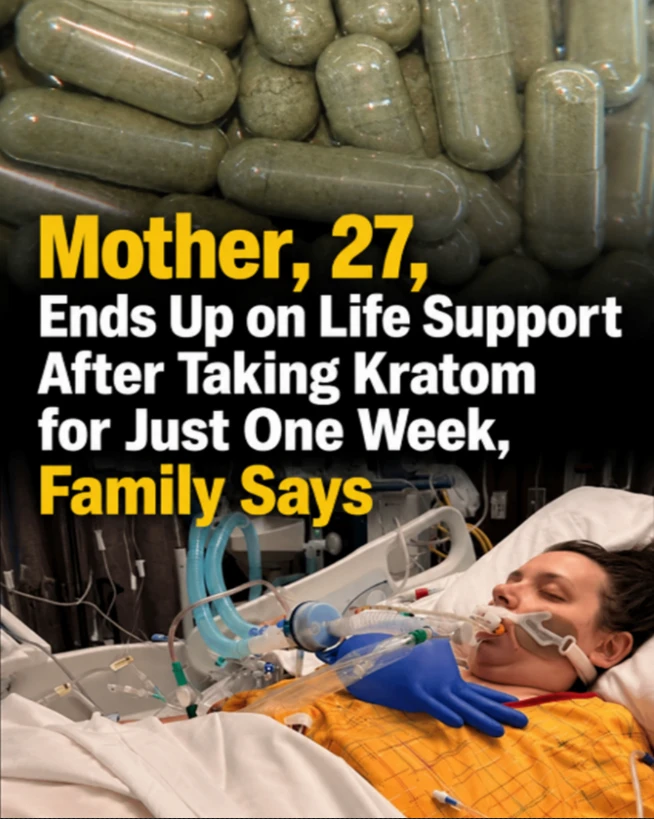
Mother, 27, Ends Up on Life Support After Taking Kratom for Just One Week, Family Says.946

What began as an attempt to relieve persistent leg pain turned into a medical emergency for 27-year-old Arizona mother Amanda Goodsell. According to her family, Amanda had been taking an over-the-counter kratom supplement for less than a week when her husband found her unresponsive in their bed, barely breathing and showing signs of a life-threatening crisis. She would soon be placed on life support, with doctors warning that her heart was functioning at a dangerously low level and that she might need a transplant.
Amanda, a mother of twins, had never used kratom before. Her husband, Mike Goodsell, said she had been dealing with ongoing pain in her leg when he suggested she try the herbal supplement. Kratom products are widely available in some parts of the United States and can sometimes be purchased at convenience stores and gas stations. That easy availability contributed to Mike’s belief that the product was relatively harmless.
“Everybody knew what kratom was,” Mike recalled. His thinking at the time was simple: if the product could legally be purchased at a gas station, he did not expect it to put his wife in danger.
Amanda purchased kratom in gummy form and began taking it for her pain. For several days, nothing apparently suggested to the couple that a catastrophic medical emergency was approaching. But after nearly a week, Mike woke to a terrifying scene.
Amanda was unresponsive beside him.
Mike said her skin appeared red, her lips were blue and she was foaming at the mouth. He immediately tried to wake her, but she was not responding normally. For a moment, he believed his 27-year-old wife had already died.
“You freak out a little bit. I thought she was gone,” he recalled.
Amanda was rushed to the hospital, where the seriousness of her condition quickly became clear. Doctors placed her on a ventilator because she needed assistance breathing. According to Mike, physicians also administered multiple medications in an effort to support her failing heart.

Her heart function had reportedly fallen to around 15%.
Doctors diagnosed Amanda with heart failure, and her condition was considered so serious that the family was told she might need a heart transplant. For Mike, what had started with an easily purchased supplement for leg pain had suddenly become a fight to keep his wife alive.
The possibility of a transplant was especially frightening. Amanda was only 27, had young children waiting for her and had apparently been functioning normally shortly before the emergency. Now machines and medications were helping keep her alive while doctors tried to determine whether her heart could recover.
For approximately two weeks, the family lived with that uncertainty.
Then Amanda’s condition began moving in a direction they desperately hoped for.
Mike described what happened next as a remarkable turnaround. Her heart function began improving enough that doctors eventually determined she would not need a transplant.
“Her heart kind of did a miracle turnaround,” he said, describing the relief he felt when physicians told the family that transplantation was no longer necessary.
Amanda ultimately survived and was able to return home, but her family says the medical consequences have not simply disappeared. According to the report, doctors have told her that she will need heart medication for the rest of her life and will require an implanted defibrillator.

The family believes kratom played a role in what happened, although determining causation in an individual medical case can be complicated. The manufacturer of the product Amanda reportedly used had not responded to a request for comment at the time of the original report.
The case has nevertheless renewed attention around kratom and the public perception that products sold over the counter are automatically low-risk.
Kratom comes from the leaves of Mitragyna speciosa, a tree native to Southeast Asia. Products containing kratom are marketed and consumed in various forms, including powders, capsules, extracts and gummies. Some people use them in attempts to manage pain, anxiety or depression, while others have used kratom to manage symptoms associated with opioid withdrawal.
But “natural” does not necessarily mean harmless.
Kratom contains biologically active compounds, most notably mitragynine and 7-hydroxymitragynine. Depending on the amount and formulation, kratom can produce effects that overlap in some respects with opioids. Potential adverse effects and interactions are a major reason health authorities have warned consumers about certain kratom products.
Serious medical events involving kratom have been reported, including seizures, liver injury and cardiovascular complications. At higher doses or with certain concentrated products, risks may increase. Other substances or medications taken at the same time can also complicate individual cases.
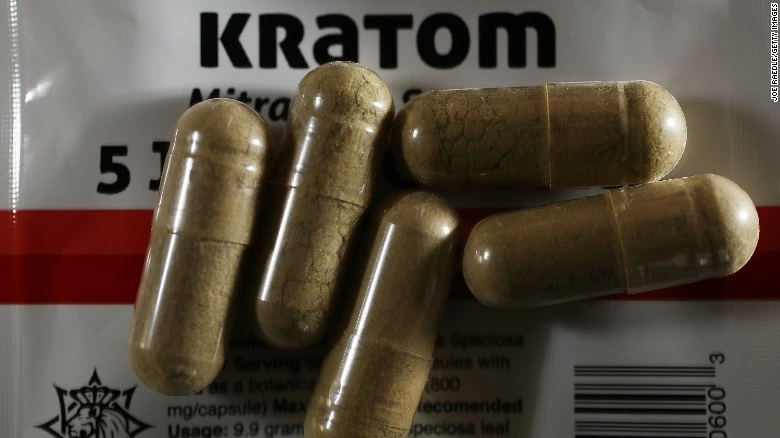
Another issue is that products marketed under the broad label of “kratom” are not necessarily identical. Their concentrations and formulations can vary significantly. This makes the assumption that every kratom gummy, powder or extract carries the same strength or risk particularly problematic.
In Arizona, where Amanda lives, kratom is legal but subject to regulation through the state’s Kratom Consumer Protection Act. Legal availability, however, does not mean a product is appropriate for every individual or that serious adverse reactions cannot occur.
Amanda’s story is particularly striking because of how quickly her family says everything changed.
She was not described as a longtime kratom user. According to Mike, she had never taken it before. She began using the gummies because of leg pain, and within roughly a week she was found unresponsive and subsequently placed on life support.
For Mike, the experience completely changed his perception of the supplement.
“I say give it up,” he said. “It’s not really worth it, to be honest with you.”
He is now warning others not to make the same assumption he did—that because something can be purchased easily from a gas station or convenience store, it cannot cause serious harm.
Amanda’s recovery has also brought a new reality for the family. Surviving the immediate crisis did not mean returning instantly to life as it existed before. She continues recovering at home while facing ongoing cardiac care, medication and the prospect of living with a defibrillator.
The financial impact has added another burden. A GoFundMe was established to assist the family with medical expenses as Amanda continues her recovery.
Her case does not establish that every person who uses kratom will experience the same reaction, and serious outcomes appear to be uncommon relative to overall use. It also remains important to distinguish the family’s belief about what caused Amanda’s heart failure from a definitive determination of causation based solely on the information publicly available.
But her experience highlights a broader issue: supplements and other products available without a prescription can still contain powerful active compounds, carry risks, interact with medications or affect people differently.
For Amanda Goodsell, that warning became painfully personal. A 27-year-old mother looking for relief from leg pain went from taking an easily accessible gummy to being connected to a ventilator while doctors discussed the possibility of replacing her heart.
She survived, and the transplant doctors initially feared she would need was ultimately avoided. But according to her family, the consequences will remain with her for the rest of her life—and Mike now hopes their experience will make others think twice before assuming that something sold over the counter must also be safe.