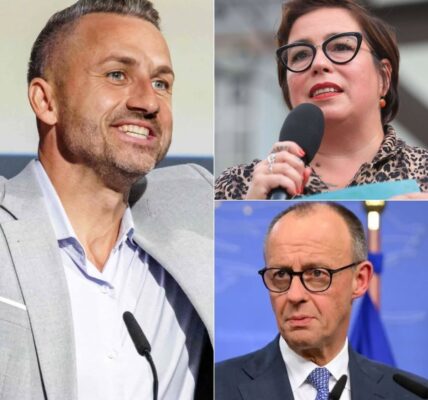
Andy Burnham has been accused of ‘betraying’ the British people with his post-Brexit ‘reset’ (Image: Getty)
GB News turned tense as host Ben Leo clashed with former Labour MP Stephen Pound on Friday. The two were on hand to discuss Andy Burnham’s ‘Brexit betrayal’ after the prime minister announced new plans to establish closer ties between the UK and the EU. Speaking at a summit in Brussels, the Labour leader also revealed that a post-Brexit ‘reset’ deal had been reached, covering food and drink, energy, and the youth experience scheme. Reflecting on Burnham’s Brexit U-turn, Leo asked Pound, “Are you embarrassed of your party today? The Labour Party – they don’t really care much for democracy, do they?”
“I’ll tell you the truth, I’ve never been so proud of a British prime minister for a damn long time as I’m proud of Andy Burnham today,” Pound replied, causing the presenter to scoff.
“Andy Burnham has put the country first,” the former MP continued. “He’s a liar!” Leo interrupted. Noting that Burnham is “not a liar,” Pound added: “Don’t throw that word around”.
“Stephen, before I allow you to continue,” Leo interjected, “Let me just ask you very quickly… months ago, Andy Burnham said he would not entertain rejoining the EU or any of that because it would be divisive, and it’s an argument that’s been and gone. What’s changed since then?”
“What’s changed is there is no way; there is not a snowball in hell’s chance of us rejoining the European Union as it was in 2016. That ship has sailed; it simply doesn’t apply,” Pound explained.
Stating that Burnham had “completed a negotiation that Rishi Sunak started” to “make life better for British traders, British farmers and British business people,” Pound argued that the European Union would never accept the UK back, or offer the same terms as it did a decade ago, anyway.
Pound reiterated that he was “proud” of Burnham, before Leo pointed out, “Half the nation don’t think that, Stephen. Half the nation feel betrayed; they feel used.” The GB News presenter concluded by reading out a months-old speech made by Burnham in Makerfield in which he said he would respect the results of the 2016 referendum.
Following the debate, viewers flocked to X, where many voiced their outrage over Burnham’s “betrayal”. “This is about as undemocratic as it gets. This is a dictatorship. We voted OUT. Now, we’re back in without ANY vote or consideration for our rights?” tweeted one.
“He’s a traitor to the public and has no right to go discussing anything on our behalf when the public has voted against it. How dare he go against democracy like that and tell us he’s done it for our benefit; he must think we’re stupid. Many people are angry about this treachery,” fumed a second.
“He has not put the country first, just his own outdated ideology. #LeaveMeantLeave,” mused a third.
The atmosphere on GB News was reportedly tense as Andy Burnham’s position on Brexit sparked another heated political confrontation, with viewers expressing anger and disbelief over what critics described as a betrayal of the promises made to the British public. The discussion quickly became a flashpoint in the wider debate about Britain’s relationship with the European Union, reopening political divisions that many had hoped were finally beginning to settle.
For millions of people who voted to leave the European Union in 2016, Brexit was about more than trade agreements, immigration policies or Britain’s position on the international stage. It was a democratic decision about national sovereignty, parliamentary accountability and the right of the British public to determine the country’s future. Consequently, any suggestion that Britain should move closer to the EU, particularly if it involves revisiting fundamental aspects of Brexit, is likely to provoke strong reactions.
Burnham has increasingly found himself at the centre of this political argument. His comments and reported ambitions regarding Britain’s future relationship with Europe have attracted criticism from opponents who believe that the country should concentrate on making Brexit work rather than reopening old arguments. Supporters of closer European cooperation, however, argue that the economic and diplomatic realities have changed and that Britain must be prepared to reconsider its approach where necessary.
The GB News confrontation illustrated just how emotionally charged this issue remains. Viewers watching the discussion were confronted with two sharply contrasting interpretations of Britain’s political future. On one side was the argument that closer cooperation with Brussels could improve economic opportunities, reduce unnecessary barriers and strengthen Britain’s influence in Europe. On the other was the conviction that reversing Brexit commitments would undermine democracy and disregard the clear expectations of millions of voters.
The reaction attributed to viewers reflected the continuing frustration among those who believe that politicians have not properly respected the result of the 2016 referendum. For these voters, the prospect of renewed European integration raises uncomfortable questions about whether the political establishment has genuinely accepted the outcome of one of the most significant democratic decisions in modern British history.
Critics of Burnham argue that politicians should be particularly careful when discussing changes to Britain’s relationship with the EU. They point out that the referendum was followed by years of parliamentary disputes, political instability and difficult negotiations. The eventual departure from the European Union represented a major constitutional change, and reopening the question could create another prolonged period of uncertainty.
There is also a significant political dimension to the controversy. Reform UK, under Nigel Farage, has made defending Brexit a central part of its political identity. Farage has repeatedly presented himself as a defender of voters who believe that their decision to leave the EU has not been fully implemented. Any prominent Labour figure perceived to be advocating a return towards European integration could provide Reform with an opportunity to strengthen that message.
For Burnham, the challenge is therefore considerably bigger than defending an individual policy position. He must explain how any proposed changes would benefit ordinary households, businesses and communities while addressing the concerns of people who remain firmly committed to Brexit. Simply presenting closer European relations as an economic necessity may not be enough to persuade voters who see the issue primarily through the lens of democratic accountability.
The economic argument is particularly complicated. Businesses have experienced additional administrative requirements and trading difficulties since Britain left the single market and customs union. Some companies have called for improved arrangements with European partners, arguing that reducing unnecessary barriers would help exporters and encourage investment.
However, supporters of Brexit maintain that Britain must use its independence to develop a more flexible economic strategy. They argue that the country should pursue global trade opportunities, reform domestic regulations and improve productivity rather than become increasingly dependent on European institutions. From this perspective, closer cooperation does not necessarily require surrendering political independence.
This distinction is central to the debate surrounding Burnham. There is a considerable difference between negotiating practical improvements with European governments and seeking arrangements that could effectively recreate elements of EU membership. Politicians who fail to explain that distinction risk creating suspicion among voters who fear that apparently limited proposals could eventually lead to a much wider reversal of Brexit.
Immigration is another issue that could make the controversy considerably more difficult. Freedom of movement was one of the most important and controversial features of Britain’s previous EU membership. For many Leave voters, ending automatic freedom of movement was a fundamental reason for supporting Brexit. Any suggestion that Britain could restore similar arrangements would therefore encounter substantial opposition.
Those advocating closer relations with Europe may argue that carefully negotiated mobility arrangements could benefit universities, employers and young people. Yet opponents would immediately question what safeguards would exist and whether the government could maintain meaningful control over immigration policy.
The political consequences could extend well beyond Labour’s internal discussions. The party faces the difficult task of maintaining support among voters with very different attitudes towards Brexit. Some Labour supporters favour closer European integration, while others voted Leave and remain deeply suspicious of attempts to reverse the referendum result.
Burnham would therefore need to demonstrate that his approach reflects the interests of the country rather than the preferences of a particular political faction. If voters begin to believe that Labour is prioritising its relationship with Brussels over domestic concerns, the party could face serious difficulties in communities where Brexit remains an important political dividing line.
There are also questions about the practical consequences of changing Britain’s relationship with the EU. Negotiating new agreements would require considerable diplomatic effort, parliamentary scrutiny and compromises on both sides. Brussels would have its own priorities and would not necessarily accept every proposal put forward by British politicians.
The assumption that Britain could simply obtain the economic advantages of EU membership without accepting any corresponding responsibilities is unlikely to survive serious negotiations. Any substantial agreement would involve difficult decisions about regulation, financial contributions, enforcement and the role of European institutions.
This is precisely why the GB News debate matters beyond the immediate confrontation. It demonstrates that Brexit remains an unresolved political argument in the minds of many voters, even though Britain formally left the European Union several years ago.
For viewers who feel that politicians are attempting to revisit the referendum result without a fresh democratic mandate, the controversy reinforces their concerns about the direction of British politics. They want clear answers about what any proposed changes would mean and whether the government intends to preserve the independence secured through Brexit.
Meanwhile, those who believe that Britain should develop a closer relationship with Europe argue that refusing to reconsider existing arrangements would be equally irresponsible. They point to economic pressures, international competition and changing geopolitical circumstances as reasons why the country must remain pragmatic.
Ultimately, Burnham’s challenge is to convince the public that his position offers genuine benefits without undermining democratic trust. That will require more than political speeches or appearances on television. It will require detailed proposals, transparent explanations and a willingness to acknowledge the legitimate concerns of voters who supported leaving the EU.
The anger surrounding the GB News discussion also provides a warning to the wider Labour leadership. Brexit remains an issue capable of transforming political fortunes, particularly when voters believe that their democratic choices are being ignored. A policy that appears attractive to political insiders may become a serious electoral liability if it is presented without sufficient public consultation.
Nigel Farage and Reform UK will almost certainly seek to capitalise on any perception that Labour wants to reverse Britain’s departure from the European Union. For Reform, the issue offers an opportunity to portray itself as the party defending national sovereignty against what it describes as an establishment determined to restore closer European control.
Whether Burnham can overcome these concerns remains uncertain. What is clear is that the argument over Brexit is far from finished. The confrontation on GB News has once again demonstrated how quickly discussions about Britain’s future relationship with Europe can become deeply personal and politically explosive.
For many viewers, the central question is straightforward: should politicians concentrate on delivering the opportunities promised by Brexit, or should Britain move towards a closer relationship with the European Union? Until that question receives a convincing answer, every new intervention from Burnham is likely to attract intense scrutiny, fierce criticism and another round of political controversy.