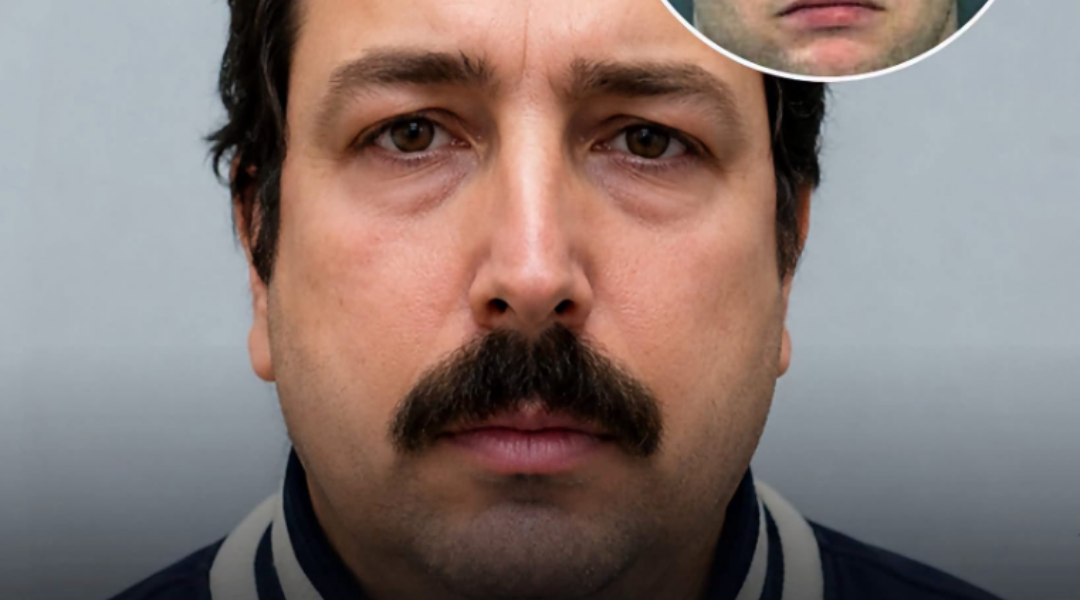
Inmate Sentenced to Life After Beating Convicted Sex Offender to Death in Prison.933

A 26-year-old inmate has been sentenced to life in prison, with a minimum term of 35 years, after being found guilty of murdering convicted sex offender Robert Coello in a brutal attack inside prison. Coello, 44, was only three years away from completing his sentence when he was beaten and repeatedly stamped on so violently that prosecutors said the tread pattern from the attacker’s boots was left imprinted on his body.

The man convicted of the killing, Lee Foye, launched the attack after Coello reportedly spoke openly about his child sex offenses during a group therapy session. According to evidence presented during the case, Foye had previously made no secret of his hatred toward people convicted of sexual crimes. Witnesses recalled him expressing extreme views about sex offenders and allegedly saying that people like Coello “should be put down.”
Prosecutors said the killing was not the result of a sudden argument that unexpectedly became violent. Instead, they argued that Foye deliberately targeted Coello and entered his cell with the intention of carrying out a serious assault.
Once inside, Foye attacked the 44-year-old using his fists and heavy prison boots. The violence continued as Coello was repeatedly punched and stamped on around the head and body. Investigators later described the injuries as devastating.
Coello suffered multiple fractures to his face along with a catastrophic brain injury. Despite attempts to save him, the damage proved fatal.
One of the most disturbing details presented during the investigation was the force with which Foye allegedly stamped on his victim. Prosecutors said markings from the tread of his footwear were visible on Coello’s body, demonstrating the severity and repeated nature of the attack.
The circumstances leading up to the killing became a central part of the prosecution’s case.
Coello was being held at HMP Grendon, a prison known for operating a therapeutic-community model in which prisoners take part in structured group sessions and are encouraged to discuss their offending behavior. During one of those sessions, Coello reportedly described the sexual offenses for which he had been convicted.
That disclosure appears to have intensified Foye’s hostility toward him.
Witnesses told investigators that Foye had repeatedly expressed disgust toward sex offenders before the attack. His comments were not described as isolated remarks made in the heat of the moment. Prosecutors argued that they demonstrated a longer-standing desire to harm someone convicted of such crimes.
Even more significantly, investigators said Foye had deliberately sought a transfer to HMP Grendon because he wanted access to a convicted sex offender whom he could target.
That allegation dramatically changed how the prosecution presented the killing.
Rather than portraying the violence as a spontaneous prison confrontation, prosecutors argued that Foye had effectively placed himself in an environment where he knew he was likely to encounter prisoners convicted of sexual offenses. They said his previous statements, his actions before the attack and the extreme violence used against Coello all pointed toward deliberate intent.
When Foye entered Coello’s cell, prosecutors said there was little the victim could do to escape.
The attack involved punches followed by repeated stamping with heavy boots. Coello’s head and face suffered particularly severe injuries. Medical evidence later confirmed multiple facial fractures and massive trauma to the brain.
The fatal assault came at a point when Coello had approximately three years remaining before he was expected to be released.
Whatever the nature of his original offenses, the court made clear that his conviction did not give another prisoner the right to act as judge, jury and executioner. The murder case therefore centered not on sympathy for Coello’s past conduct, but on whether Foye deliberately took a human life.
Following the evidence, Foye was found guilty of murder.
The court subsequently imposed a life sentence and ordered that he serve at least 35 years before he can even be considered for release. A minimum term does not guarantee that he will be freed once those years have passed. It means only that he may become eligible for parole consideration at that point. Release would depend on whether authorities determine that he no longer presents an unacceptable danger to the public.
The sentence reflects both the brutality of the killing and the prosecution’s argument that the attack was planned rather than impulsive.
Cases like this also highlight one of the difficult realities faced by prison authorities. People convicted of serious and deeply disturbing crimes must still be protected while serving their sentences. Sexual offenders, particularly those convicted of crimes against children, can be especially vulnerable to attacks from other prisoners.
Prison officials must therefore balance rehabilitation, therapy and security while managing inmates who may hold intense hostility toward one another.
At therapeutic prisons such as HMP Grendon, that challenge can become even more complicated because prisoners are encouraged to discuss the crimes that brought them into custody. The purpose of those sessions is to force offenders to confront their behavior and understand the harm they caused. But such disclosures can also create tensions if other inmates react with anger or violence.
In this case, what was supposed to be part of a therapeutic process allegedly became the catalyst for a fatal attack.
Witness accounts suggested that Foye’s hatred of sex offenders was already well established before Coello discussed his crimes. His comments that such offenders should be “put down” became particularly significant when investigators examined his motive after the killing.
The claim that he had intentionally pursued a transfer to HMP Grendon in order to find a sex offender to attack added an even more troubling dimension.
If prosecutors’ account is accepted, Coello was not simply unlucky enough to encounter another inmate during a sudden argument. He became the target of someone who had already decided that people with his type of conviction deserved violence.
The attack was ultimately so severe that medical intervention could not reverse the damage.
For prison staff, investigators and the courts, the case became an example of the consequences of allowing personal hatred to turn into vigilante punishment inside the justice system. A criminal sentence is imposed by a court. Another prisoner cannot decide that a sentence is insufficient and impose a death sentence of his own.
Foye will now spend decades behind bars because of that decision.
At just 26 years old when the case was prosecuted, his minimum 35-year term means he will be well into later adulthood before he can potentially seek parole. Even then, there is no guarantee that he will ever be released.
Robert Coello, meanwhile, never reached the end of the sentence he had originally been serving.
With just three years remaining before his expected release, he instead died inside his prison cell after an assault prosecutors described as deliberate, prolonged and extraordinarily violent.
The case leaves behind an unsettling question about how far hatred can escalate inside prison walls. Foye reportedly entered HMP Grendon already expressing strong hostility toward sex offenders. After hearing Coello openly discuss his crimes, prosecutors say that hostility turned into action—and within moments, one inmate was dead while another had effectively exchanged his existing sentence for the possibility of spending the rest of his life behind bars.