
MISSING FOR 17 MONTHS, A UTAH TEEN REACHED SOMEONE WHO HELPED BRING HER TO SAFETY
For about 17 months, a Utah family lived with the uncertainty of a missing child. Then an online conversation helped authorities find the teenager alive in Oregon. The girl, identified publicly as Kylie, was 17 when law enforcement recovered her on November 1, 2026. A 39-year-old man, Adam Hunter Harmel, now faces a federal charge accusing him of transporting a minor across state lines with the intent to engage in criminal sexual activity. Behind that allegation is a teenager’s account of confinement, fear, and abuse—and a disclosure that finally reached someone able to help.
The FBI confirmed her recovery in a November 1 announcement, saying Oregon authorities had worked with investigators in Salt Lake City and the Rich County Sheriff’s Office. She had been reported missing from Garden City, Utah, in May 2025. The agency said investigators had pursued leads for more than a year, including information from other states and countries. Her disappearance had remained an active investigation, even though, according to court-document reporting, she later told an online acquaintance that she believed police were no longer searching for her.
That reported belief is one of the most painful details in the case. It describes what she said she understood about her situation, rather than the actual status of the search. Outside the home where she allegedly was being held, investigators were still working. The distance between those two realities underscores how little a person in isolation may know about efforts to find them. In this case, the conversation that reached authorities helped close that distance and turn a possible location into a recovery.

She reportedly believed the search had ended, but investigators had never stopped pursuing answers.
According to federal authorities, Harmel met the teenager through a social media application in May 2025. Court-document reporting says he offered money to help her travel to Oregon and drove to Utah to collect her. Investigators allege that he discarded her cellphone in a river during the journey. Upon reaching his residence, she said, he told her she could not leave. These allegations remain subject to the court process, but they describe a stark change from an online invitation to an alleged situation in which her freedom was restricted.
The criminal allegations include repeated physical and sexual abuse. Reporting on the court documents also describes a knife allegedly kept near the bed to discourage escape. Another allegation concerns an effort to alter her appearance so she would be harder to identify. Those details can be understood without repeating graphic descriptions. The central issue is the alleged exercise of control over a child who was away from her family and, by her account, unable to leave. Nothing about an initial online conversation or journey diminishes the seriousness of those allegations.
The surviving public account does not provide a complete record of her daily life during those months. It does not establish every opportunity she had to communicate, every threat she faced, or every decision she made to get through the situation. Filling those spaces with invented dialogue would obscure rather than explain her experience. What the available reporting does describe is a later connection with another young person online, followed by a disclosure that she was missing and being held against her will.
A parent reported that their child had met the teenager through the game Among Us, according to local reporting on the affidavit. Their communication later moved to another messaging application. Eventually, the missing girl shared information about her identity and circumstances, including reports about her disappearance. The other child’s parent contacted authorities. An exchange that began between young people online had become information investigators could act upon. The parent’s decision to take the disclosure seriously was a crucial step in bringing it to the FBI’s attention.
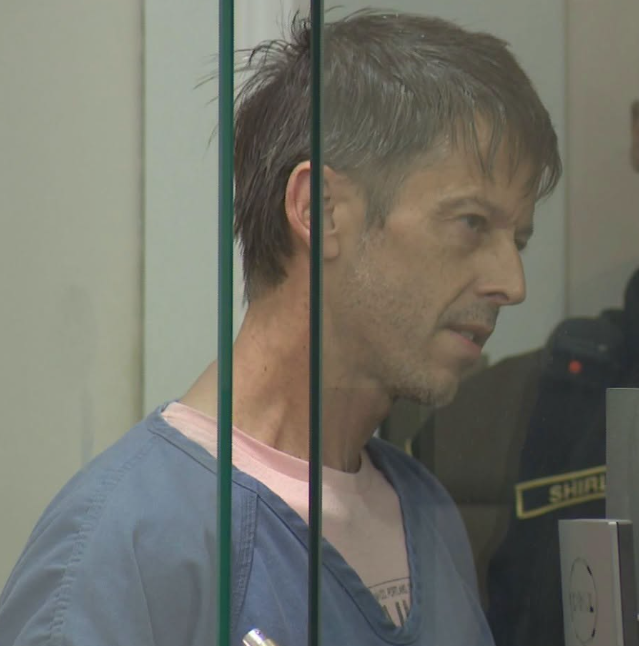
An online conversation became a lifeline when someone listened and brought her disclosure to authorities.
On November 1, federal agents observed a video call with the teenager, according to reporting on the court records. During that conversation, she described her circumstances and displayed a knife she said belonged to Harmel. The call gave investigators information they could assess alongside the tip. It was part of a sequence involving the young person she had contacted, a concerned parent, and law enforcement agencies working across state lines. Her disclosure did not remain an isolated message on a screen.
Authorities subsequently recovered her in Oregon. Local reporting says Harmel was arrested during a traffic stop in Ontario, roughly 30 miles from the Huntington residence associated with the allegations. The teenager was taken for medical evaluation, and investigators collected evidence from the home. The FBI’s official announcement places her recovery on November 1; some retellings confuse the rescue date with later announcements. Keeping that chronology clear matters because the investigation, recovery, charging decision, and public reporting occurred across several closely spaced days.
Federal authorities announced that Harmel had been charged in a complaint filed November 2 in Utah. The Justice Department said he made an initial court appearance November 4 in Boise, Idaho. The announced charge concerns transporting a minor with the intent to engage in criminal sexual activity. It should not be replaced with an assumed list of charges based on descriptions circulating online. A complaint contains allegations, and Harmel is presumed innocent unless proven guilty beyond a reasonable doubt. Investigators and prosecutors must establish their case through evidence.
The Justice Department also described an investigation into alleged grooming through gaming and social media platforms, including environments used by members of nihilistic violent extremist groups. That information raises broader questions about exploitation, but it does not establish every claim circulating about a particular network or Harmel’s alleged affiliations. The documented allegations should remain distinct from speculation. The teenager’s experience also should not be reduced to a sensational label when the concrete facts concern her disappearance, alleged abuse, disclosure, and recovery.

Being found brought her to safety; what comes next deserves patience, privacy, and care.
For her family, learning she was alive ended one devastating uncertainty. It did not erase the missing months or answer every question. A public announcement cannot capture what a reunion means to the people involved, and no imagined scene is needed to make that moment matter. Their conversations, emotions, and decisions belong to them. They should have space to determine what they want to share, without pressure to provide a complete account simply because the case has attracted attention.
As the legal proceedings continue, the teenager deserves to be seen as more than the allegations in a criminal file. Her future should include room for ordinary interests, relationships, and choices that have nothing to do with public curiosity. The case will require evidence, careful reporting, and accountability through the courts. Her life requires something equally important: recognition that she is a person whose story remains her own. After about 17 months missing, she was found alive because her disclosure reached people who acted—and she now deserves the opportunity to move forward beyond the headlines.