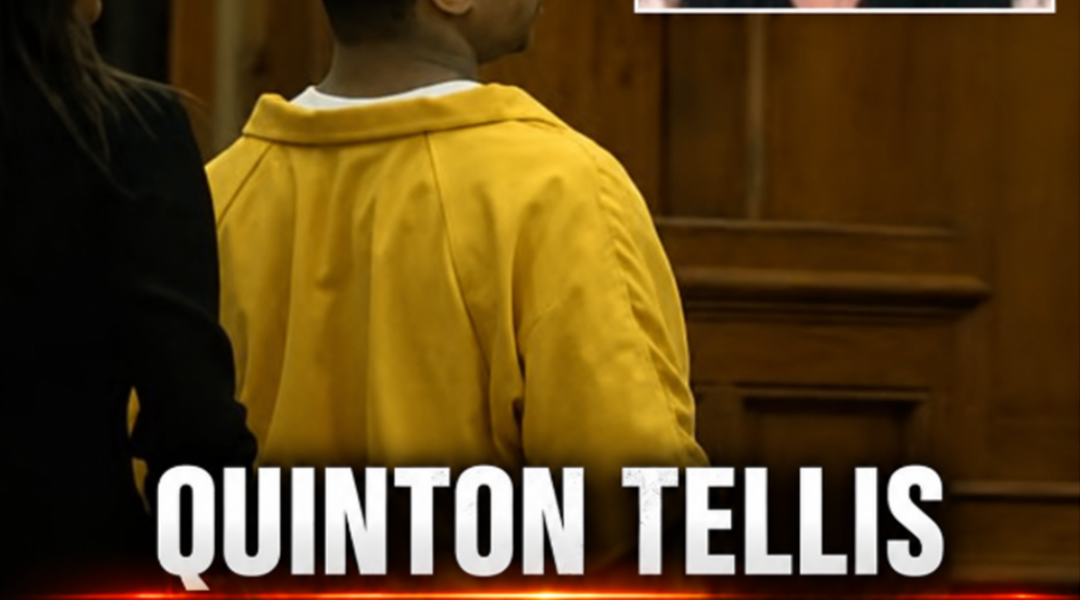
Quinton Tellis Found Not Guilty in 2015 Killing of ULM International Student Ming-Chen Hsiao.954

More than a decade after international student Ming-Chen “Mandy” Hsiao was found killed inside her Louisiana apartment, the long-running case against Mississippi native Quinton Tellis has reached a dramatic conclusion. On July 23, 2026, Judge Larry Jefferson found Tellis not guilty of second-degree murder, ending a bench trial that had stretched across months and a prosecution that had been delayed for years. Tellis had waived his right to a jury, leaving the final decision entirely in the judge’s hands.
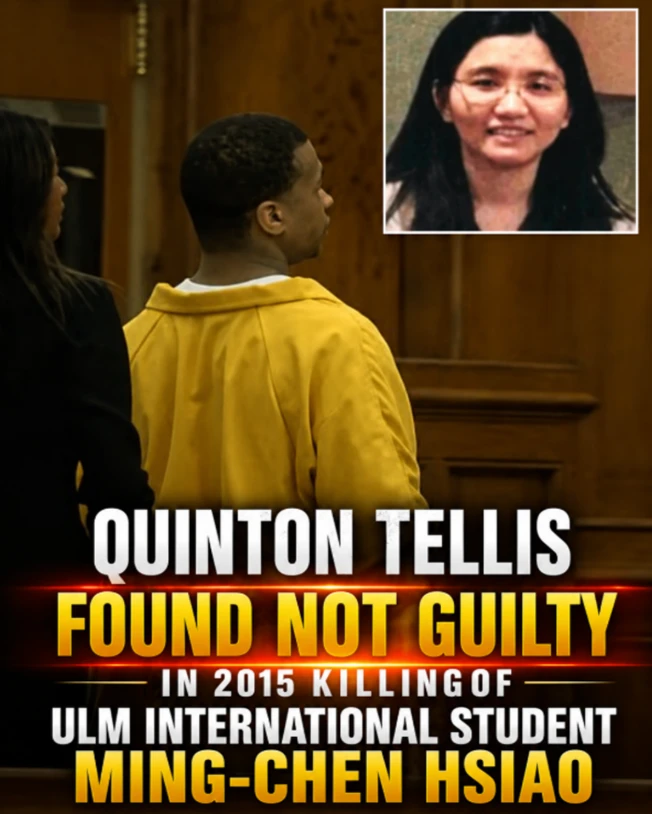
Hsiao was an international student who attended the University of Louisiana Monroe and was known to friends as Mandy. Authorities said she was killed inside her Monroe apartment around late July 2015, but her body was not discovered until August 8. Court records describe an extremely violent death: Hsiao had been tortured and stabbed. The long period before her body was discovered would later become important because decomposition complicated investigators’ ability to recover and interpret forensic evidence.
Investigators eventually turned their attention toward Tellis. One major reason was his connection to Hsiao’s finances after her death. Louisiana appellate court records state that Tellis used Hsiao’s debit card at an ATM, accessed her accounts and withdrew hundreds of dollars. He was arrested in August 2015 and later pleaded guilty to unauthorized use of an access card, receiving a lengthy prison sentence as a habitual offender. But possessing or using the victim’s card was not the same as proving he had killed her, and that distinction would become central to his murder trial.
Prosecutors developed a much broader theory. They alleged that Tellis wanted access to Hsiao’s money and killed her after attempting to obtain her banking information. At the 2026 trial, the state relied on a combination of financial records, cellphone evidence, surveillance information and witness testimony in an effort to construct a timeline connecting Tellis to Hsiao around the time she died.

The prosecution also presented testimony it believed placed Tellis near Hsiao’s apartment. Investigators highlighted inconsistencies they said appeared in his accounts of what happened, while prosecutors emphasized his admitted use of Hsiao’s access card after her death. From the state’s perspective, those pieces were not isolated coincidences but parts of a larger circumstantial case pointing toward Tellis.
But the defense attacked the most important gap in that theory: prosecutors still had to prove beyond a reasonable doubt that Tellis was the person who actually killed Hsiao.
There was no DNA evidence definitively placing Tellis at the murder scene. During the trial, experts discussed the limitations of the available forensic evidence, including the advanced decomposition of Hsiao’s body. The defense repeatedly emphasized that investigators had not produced physical evidence conclusively connecting Tellis to the killing itself.
That became one of the defining tensions of the trial. Tellis’ connection to Hsiao’s debit card was established, but the murder charge required much more. His attorneys argued that suspicious behavior, inconsistent statements and financial evidence could not substitute for proof that he committed the homicide.
The case had already taken an extraordinarily complicated path before reaching trial.
Tellis was formally indicted for second-degree murder years after Hsiao’s death. The prosecution then became entangled in delays and litigation over Tellis’ right to a speedy trial. In 2022, Judge Jefferson dismissed the murder charge, but Louisiana’s Second Circuit Court of Appeal later reversed part of that ruling and sent the case back for further proceedings, eventually allowing prosecutors another opportunity to put Tellis on trial.
By March 2026, more than ten years after Hsiao died, the murder case finally reached trial.
Unlike a traditional murder trial with 12 jurors deciding guilt or innocence, this was a bench trial. Judge Jefferson heard the witnesses, examined the evidence and ultimately had sole responsibility for determining whether prosecutors had satisfied the extraordinarily high burden required for a criminal conviction.
The prosecution rested after days of testimony in May. Closing arguments followed, and then both sides waited for the judge’s decision.
On July 23, that decision finally came.

Not guilty.
Judge Jefferson acquitted Tellis of the murder charge, bringing the Louisiana prosecution over Hsiao’s death to an end. Local reporting also indicated he was found not guilty of the lesser manslaughter charge considered in the proceedings.
For prosecutors, the verdict was deeply disappointing. Assistant District Attorney Holly Chambers-Jones acknowledged afterward that the amount of time Hsiao’s body remained undiscovered had significantly limited the evidence available to investigators. She noted that authorities could never know what additional DNA or other forensic evidence might have been recovered had Hsiao been found sooner.
The acquittal is legally significant. A not-guilty verdict does not necessarily mean a court has affirmatively established who killed Hsiao. It means prosecutors did not prove Tellis’ guilt beyond a reasonable doubt in this prosecution. Because the case ended in an acquittal, prosecutors said the state had no further recourse against Tellis on the murder charge.
The ruling also does not mean Tellis immediately walks free.
After the verdict, prosecutors requested that he be returned to Mississippi, where he still has time remaining on an unrelated burglary sentence. Authorities reported that his projected release date on that sentence is October 16, 2027.
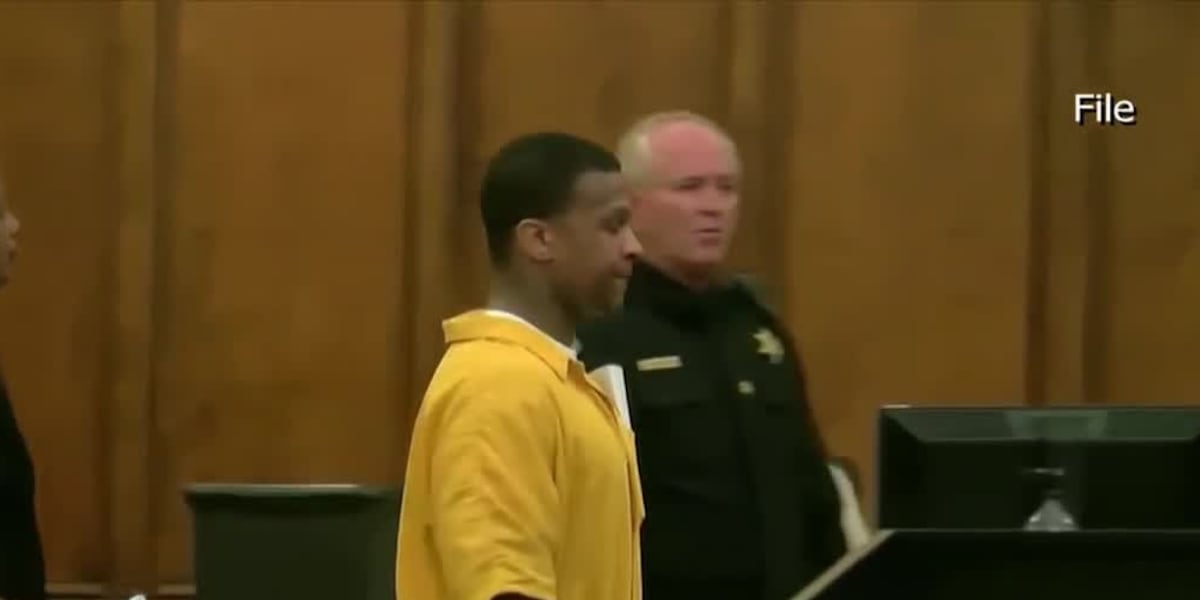
Tellis’ name is already familiar because of another notorious case. He was previously tried twice in Mississippi in connection with the 2014 death of 19-year-old Jessica Chambers. Both trials ended with juries unable to reach unanimous verdicts, resulting in mistrials rather than convictions or acquittals.
But the Hsiao case was separate, and after more than a decade of investigation, procedural battles and courtroom arguments, it has now ended with an acquittal.
That outcome leaves Hsiao’s loved ones with an especially painful reality. Mandy came to Louisiana from overseas to pursue her education. Her life ended violently shortly after her time at ULM, and the criminal case surrounding her death consumed more than ten years before finally reaching a verdict.
The prosecution believed the combination of Tellis’ financial connection to Hsiao, his use of her card, witness testimony and other circumstantial evidence demonstrated that he was responsible.
The defense argued there was still a missing link.
No definitive DNA evidence.
No physical evidence conclusively placing Tellis inside the apartment when Hsiao was killed.
And, in the judge’s final determination, not enough proof to convict him of murder beyond a reasonable doubt.
That distinction is at the heart of the American criminal justice system. A defendant does not have to prove that someone else committed the crime. The burden remains with the government to establish the defendant’s guilt beyond a reasonable doubt.
After hearing the evidence himself, Judge Jefferson concluded that burden had not been met.
More than ten years after Ming-Chen Hsiao lost her life, Quinton Tellis has therefore been found not guilty of her murder.
He will return to Mississippi custody rather than walk directly out of court. But when his remaining sentence there ends, this Louisiana murder case will no longer be standing between him and freedom.
For Tellis, the verdict closes one of the longest and most serious prosecutions he has faced.
For Hsiao’s family, however, it leaves behind a much harder question.
If Quinton Tellis did not legally stand proven as Mandy Hsiao’s killer, who will ultimately be held responsible for what happened to her in that apartment more than a decade ago?