
San Francisco Creates Reparations Fund as $5 Million Payment Proposal Fuels Debate.977

San Francisco’s reparations debate has returned to the national spotlight after Mayor Daniel Lurie signed legislation establishing an official city Reparations Fund. But one crucial detail has often been lost in viral headlines: the city has not approved or funded $5 million payments to every eligible Black resident. The $5 million figure comes from a recommendation in San Francisco’s 2023 reparations plan, while the newly created fund currently serves as a mechanism to receive money that could eventually support recommendations from that broader plan.
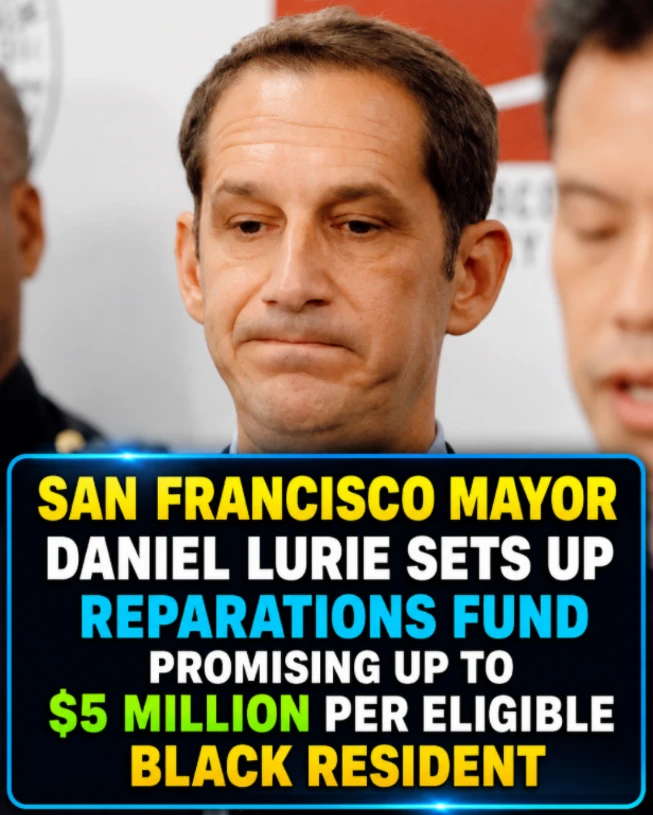
The controversy traces back to the work of San Francisco’s African American Reparations Advisory Committee. After studying the effects of slavery, discrimination, redlining, displacement and other historical policies, the committee produced an extensive reparations plan containing more than 100 recommendations. Among its most dramatic proposals was a one-time lump-sum payment of $5 million to each person who meets specific eligibility requirements. The report argued that such payments could help compensate for decades of economic and opportunity losses experienced by Black San Franciscans.
That proposal immediately attracted national attention. Five million dollars per person would represent an extraordinary level of compensation, and critics questioned how a city could possibly finance payments on that scale. Supporters, meanwhile, argued that the size of the proposed payment reflected the enormous accumulated financial damage caused by discriminatory government policies over generations.
But the legislation Mayor Lurie ultimately signed is much narrower than the original recommendation.
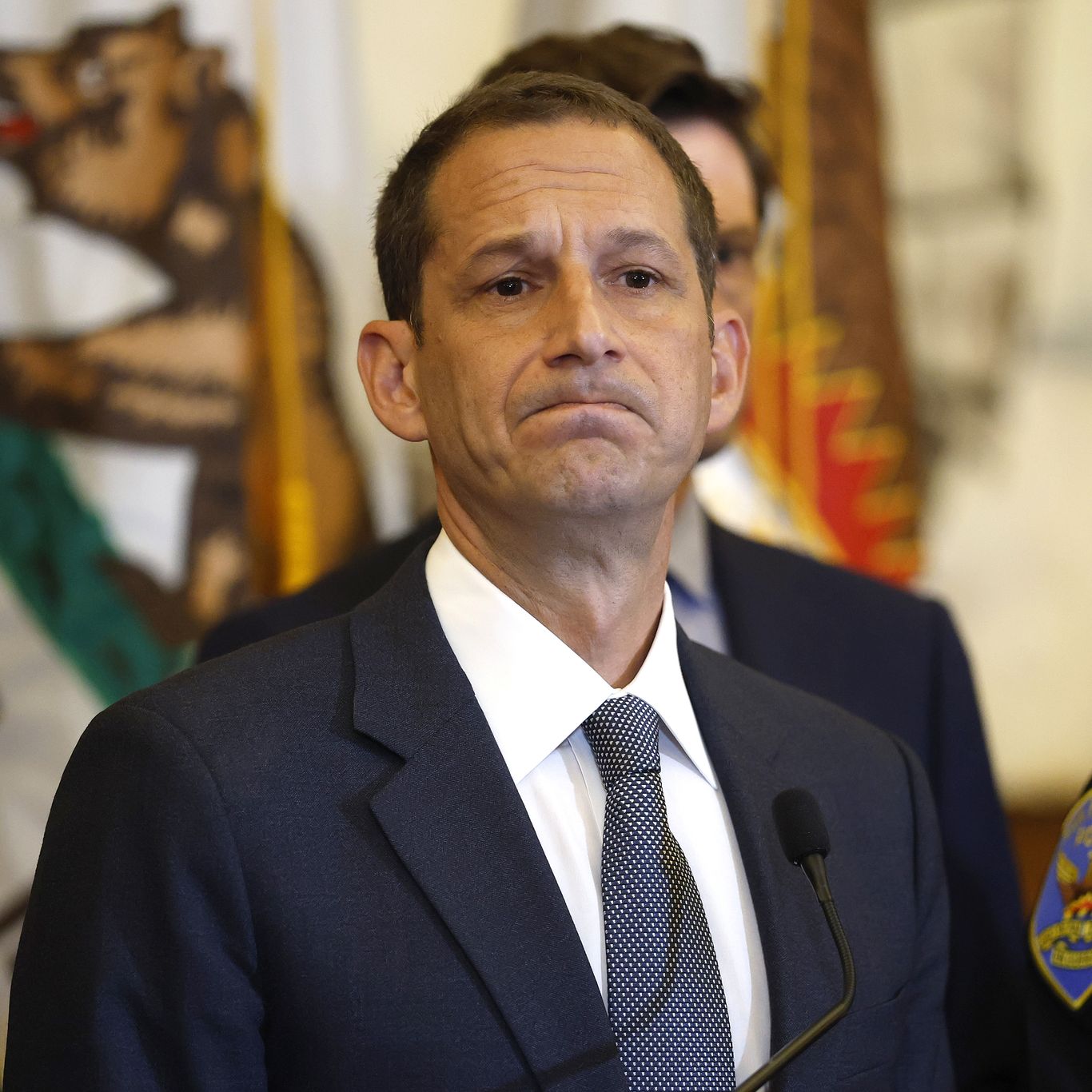
The ordinance formally establishes a Reparations Fund administered by San Francisco’s Human Rights Commission. Under the law, the fund can receive legally available money that is either appropriated or donated and can use those resources to support recommendations contained in the 2023 Reparations Plan. The ordinance itself does not guarantee a $5 million check to any resident, nor does it specify that every dollar raised must be used for direct cash payments.
That distinction is especially important because San Francisco has been dealing with major budget pressures. The city’s recently approved $16.9 billion budget had to close a deficit of more than $640 million while preserving essential services and maintaining reserves against potential federal funding cuts.
Lurie has therefore resisted committing taxpayer dollars to the reparations fund. The framework allows private donations and other legally available funding to flow into it, but simply creating the account does not mean billions of dollars are waiting to be distributed.
This creates an enormous practical challenge for advocates of direct payments.
Even if only 1,000 people eventually qualified for the proposed $5 million payment, fulfilling that recommendation would require $5 billion. Five thousand eligible recipients would require $25 billion. Ten thousand would require $50 billion. Those figures illustrate why establishing the fund and actually implementing the most ambitious recommendations are two entirely different steps.

The eligibility question is also more complicated than headlines suggesting payments to all Black San Franciscans. The city ordinance describes the reparations plan as addressing people who are Black and/or descendants of people subjected to chattel slavery and who experienced proven harms in San Francisco, including displacement connected to redevelopment policies. The original advisory committee developed detailed eligibility concepts rather than proposing an automatic payment based solely on race.
Supporters of reparations argue that San Francisco has a responsibility to address documented harms caused by government decisions. Urban renewal and redevelopment transformed historically Black neighborhoods and displaced families and businesses, contributing, advocates say, to generational losses in property ownership, wealth and community stability.
From that perspective, reparations are not simply a symbolic payment for slavery that occurred generations ago. Advocates frame the program as compensation for specific discriminatory policies whose economic consequences can still be traced through families and neighborhoods today.
Critics see the issue very differently. Some question whether residents today should financially compensate other residents for historical government policies they personally did not create. Others argue that race-conscious benefits could face constitutional or legal challenges. And even among people who support acknowledging historical discrimination, there is disagreement about whether enormous individual cash payments are the best way to address it.

There is also the basic question of priorities.
San Francisco faces persistent challenges involving homelessness, housing affordability, public safety, behavioral health, transportation and the cost of providing city services. With city officials already making difficult budget decisions, critics argue that billions of dollars in direct reparations payments would be financially unrealistic.
That is precisely why the current funding structure matters.
The city has created a legal vehicle capable of receiving donations, but creating that vehicle is not equivalent to depositing enough money to implement every recommendation. The ordinance states that the Reparations Fund can receive legally available appropriations or donations and that money must be used to support recommendations in the reparations plan.
Lurie has also demonstrated a broader willingness to seek private money for city initiatives. His administration has used privately raised funds for projects including supportive-housing repairs, illustrating how philanthropy has become part of his approach to supplementing limited public resources.
Whether wealthy donors, foundations or private organizations would contribute anywhere near the sums required for multimillion-dollar individual reparations payments is another question entirely.
That uncertainty is why describing the program as San Francisco simply “giving $5 million to every eligible Black resident” would be misleading. What exists today is a city reparations fund connected to a plan that includes a $5 million-per-eligible-person recommendation. The recommendation is real. The fund is real. But the billions of dollars necessary to carry out that particular proposal have not been secured.
The distinction has done little to calm the political argument.
For supporters, establishing the fund represents an important transition from years of discussion toward creating an actual mechanism capable of financing reparative policies. Even if the most ambitious recommendations cannot immediately be implemented, they see the fund as infrastructure that future governments, donors and organizations can build upon.
For opponents, creating the fund raises concerns about where the policy could eventually lead. They worry that future officials could attempt to allocate taxpayer money once the mechanism already exists, particularly if private fundraising fails to generate meaningful resources.
The debate will therefore continue to revolve around three questions: Who qualifies? What benefits will actually be implemented? And who will ultimately pay for them?
San Francisco has taken the significant step of creating an official reparations fund, while the original plan still contains one of the most ambitious proposals in the country: up to $5 million for each eligible person.
But establishing a fund is the easy part.
Finding enough money to transform a controversial recommendation into actual payments could be far more difficult—especially when the city is already balancing enormous financial obligations.
And that leaves the biggest question unanswered: will San Francisco’s $5 million reparations proposal ever become a funded reality, or will it remain one of the most ambitious recommendations the city never had the money to implement?