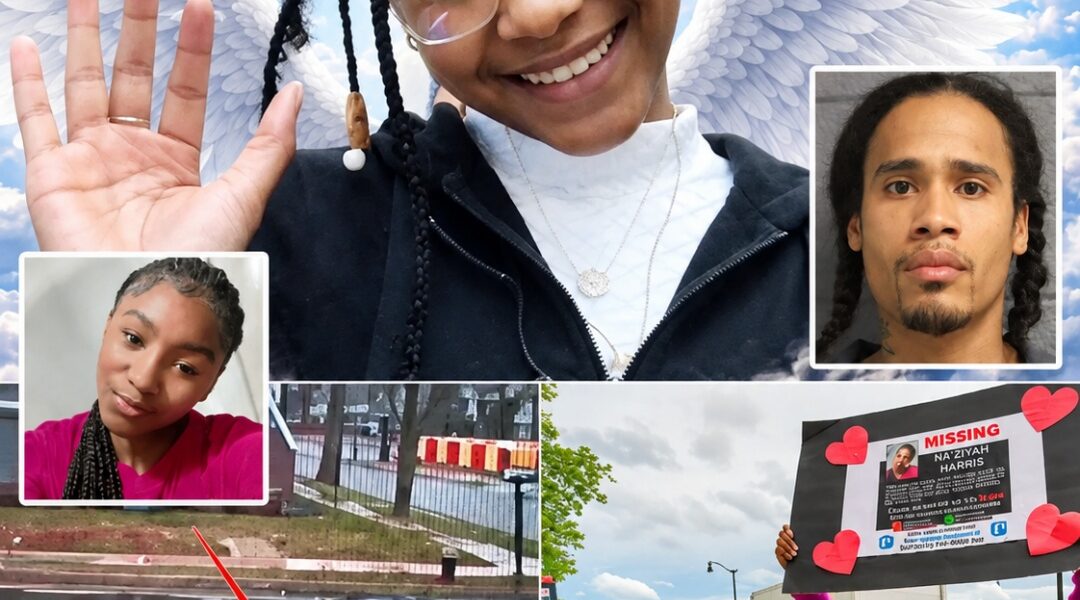

In Detroit, winter has a way of making everything feel quieter, heavier, as if the cold presses secrets into the ground.
On January 9, 2024, the city swallowed one of its children, and the silence that followed grew louder with every passing hour.
Her name was Na’Ziyah Harris, and she was only thirteen years old.
She was the kind of age where childhood and adolescence overlap, where laughter still comes easily and fear should not yet know your name.
That afternoon, Na’Ziyah stepped off her school bus like she had done countless times before.
She never made it home.
At first, people hoped for the ordinary explanations that never come true.
Maybe she went to a friend’s house without telling anyone.
Maybe her phone died and she was scared to call.

As the sun set and the cold deepened, those hopes began to fracture.
Family members spread through the neighborhood, calling her name into streets that refused to answer.
Neighbors joined in, scanning alleys, porches, empty lots, praying they would be the one to find her alive.
Posters went up with her face printed in bright ink, a smile frozen in time.
Social media filled with pleas, shares, and promises that she would not be forgotten.
Detroit has seen too many missing children, but every case still feels like the first.
Na’Ziyah was not a statistic to those who knew her.
She was a daughter, a niece, a student, a child who liked music and jokes and the small freedoms that come with being thirteen.
She should have been worrying about homework, not survival.
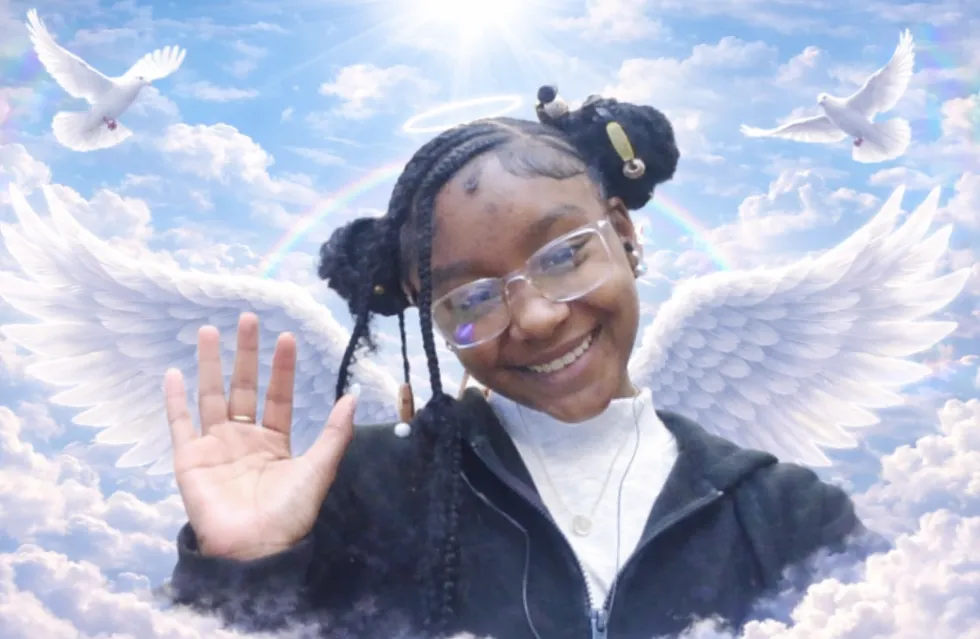
But long before she vanished, danger had already found her.
It had not come from a stranger lurking in the dark.
It came from inside her own family.
Prosecutors would later name that danger as Jarvis Butts, a forty-one-year-old relative who had known Na’Ziyah since she was small.
He was someone who should have protected her by default.
Instead, investigators say, he exploited her.
According to court records, the abuse did not begin suddenly.
Disturbing text messages presented in hearings traced a pattern going back to 2022.
A child was being groomed, manipulated, and violated while adults failed to intervene.

This was not a secret hidden well.
There were signs, missed moments, and systems meant to protect children that never activated.
Every unanswered question now echoes with guilt.
Prosecutors allege that the abuse escalated into something even more horrifying.
They say Na’Ziyah was pregnant at the time she disappeared.
Thirteen years old, carrying a trauma no child should ever know.
Investigators uncovered online searches tied to abortion methods after she mentioned missing a period.
Those searches were not made by a frightened child.
They were made by an adult trying to erase evidence.

As the case unfolded, hope turned to dread.
Search efforts expanded beyond neighborhoods into digital footprints and timelines.
Each new detail chipped away at the possibility of a miracle.
Eventually, authorities charged Jarvis Butts with first-degree premeditated murder.
The list of charges read like a catalogue of failure: child sexually abusive material, criminal sexual conduct with a child under thirteen.
Words that feel clinical until you remember the child behind them.
In court, prosecutors spoke plainly.
They said there was enough evidence to move forward to trial.
A judge agreed, ruling that the case would proceed.
But legal language cannot contain the weight of what was lost.
Na’Ziyah did not get a chance to grow older, to heal, or to tell her story in her own words.
Her future ended before it had truly begun.
Court officials did something rare and necessary.

They spoke openly about the adults who failed her.
They acknowledged that Na’Ziyah was vulnerable long before she vanished.
Family, community, and systems designed to protect children all missed their chance.
Mandatory reporters did not report.
Warning signs did not trigger action.

This case is not only about one man’s crimes.
It is about how easily a child can disappear when accountability disappears first.
It is about silence dressed up as normalcy.
Na’Ziyah’s name now joins a list no city ever wants to grow.
Missing children.
Murdered children.
Her story forces uncomfortable questions.
How many kids are suffering right now in places we call safe?
How many are taught to stay quiet because the abuser is “family”?
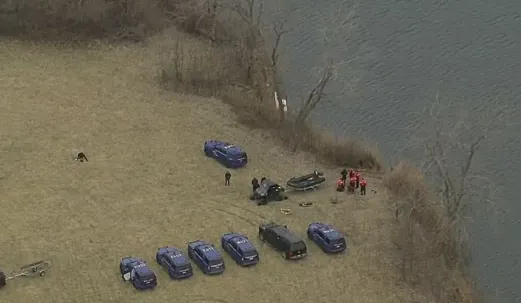
At thirteen, Na’Ziyah should have been protected by layers of adults.
Parents, relatives, schools, community supports.
Instead, she stood alone against something far bigger than her.
When people say “Forever 13,” it sounds poetic.
In truth, it is devastating.
It means time stopped while the world kept moving.
Somewhere, there is a backpack that will never be used again.
A bedroom that no longer changes with posters and age.
A life measured only in what might have been.
Her disappearance has left Detroit grieving and angry.
Grief for the child lost.
Anger at the failures that made it possible.
Justice, if it comes, will arrive too late for Na’Ziyah.
It cannot return her childhood or erase her suffering.
But it can speak her name out loud in a system that too often forgets children.
Her story demands more than sympathy.
It demands vigilance, courage, and action when something feels wrong.
It demands that adults believe children the first time.

Because predators thrive in doubt and delay.
They depend on the idea that family loyalty matters more than safety.
They count on systems moving too slowly.
Na’Ziyah Harris deserved better from every adult around her.
She deserved safety, protection, and the freedom to grow.
She deserved to turn fourteen.
Instead, she became a symbol of what happens when warnings are ignored.
When love is replaced with control.
When responsibility is deferred until it is too late.
Her name should not fade into case numbers and headlines.
It should remain a reminder.
A call to protect the children who cannot protect themselves.
Rest in peace, Na’Ziyah Harris.
Forever thirteen, not by choice, but by failure.
May your story change how the world listens to its children. 🕊️💔