
THEY CAME TO MAKE HISTORY: REMEMBERING LEVI PIMENTEL AND GEORGIA JEAN
Levi Pimentel and Georgia Jean traveled to a skydiving gathering with a shared ambition: to help accomplish something extraordinary alongside other women who loved the sport. On Friday, November 6, that gathering ended in tragedy. Pimentel, 29, and Jean, 56, died after colliding during their approach to land at Skydive Elsinore in California. Their parachutes had already opened. According to the operator, they were approximately 150 feet above the ground when the collision caused their canopies to become entangled.
Both women were licensed, experienced skydivers. They had come from different states, bringing different histories and years of commitment to the same event. Pimentel lived in Aurora, Illinois; Jean was from Box Elder, South Dakota. Their identities were released by the Riverside County Sheriff’s Office after the accident. Behind those brief official descriptions were two lives shaped by interests, work, friendships, and ambitions that extended far beyond the circumstances of their deaths.
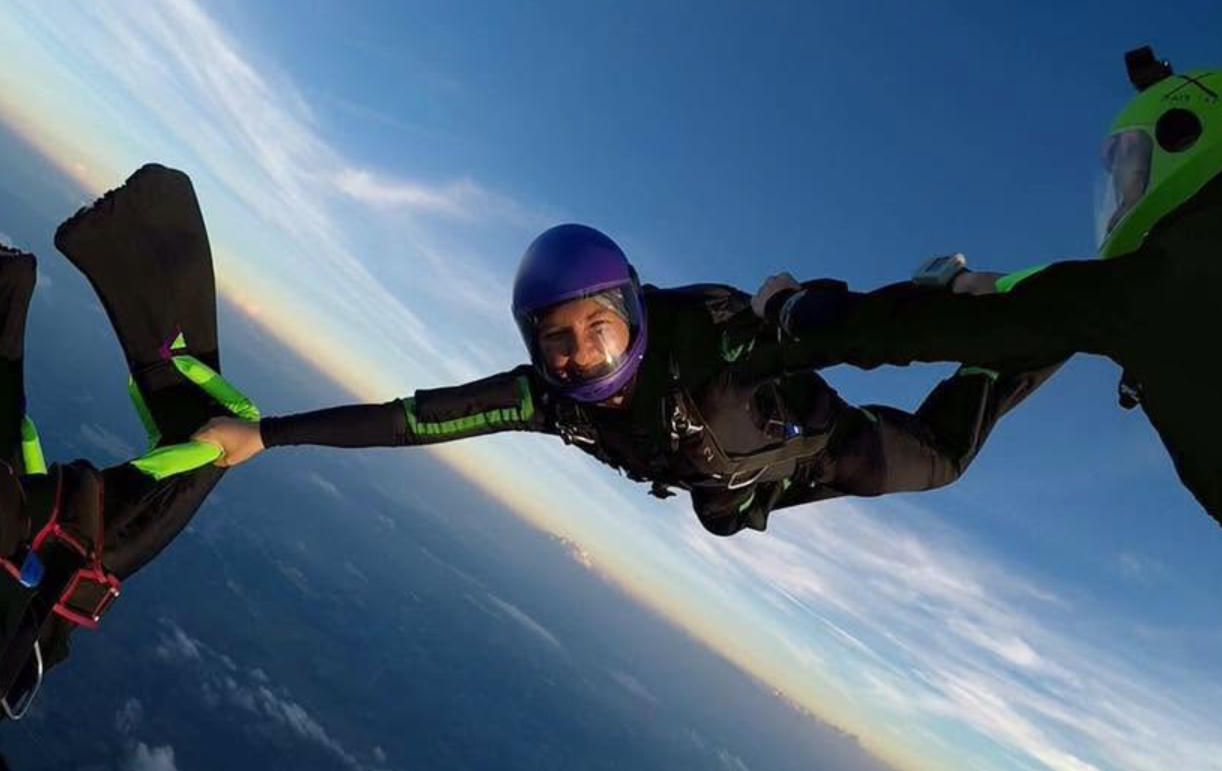
The group was reportedly working toward a California record for a women’s upright formation. The planned formation involved 19 participants, exceeding an existing benchmark described as 12. In this orientation, skydivers appear to sit in the air while moving together. The objective depended on a collective effort: individual skill brought into a coordinated formation, with each participant contributing to something larger than herself.
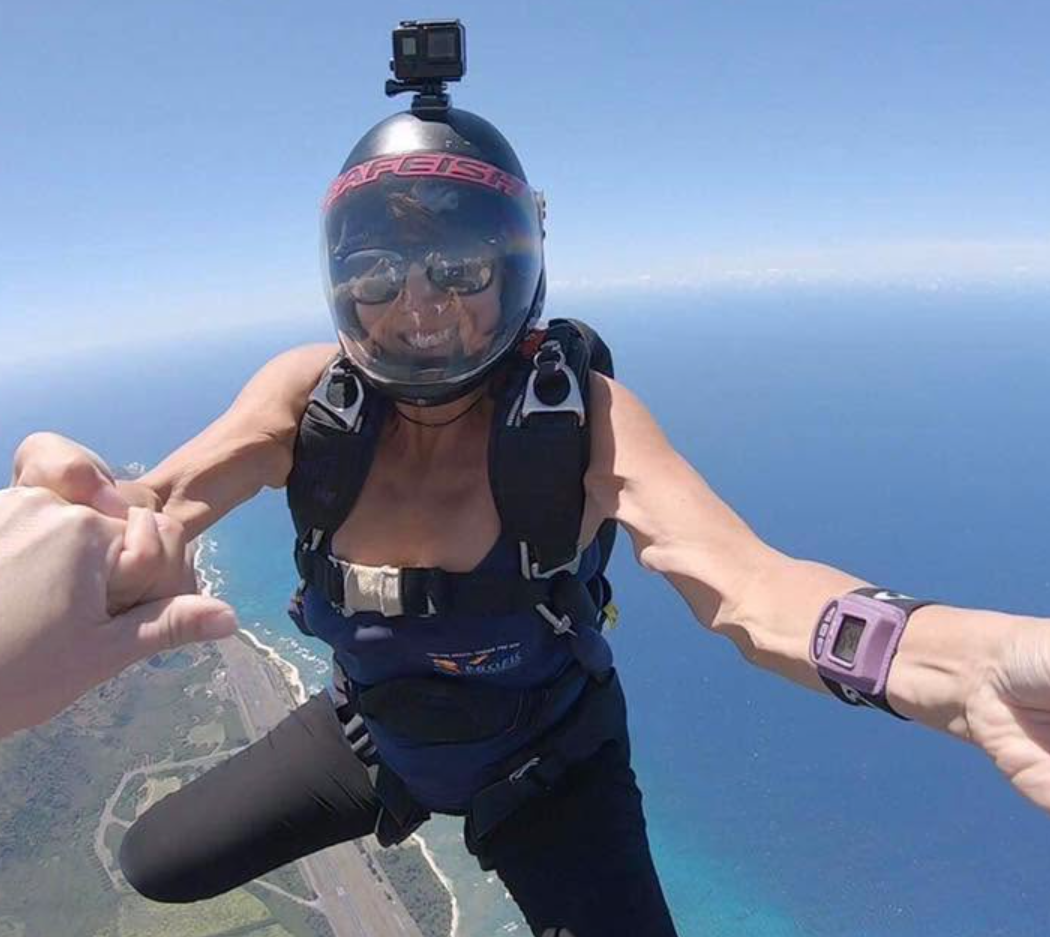
They came together to make history, and two of them never made it home.
According to accounts of the jump, the group exited an aircraft at approximately 12,500 feet. Skydive Elsinore said the freefall portion proceeded normally, and both women deployed their parachutes at the appropriate altitude. That sequence matters. The emergency described by the operator occurred later, as they approached the landing area. The public account does not describe a parachute failing to open during freefall.
Professional skydiver Chazi Rutz, who participated in the gathering, described the initial freefall as successful before the landing emergency unfolded. For those following the news afterward, that distinction made the accident especially difficult to comprehend. The formation work and parachute openings had been completed, yet the jump still ended in two deaths. Investigators must establish why their paths converged, rather than leave that question to speculation.
Emergency responders provided aid, and both women were transported to a hospital with critical injuries. Neither survived. A gathering centered on preparation and sporting ambition had become the scene of a fatal accident. The people involved were left facing an outcome that no account of the earlier, successful portion of the jump could soften. Two participants who had arrived to take part would not return from the event.
Pimentel’s involvement in skydiving also extended into her working life. She was listed as a lead instructor at iFLY Indoor Skydiving in Naperville, Illinois. Reporting on her employment described years spent in instructional and training roles. Her connection to flight therefore included more than personal jumps and competitive goals. It also included the professional responsibility of helping other people participate in an indoor version of the activity.
That distinction gives her story a human dimension beyond a jump count. An instructor occupies a place in other people’s experiences: introducing skills, explaining movements, and supporting progress. The available reporting cannot tell every story from Pimentel’s working life, and it would be wrong to invent those encounters. Her documented role nevertheless establishes that flight was part of her daily work as well as her personal ambition.
Her death at 29 also leaves a future unfinished. Public accounts describe someone still involved in the sport and working toward further achievements. A fatal accident compresses that continuing life into a few sentences about where and how it ended. Remembering Pimentel requires allowing room for the person who existed before those sentences: a professional, a participant, and a woman with more ahead of her.
Their parachutes opened, but the landing they were preparing for never came safely.
Jean brought her own substantial experience to the gathering. According to a biography cited in reporting, she discovered skydiving in 2015 and had completed more than 1,700 jumps. That account corrects a confusing detail in circulated versions of the story, which repeated the same first-jump history and jump total for both women. Their experiences should be remembered individually, without assigning one woman’s milestones to the other.
More than a decade after beginning the sport, Jean was still participating in organized skydiving. Her presence at this gathering speaks to an ongoing commitment. It does not tell us her private thoughts before the jump or permit us to describe imagined final conversations. What can be said is that she continued to make room in her life for a demanding activity that brought her together with other participants.
Pimentel and Jean were separated by 27 years in age, but the event placed them within the same collective undertaking. That is one of the poignant features of their story. Different lives had converged around a shared interest and a common goal. Their deaths now link their names publicly, although each woman leaves a separate history that deserves attention beyond the accident they shared.

For those who knew them, the official facts can only describe part of the loss. An age, hometown, occupation, or number of jumps cannot contain a whole person. Nor can a report establish the particular memories that friends and relatives will carry. Those memories belong to the people who lived alongside them, and their absence from public reporting does not make them any less important.
Skydive Elsinore said there was no indication of an equipment malfunction. That statement describes the operator’s assessment, rather than a completed investigative finding. The sheriff’s office said the Federal Aviation Administration had been notified and would collect the parachutes for examination. The central question remains how the women came into contact during their approach. Their experience alone cannot supply an answer, and neither can the record attempt’s purpose. 
Two lives deserve to be remembered beyond the final moments investigators are trying to explain.
It is possible to acknowledge that uncertainty while still recognizing the scale of the loss. Establishing the sequence of events serves one purpose; remembering the women serves another. A careful account needs both. It should preserve the facts already available, identify what remains unresolved, and resist filling the gaps with blame, imagined dialogue, or explanations that authorities have not established.


The gathering began with women working toward a shared achievement. Its aftermath is now defined by two missing participants and an investigation into a landing that went terribly wrong. For Pimentel and Jean, the public record ends at the hospital. Their lives do not begin there. They include the years before California, the work and interests they pursued, and the people who knew them.
The record they hoped to pursue offers context for why they were there, but it cannot measure what has been lost. Sporting achievements can be counted and compared. A person’s place in the lives of others cannot. As attention turns toward the investigation, their names should remain at the center of the story, alongside the simple fact that both women had lives still unfolding when they arrived.
Whatever investigators ultimately establish, the loss already has two names: Levi Pimentel and Georgia Jean.