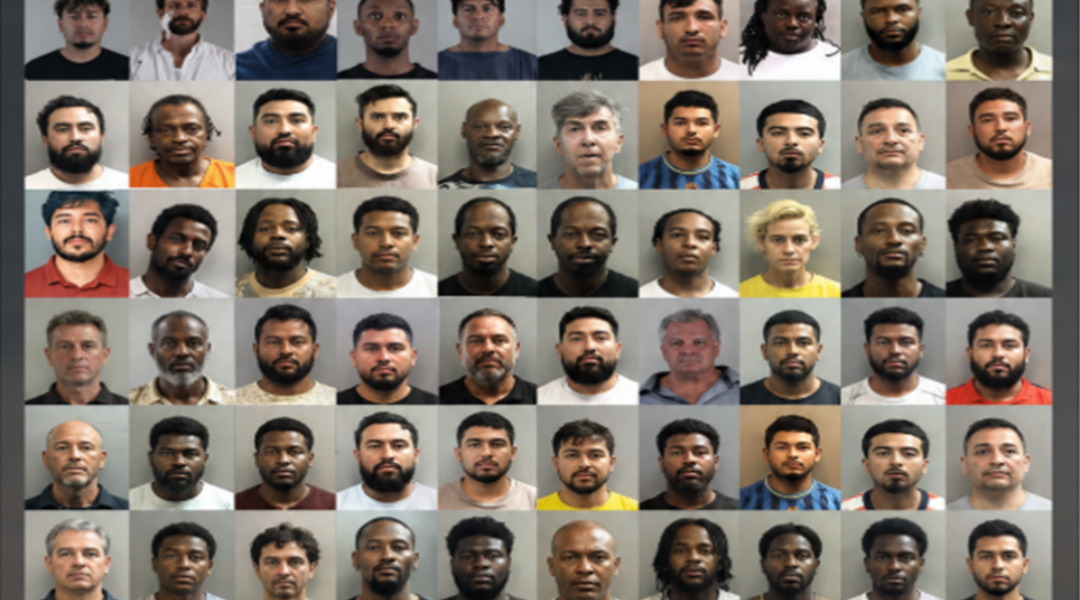
Over 50 Arrested and Dozens of Victims Rescued in North Texas During Massive World Cup Human Trafficking Crackdown.993

As millions of soccer fans turned their attention to the 2026 FIFA World Cup, law enforcement agencies across the United States were confronting a very different concern behind the scenes: the possibility that traffickers and predators could exploit the enormous crowds surrounding the tournament. In North Texas, that concern led to a sweeping multi-agency crackdown that authorities say resulted in more than 50 arrests and helped locate or rescue dozens of potential victims, part of a much broader effort to combat human trafficking, child exploitation and related crimes during one of the largest sporting events in the world.

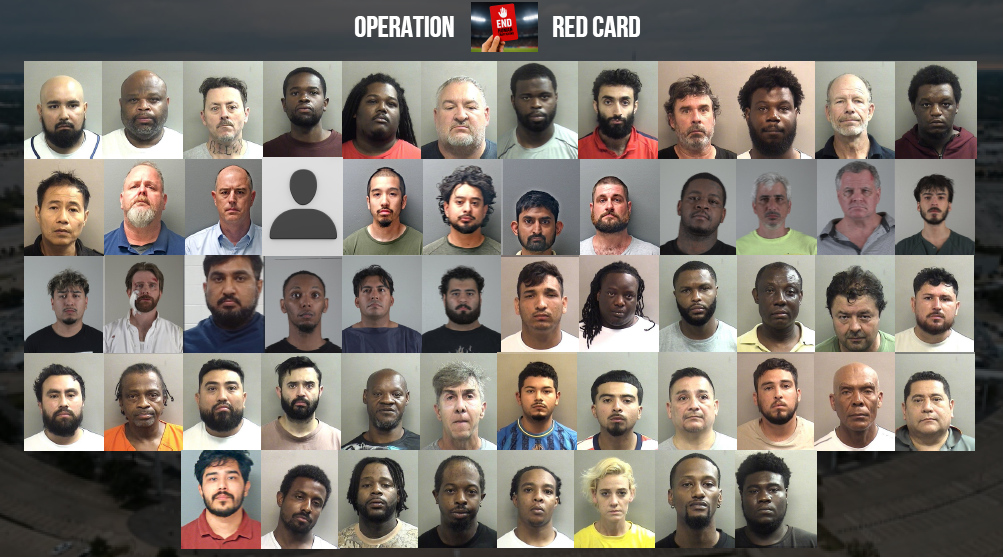
North Texas was a major focus for authorities because the Dallas-Fort Worth region hosted nine World Cup matches and attracted huge numbers of visitors. Months before the games began, federal prosecutors and law enforcement leaders announced an enforcement initiative known as Operation Red Card. Officials warned that the influx of visitors could create opportunities not only for legitimate businesses but also for traffickers, drug dealers and other criminal networks seeking to take advantage of the increased demand and anonymity created by massive crowds.
The North Texas effort brought together federal, state and local agencies. Rather than focusing on a single type of crime, authorities used intelligence, undercover investigations and coordinated enforcement to target suspected trafficking, child exploitation, violent crime and other offenses connected to public-safety concerns surrounding the tournament. The strategy was simple: identify suspected offenders before and during the World Cup and make it clear that crimes normally handled at the local level could potentially bring far more serious federal consequences.
The human cost behind the operation, however, was far more important than the arrest numbers.
Authorities reported that dozens of people believed to have been caught in exploitative situations were identified or rescued during enforcement activity in North Texas. For investigators and victim advocates, removing a person from immediate danger represents only the first stage of the process. Trafficking survivors may require emergency housing, medical treatment, counseling, transportation, legal assistance and long-term support before they can safely rebuild their lives.
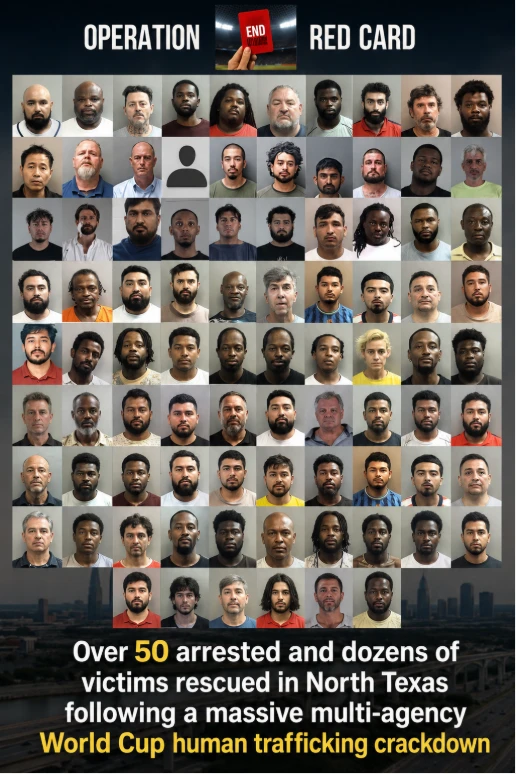
The crackdown also formed part of a much larger nationwide response surrounding the World Cup. Homeland Security Investigations and the Department of Homeland Security’s Center for Countering Human Trafficking worked with federal, state and local partners in host cities across the country. According to figures released after the tournament, those coordinated efforts resulted in 905 arrests and the rescue of 180 trafficking victims nationwide, including 150 adults and 30 juveniles.
One significant Dallas-area investigation targeted an adult bookstore that authorities alleged had secretly operated as a brothel for more than two decades. On July 24, HSI Dallas executed eight federal arrest warrants connected to that investigation. The case illustrated one of the challenges facing investigators: trafficking activity can sometimes exist for years behind businesses that outwardly appear legitimate.
The World Cup crackdown also overlapped with another enormous North Texas effort aimed specifically at protecting children from online sexual exploitation. During March and April 2026, FBI Dallas and the North Texas Internet Crimes Against Children Task Force conducted Operation Soteria Shield, involving 91 law enforcement agencies and 197 personnel across multiple jurisdictions.
That investigation produced staggering results: 276 child-exploitation arrests and 89 children rescued, according to the FBI. Investigators targeted suspects allegedly involved in crimes ranging from possession and distribution of child sexual abuse material to online solicitation, trafficking and sexual assault. Digital forensic specialists, analysts, prosecutors and victim advocates worked alongside investigators to identify both alleged offenders and children believed to be in danger.
Although Operation Soteria Shield was separate from the World Cup enforcement campaign, the scale of the two efforts demonstrates the enormous resources North Texas authorities have recently directed toward trafficking and exploitation investigations.
And Texas was far from alone.
In Atlanta, another World Cup enforcement effort called Operation Red Card resulted in 153 arrests and the identification of 54 trafficking victims. Authorities said 13 people were arrested on human-trafficking charges, 11 on child-exploitation allegations and another 129 for offenses including prostitution-related crimes, narcotics violations and outstanding warrants. Twenty-seven of the trafficking victims accepted services such as crisis intervention, medical care, emergency shelter, transportation, food and clothing.
Kansas City authorities announced another coordinated surge involving 17 operations during the six weeks of World Cup matches. That campaign resulted in 19 arrests, nine children being located and victim services being provided to nine individuals.
In the New York City area, police reported that 43 trafficking victims—including seven minors—were rescued during operations conducted between June 11 and July 19. Eighty-nine people were arrested. Survivors were connected with services including housing, food and counseling.
Together, those operations reveal the enormous law enforcement mobilization that took place largely outside public view while fans filled stadiums and fan zones.
Major sporting events do not automatically cause human trafficking, and experts have repeatedly cautioned against simplistic claims that tournaments themselves create trafficking. What large events can do, however, is generate huge temporary populations, increased travel, nightlife activity and demand for commercial services. Authorities therefore often intensify existing trafficking investigations during these periods while also attempting to identify vulnerable people who may otherwise remain hidden.
That distinction matters. The people identified during these operations are not statistics created by the World Cup. Many may have been exploited long before the first match began. The tournament instead provided law enforcement agencies with a deadline and an opportunity to concentrate personnel, intelligence and investigative resources on networks already operating in their communities.
The arrests are also only the beginning of the legal process. Being arrested does not establish guilt, and each defendant is entitled to due process. Prosecutors will have to prove individual allegations in court, while investigators continue analyzing evidence that could identify additional suspects or victims.
Digital evidence may be particularly important. Modern trafficking and exploitation investigations increasingly involve phones, social-media accounts, messaging applications, online advertisements and financial transactions. A single seized device can potentially reveal communications involving numerous people, meaning investigations may continue long after an initial raid or arrest.
For survivors, meanwhile, leaving an exploitative situation does not necessarily mean the danger immediately disappears. Some victims have been manipulated through threats, financial dependency, addiction, emotional control or fear for relatives. Others may not initially identify themselves as victims. This is why victim advocates are often embedded alongside investigators rather than brought in only after arrests occur.
The numbers emerging from the 2026 World Cup operations show the scale of that challenge. Across the country, hundreds of suspects were arrested and scores of adults and children were removed from potentially dangerous situations. North Texas became one important piece of that national effort.
But perhaps the most significant question comes after the stadiums empty.
World Cup crowds eventually leave. Temporary command centers close. Specialized enforcement surges end. Human trafficking does not.
For North Texas authorities, the real measure of Operation Red Card may therefore not be simply how many people were arrested during several weeks of soccer. It will be what investigators uncover from the evidence seized, whether additional victims can be identified, whether prosecutors can build sustainable cases against alleged traffickers—and whether the unprecedented cooperation created for the World Cup continues after the tournament is over.
More than 50 arrests may have made the immediate headlines. The dozens of people removed from suspected exploitation represent something much larger.
And as investigators continue examining what was uncovered during the crackdown, the final number of suspects—and victims—may not yet be known.