LABOUR’S PMQs HUMILIATION SPARKS A POLITICAL FIRESTORM – LOUISE HAIGH UNDER PRESSURE, BURNHAM ABSENT, AND QUESTIONS EXPLODING OVER WHAT WENT WRONG! . HYN

Labour’s Louise Haigh was skewered by the Tories over the eye-watering benefits bill as she stood in for Andy Burnham at PMQs today.
Conservative deputy leader Alex Burghart began by asking the First Secretary of State how much working-age welfare will cost this year.
She replied: “This Government is committed to bringing the benefits bill down.”
He said: “I think it’s very telling that the Right Honourable Lady doesn’t want to tell us the answer to that question.
The answer to the question is £183billion.
That is the highest figure ever, it’s higher than anything during Covid, it’s higher than defence, schools and policing combined, it is nearly £10,000 for every working household in this country.”
He later added: “The Government’s in a complete mess on this.”
It comes as the Prime Minister is missing the Commons showdown as he is attending a Commonwealth summit in the Caribbean.
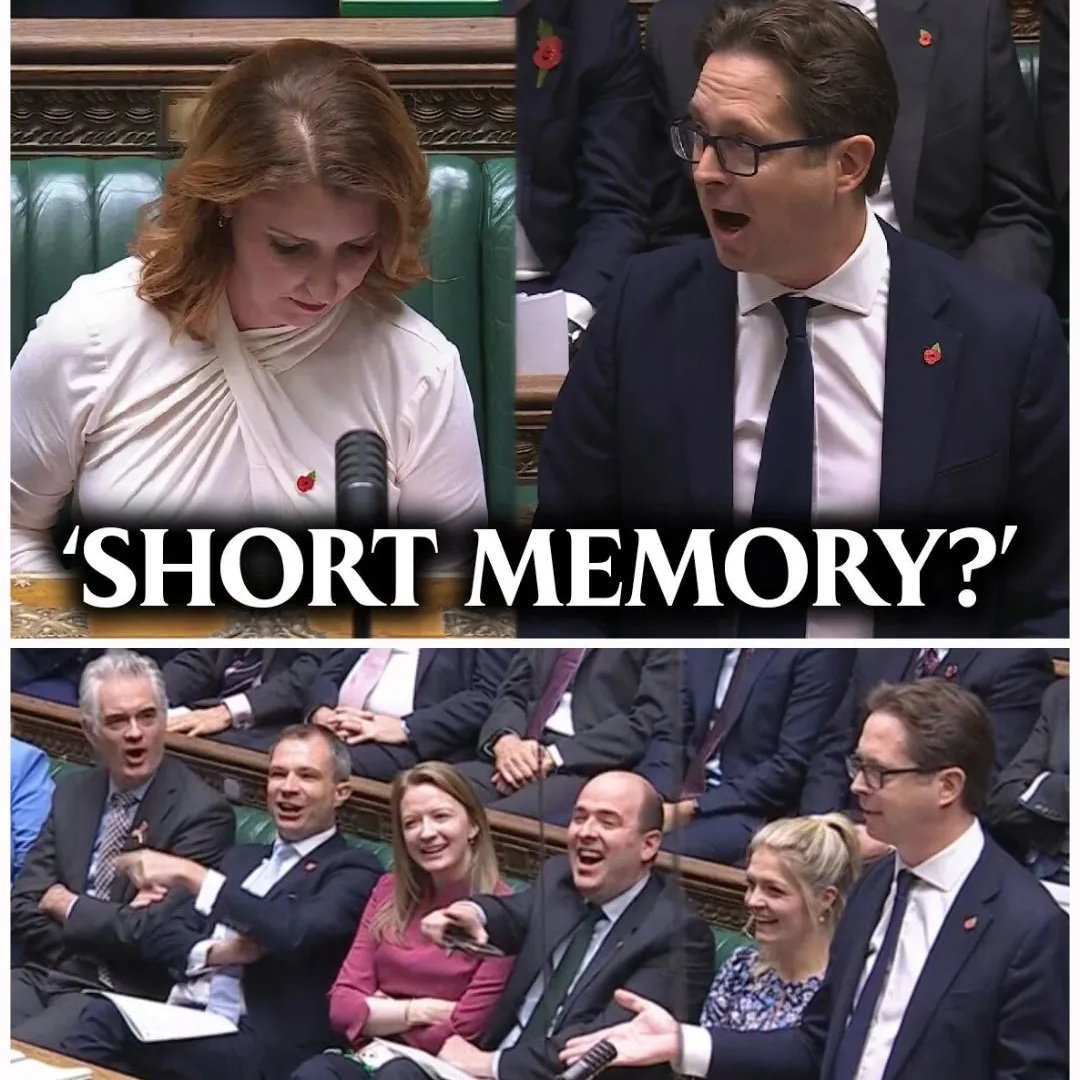
Louise Haigh shuns detail in first PMQs outing
Louise Haigh’s first outing as Andy Burnham’s stand-in at Prime Minister’s Questions today was assured and pretty successful.
She looked like she was enjoying herself towards the end of her sparring with Alex Burghart, who has now racked up a good few sessions on the Tory side, and was clearly even more comfortable.
But the way the questions went did still serve to highlight the trouble coming for this government on welfare.
Burghart asked the same thing repeatedly, but with slightly different permutations, and Haigh wasn’t able to give much of an answer, other than that this government really is committed to bringing the benefits bill down.
When it might manage that, or how, weren’t details she could offer.
Burghart started by asking how much the government would be spending on working age welfare.
Haigh replied that ‘he recently said it was now his job to tell the leader of the opposition when she is getting things wrong, which must make him the busiest man in Westminster’.
She added that ‘this government is committed to bringing the benefits bill down and committed to dealing with the mess’ left by the Conservatives.
She told the chamber that the benefits bill had grown by £88 billion in a decade under the Tories.
Her opponent came back immediately to point out that the First Secretary of State had not answered the question, and that this was ‘telling’.
The government is spending £183bn, he said, adding: ‘The highest figure ever. It’s higher than anything during Covid.
It is higher than defence, schools and policing combined. It is nearly £10,000 for every working household in this country.
So will the government commit to bring that bill down?’
Haigh replied that ‘the government has been clear the benefit bill will come down’, and then listed the steps it was already taking in order to do this.
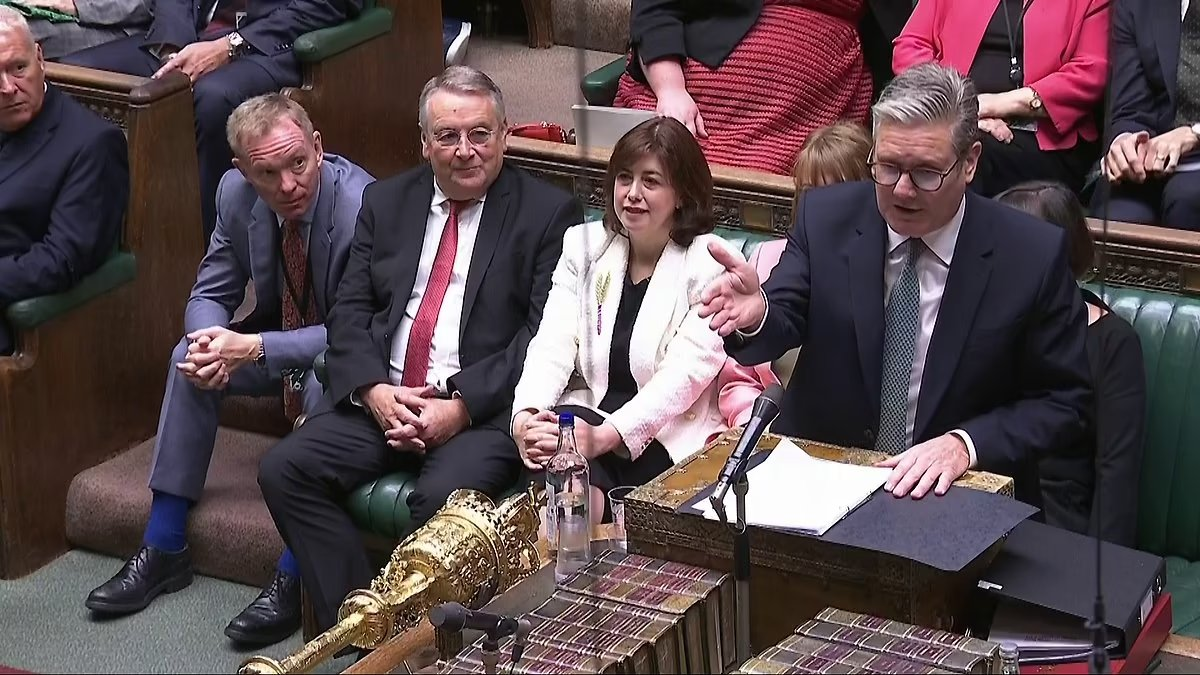
She repeated her own claim that the bill had soared by £88bn under Burghart’s party, adding that the Tories had also left one million young people not in employment, education or training, and that ‘this government is committed to tackling all of it’.
The government hasn’t been very clear, though, on when the bill will come down, and Burghart used his next question to exploit the confusion following John Healey’s remarks last week about whether it would be cut in time for the next election.
Haigh, having mentioned Neets, was quick to mention the forthcoming Milburn report on how to get these young people off benefits and back into work, as well as the Timms review of personal independence payment for good measure.
Haigh and Burghart argued a bit about whether the Budget was good or ‘catastrophic’ for living standards, and then Burghart returned to Milburn, joking that it ‘was a review that was so important that it was delayed until after the Budget’.
He then insisted that ‘we know why the government isn’t going to fix welfare’, and one of those reasons was, he argued, that Haigh was the person who led the rebellion ‘against Keir Starmer’s very modest welfare reforms’.
He asked another question, which was whether Haigh could promise that the government wouldn’t put up taxes in order to fund the higher benefits bill, given it wouldn’t be able to reform it.
By this point, Haigh started to attack the Conservative frontbench a little more, listing all the failures of the previous Tory government that she could connect each individual member to, and asking for them to apologise for those failures on immigration and on the mini budget.
Both she and Burghart had prepared payoffs for the social media clips, with the Tory deputy leader saying: ‘The Labour way is more tax, more welfare and more borrowing.
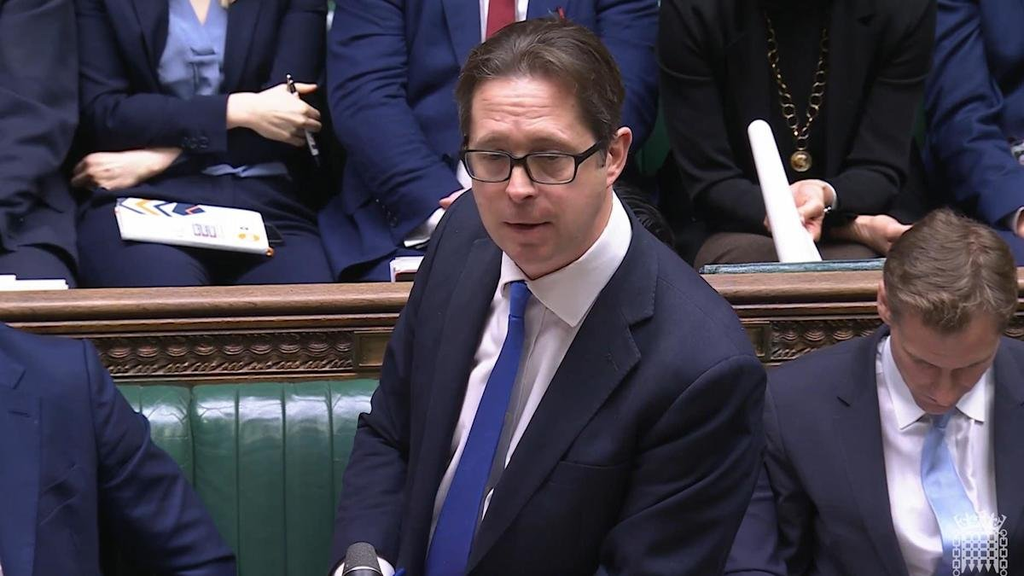
There is no commitment not to reduce welfare and no promise not to put up tax.
Too scared to cut spending.
Too weak to do the right thing… If Labour doesn’t want to do the right thing, why doesn’t it just get out of the way?’
Haigh claimed in reply that ‘as a student of history’, Burghart will be ‘well aware that few governments have delivered the scale of change that this administration ha
LABOUR’S PMQs HUMILIATION SPARKS A POLITICAL FIRESTORM – LOUISE HAIGH UNDER PRESSURE, BURNHAM ABSENT, AND QUESTIONS EXPLODING OVER WHAT WENT WRONG!
British politics has been thrown into another heated debate following a tense parliamentary session in which senior Labour minister Louise Haigh faced challenging questions from the opposition while Prime Minister Andy Burnham was absent from the House of Commons. The confrontation took place during Prime Minister’s Questions on 4 November 2026, when Conservative deputy leader Alex Burghart questioned the government’s approach to welfare spending, public finances and its ability to deliver promised reforms. What should have been an opportunity for Labour to demonstrate confidence in its economic policies instead exposed several difficult questions that the government still needs to answer.
The absence of Andy Burnham immediately attracted attention. However, his absence was connected to an official engagement rather than an attempt to avoid parliamentary scrutiny. The Prime Minister was attending a meeting with Commonwealth leaders in Antigua and Barbuda, leaving First Secretary of State Louise Haigh to represent the government in the Commons. Nevertheless, the timing created an opportunity for opposition politicians to challenge Labour’s position on some of the most controversial economic issues facing the country.
Alex Burghart focused his questions on the government’s growing welfare bill. He argued that public spending on benefits had reached an unsustainable level and demanded a clear explanation of how Labour intended to reduce it. His questions placed Haigh under pressure to provide specific commitments, particularly concerning when the government expected welfare expenditure to begin falling.
The welfare issue has become increasingly important because of concerns about public finances and the long-term sustainability of government spending. According to official forecasts discussed around the November Budget, welfare expenditure could increase from approximately £353 billion in 2026-27 to £431 billion by 2031-32. These projections have raised questions about the government’s ability to balance support for vulnerable citizens with the need to control public spending.
During the parliamentary exchange, Haigh insisted that Labour remained committed to bringing down the benefits bill. She argued that the government intended to address the underlying causes of rising welfare expenditure rather than simply reducing payments to people who depended on financial assistance.
Her argument centred on the idea that preventing people from becoming economically inactive could produce better long-term results than making immediate cuts to benefits. She referred to the importance of employment opportunities, reducing housing costs and helping individuals return to the workplace. She also highlighted upcoming reviews intended to examine how the welfare system could be improved.
However, Burghart continued pressing for a clear timetable. He wanted to know whether Labour could guarantee that the benefits bill would fall during the current parliamentary term. Haigh maintained that the government was committed to reducing expenditure but did not provide a specific date by which the reduction would happen.
This lack of a precise timetable became one of the most important points of the debate. Opposition politicians argued that promising to reduce spending without explaining when or how it would happen was insufficient. They questioned whether Labour had a realistic plan or was simply postponing difficult decisions.
Another controversial moment concerned taxation. Burghart asked whether the government could promise not to increase taxes to cover the rising costs associated with welfare expenditure. This question placed Haigh in a difficult political position because the government must balance several competing priorities, including public services, economic growth, social protection and fiscal responsibility.
Haigh responded by arguing that the country could not afford to continue paying for failure and needed to invest in success. Her response reflected Labour’s broader argument that improving employment, education and economic opportunities would help reduce long-term dependence on welfare.
Nevertheless, the exchange did not completely resolve the questions raised by the opposition. Taxation remains an important concern for households and businesses, particularly when living costs are high and economic uncertainty continues to affect public confidence. Without clear explanations of future spending decisions, the government risks facing further criticism over its financial priorities.
The opposition also attempted to connect the current welfare challenges with the record of previous Conservative governments. Haigh criticised the Conservatives over their handling of immigration, economic policy and public finances. She argued that Labour had inherited serious problems and needed time to introduce lasting improvements.
Burghart, however, accused Labour of lacking the determination to make difficult decisions. He argued that the government was unwilling to explain how it would control spending and challenged ministers to provide stronger guarantees about the future direction of taxation and welfare reform.
The confrontation illustrates a wider disagreement about the purpose and structure of the British welfare state. Supporters of a more generous system argue that social security provides essential protection for people experiencing unemployment, disability, illness and financial hardship. They believe that a strong welfare system is an important part of a fair society.
Others argue that the system must be reformed to ensure that public money is used effectively and that people who are capable of working receive appropriate support to find employment. They are concerned that rising expenditure could place additional pressure on taxpayers and reduce the resources available for other public services.
Finding the right balance is extremely challenging. Reducing welfare expenditure too quickly could harm vulnerable households and increase poverty. However, failing to address long-term increases could create financial difficulties for future governments. Therefore, meaningful reform requires careful planning, reliable evidence and sufficient support for people who genuinely need assistance.
The debate also highlighted the importance of employment among younger generations. Young people who are not in education, employment or training represent a significant concern for policymakers. Long periods outside the labour market can reduce professional confidence, limit future earnings and increase the likelihood of long-term economic inactivity.
The government has indicated that upcoming reviews, including the work associated with Alan Milburn and the Timms review of personal independence payment, will help shape future reforms. These reviews are expected to examine different aspects of employment support and welfare policy. Their recommendations could influence how Labour approaches the challenge of reducing economic inactivity while protecting people with genuine support needs.
Meanwhile, Andy Burnham’s absence has become another talking point in the wider political discussion. Although he was attending an official Commonwealth engagement, the parliamentary confrontation demonstrated the importance of having senior ministers capable of defending government policy when the Prime Minister is unavailable.
For a government, political communication is almost as important as the policies themselves. Ministers must be able to explain complicated decisions clearly, respond to criticism and demonstrate that they understand the concerns of ordinary citizens. When answers appear incomplete or lack specific commitments, opposition parties can use the uncertainty to challenge the government’s credibility.
However, one parliamentary exchange should not automatically be interpreted as a complete political failure. Prime Minister’s Questions is designed to provide a public forum in which government decisions can be challenged. Strong disagreements are a normal feature of democratic politics, and the quality of government policy should ultimately be judged by its implementation and measurable results.
The media has also contributed to the intensity of the discussion. Dramatic descriptions of parliamentary confrontations can make political exchanges appear more decisive than they actually are. A fair assessment requires examining the questions, the answers and the government’s subsequent decisions rather than relying exclusively on sensational headlines.
Ultimately, Labour faces a difficult challenge. It must demonstrate that it can control public spending without undermining essential social protection. It must also create more employment opportunities, improve productivity and ensure that the welfare system supports people who need assistance while helping those who can work to become economically independent.
In conclusion, the November 2026 parliamentary confrontation between Louise Haigh and Alex Burghart exposed important unanswered questions about Labour’s welfare policies, public spending and taxation commitments. Andy Burnham’s absence was due to an official Commonwealth engagement, but the session placed additional attention on the responsibilities of the ministers representing his government. The central issue is whether Labour can turn its promises into a clear and achievable programme of reform. Ultimately, the government’s credibility will depend not on dramatic performances in Parliament, but on whether it can deliver sustainable public finances, effective welfare support and genuine employment opportunities for people across Britain.