“BRITAIN’S FUTURE IS INSIDE THE EU!” — Rachel Reeves’ Stunning Words Reignite The Brexit Battle!. HYN

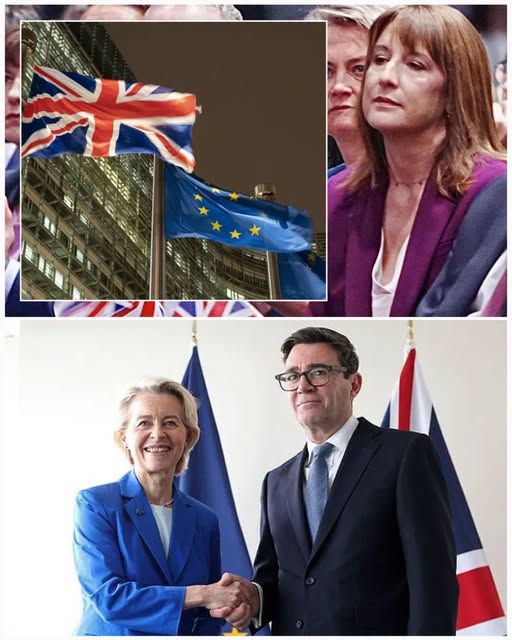
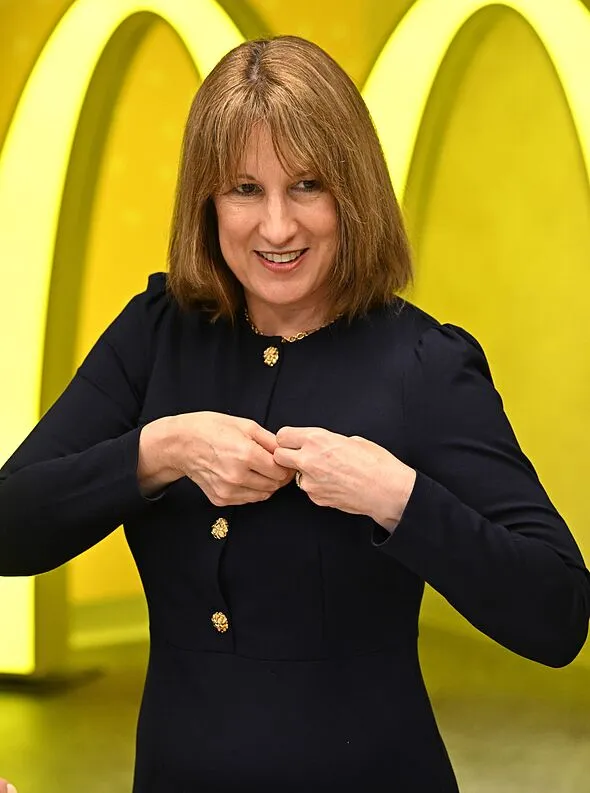
Rachel Reeves when Chancellor (Image: Doug Peters/PA Wire)
Labour’s attempts to rip-up Brexit threaten to tear Britain apart, Kemi Badenoch has warned.
The Tory leader lashed out at Andy Burnham’s “fantasises about redoing the referendum”, warning that reopening old wounds will reignite family arguments and put “the whole country on pause”.
Her blazing intervention came as Rachel Reeves joined the Labour push to drag Britain back into the EU.
In her first major intervention since being sacked as Chancellor, she insisted Britain’s “future lies in the European Union” and claimed Brexit has made the country “poorer, weaker and less secure”.
At the last election, Labour vowed to stay outside the EU and make Brexit work, promising to rule out a return of free movement, single market membership or a customs union.
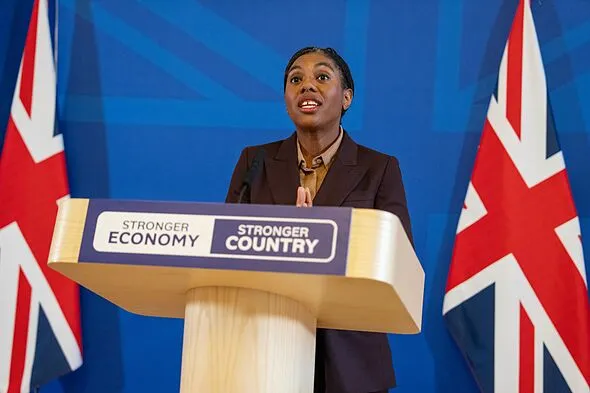
Conservative Party leader Kemi Badenoch makes a speech in central London today Photo:Philip Coburn/ (Image: Philip Coburn)
But Mr Burnham’s hints that his party’s next manifesto could vow to rejoin the bloc have sparked deep divides in the party – up to Cabinet level – and triggered widespread anger.
The Conservatives have said there is no desire to rerun the Brexit debate and Reform UK’s Nigel Farage has said there is no mandate to pursue closer EU ties.
Speaking on Sunday Mrs Badenoch, who has previously spoken of the Brexit divide in her own household, told Sky News: “We have now settled that debate.
We’ve left the EU. We need to be making the best of it.
“Yes, of course, there are some things which could be improved.
What I want to see Andy Burnham doing is looking to improve those things, not just go back into the messy debate.
“People arguing with their families, the whole country being on pause until we go round and round in circles, deciding how to rejoin.”
She also told the BBC: “I do not want to indulge Andy Burnham’s fantasies about redoing the referendum because he doesn’t have a plan for what to do today.
He keeps talking about things that will happen after the next election. Where is his plan for now?”
Writing in The Sunday Times, Ms Reeves welcomed the Prime Minister’s “leadership” in reopening the Brexit debate.
She said: “I am proud of the progress we have already made in strengthening our relationship with the European Union.
“Brexit has made us poorer, weaker and less secure.
“There is a debate to be had about our future relationship with Europe, and I welcome Andy Burnham’s leadership in facing up to this.
No one in the Treasury ever doubted where my instincts were.”
She added: “I do believe Britain’s future lies in the European Union.
“However, it is incumbent on supporters of our re-entry to make the argument, demonstrate tangible benefits and to get the next steps right – especially ahead of the UK-EU summit later this month, where at a minimum we should be looking for confirmation of the ambitious youth mobility scheme negotiated earlier this year, and – I hope – progress towards entry into the SAFE defence partnership.”
Reform UK’s deputy leader Richard Tice, said: “Reeves wants Labour to drag UK back into a failing, rioting EU
“Our growth is poor, EU growth even worse. Why open borders to more mass immigration?
“Only Reform will save Britain from this madness.”
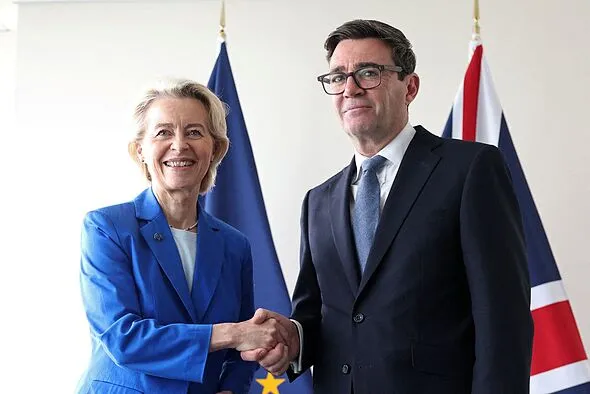
British Prime Minister Andy Burnham (R) mets with European Commission President Ursula von der Leyen (Image: POOL/AFP via Getty Images)
Mr Burnham is due to meet EU commission chief Ursula von der Leyen in Brussels on November 20 to finalise new terms.
There are concerns he will make deep concessions in return for better trade arrangements.
Ministers reportedly agreed last week that 80,000 young Europeans will be allowed to come to the UK to live and work under a new ‘youth mobility’ deal.
Critics have branded it youth “free movement”.
The PM’s call for an “honest discussion” about a return to freedom of movement has prompted a frenzy in Labour circles.
Confusion mounted after he was pressed on how any change in Labour’s manifesto red lines would be put to voters.
Mr Burnham initially said there would be no shift within this Parliament and signalled that he could fight the next general election on a promise to take the UK back into the bloc.
But in another interview, he said “no”when asked whether he would allow the UK to reinstate EU freedom of movement without a referendum.
That forced Downing Street to clarify that he was “not leaning either way” on how to move forward or whether there needed to be a national vote.
In a letter to the Cabinet, Mr Burnham warned ministers against publicly advocating for any specific outcome after the EU-UK summit later this month.
However, Chancellor John Healey, who represents a heavily Leave-supporting area of South Yorkshire, used a series of post-Budget interviews last week to downplay the chances of the UK rejoining the EU.
The 66-year-old said he did not see Britain returning to the bloc in his lifetime and cast doubts on reinstating freedom of movement.
“BRITAIN’S FUTURE IS INSIDE THE EU!” — Rachel Reeves’ Stunning Words Reignite the Brexit Battle!
Britain’s political debate over Brexit has entered a new and controversial chapter following a dramatic intervention by former Chancellor Rachel Reeves, who has declared that she believes the country’s future lies inside the European Union. Her remarks have reignited disagreements over Britain’s departure from Europe and placed renewed pressure on Prime Minister Andy Burnham as he considers the possibility of rebuilding relations with Brussels. The statement has attracted considerable attention because it represents a clear expression of support for Britain’s eventual return to the European Union from one of Labour’s most prominent political figures.
Writing in The Sunday Times on 1 November 2026, Reeves argued that Brexit had made Britain “poorer, weaker and less secure”. She also welcomed Burnham’s willingness to reopen the discussion about Britain’s future relationship with Europe. Her intervention represents a significant development in the political debate because Labour’s 2024 election manifesto had explicitly ruled out rejoining the European Union, the single market and the customs union.
Reeves’ comments have therefore raised important questions about whether Britain’s political establishment is beginning to reconsider the long-term consequences of Brexit. For supporters of European integration, her statement provides an opportunity to discuss the economic and political advantages of returning to closer cooperation with European countries. For Brexit supporters, however, it represents a worrying development that could undermine the democratic decision made by millions of British voters in 2016.
The Brexit referendum remains one of the most important political events in modern British history. Approximately 17.4 million people voted to leave the European Union, compared with around 16.1 million who voted to remain. The result reflected widespread dissatisfaction with aspects of European integration, immigration arrangements and the influence of EU institutions over British policymaking. Many Leave supporters believed that Britain would become stronger and more independent outside the organisation.
For these voters, Brexit was not simply about changing trade arrangements. It was about restoring national sovereignty and ensuring that decisions affecting British citizens were made by their own elected representatives. They wanted the government to control immigration, establish independent regulations and negotiate trade agreements with countries around the world. Consequently, the possibility of rejoining the EU remains an emotionally sensitive issue for many people who supported leaving.
However, Rachel Reeves believes that the economic consequences of Brexit deserve serious reconsideration. She has argued that leaving the European Union created additional barriers to trade, increased uncertainty for businesses and weakened Britain’s international position. Supporters of her argument believe that closer relations with European markets could improve investment, strengthen economic growth and create new opportunities for British industries.
Trade is one of the most significant issues in this discussion. The European Union remains an important trading partner for the United Kingdom, and many British businesses depend on access to European customers and suppliers. Since Brexit, companies have had to adapt to additional customs procedures, documentation requirements and regulatory arrangements. Smaller businesses, in particular, may struggle with the administrative costs associated with exporting goods to European markets.
Those supporting closer EU relations argue that reducing unnecessary barriers could help British businesses become more competitive. Improved cooperation could benefit manufacturers, farmers, exporters and service providers. It could also encourage international investment and strengthen Britain’s position in industries such as artificial intelligence, pharmaceuticals, renewable energy and advanced manufacturing.
Nevertheless, Brexit supporters argue that Britain should use its independence to develop its own economic opportunities. They believe that leaving the European Union allows the country to establish regulations and trade agreements that reflect its national priorities. They also warn that returning to the organisation could involve financial obligations and regulatory commitments that might limit the government’s freedom to make independent decisions.
Immigration is another major issue that could influence the debate. One of the central arguments behind the Leave campaign was the desire to regain control over Britain’s borders. Many voters believed that leaving the EU would allow the government to establish an immigration system based on national economic and social priorities. Today, immigration remains a controversial subject, particularly regarding irregular Channel crossings, asylum applications and pressure on public services.
Critics of rejoining the EU fear that returning to the organisation could eventually involve restoring freedom of movement. They argue that the government should retain complete authority over immigration policy and ensure that migration levels are managed according to the country’s economic needs. They also believe that public confidence in the political system depends on politicians respecting the commitments made during the referendum campaign.
On the other hand, supporters of closer European relations argue that immigration should not be treated exclusively as a political threat. International workers contribute significantly to the British economy, particularly in healthcare, construction, agriculture, hospitality and social care. Cooperation with European countries can also help combat organised crime, human trafficking and illegal migration networks. Therefore, immigration policy requires a balanced approach that considers economic requirements, border security and humanitarian responsibilities.
Another important aspect of Reeves’ intervention is its relationship with Andy Burnham’s political strategy. Burnham has argued that Britain needs an honest discussion about the long-term consequences of Brexit and the possible advantages of closer cooperation with Europe. He has indicated that the government should explore different options rather than automatically ruling out every form of European integration.
However, Burnham has also recognised that major changes would require democratic legitimacy. Any fundamental shift in Britain’s relationship with the European Union would need to be presented clearly to voters, potentially through a future general election manifesto. This distinction is important because closer economic cooperation does not necessarily mean immediately rejoining the EU.
There are several possible arrangements between Britain and the European Union. The government could negotiate improved trade agreements, participate in joint research programmes, strengthen defence cooperation or develop youth mobility arrangements. Alternatively, it could consider more substantial changes involving the single market or full EU membership. Each option would involve different economic benefits, political responsibilities and regulatory requirements.
Reeves has also highlighted the importance of demonstrating tangible benefits before asking the British public to support rejoining. She has referred to opportunities involving youth mobility and participation in the European SAFE defence programme. These arrangements could provide practical advantages without necessarily requiring immediate membership of the European Union.
Her intervention has nevertheless attracted criticism from political opponents. Conservative leader Kemi Badenoch has argued that reopening the Brexit debate risks distracting the country from more immediate economic and social problems. Nigel Farage and other Brexit supporters have also opposed attempts to move towards closer European integration, arguing that there is no mandate to reverse the referendum result.
These disagreements demonstrate that Brexit remains a politically divisive issue. Some voters believe that Britain should reconsider its departure because economic circumstances have changed, while others believe that the country should concentrate on making its existing arrangements work more effectively. Both perspectives raise questions about the future direction of British politics.
The media has also played an important role in bringing these disagreements back into the national conversation. Dramatic headlines about Britain returning to Europe can attract considerable public attention, but voters should examine the actual proposals rather than relying entirely on political slogans. Rejoining the European Union, participating in the single market and negotiating individual trade agreements are different arrangements with different consequences.
Furthermore, the government must consider the interests of younger generations. Many young British citizens want greater opportunities to study, work and travel throughout Europe. Improved cooperation could create educational opportunities, encourage cultural exchanges and strengthen professional relationships. At the same time, future generations will also need secure employment, affordable housing and a strong domestic economy.
Ultimately, Britain’s relationship with Europe should be determined by careful economic analysis, democratic accountability and a realistic assessment of national interests. Politicians must explain the potential costs and benefits of their proposals and avoid presenting complex international arrangements as simple political victories. The public deserves an honest discussion about what Brexit has achieved, what difficulties remain and what alternatives might be available.
In conclusion, Rachel Reeves’ declaration that Britain’s future lies inside the European Union has reignited one of the country’s most important political debates. Her intervention provides renewed support for Andy Burnham’s willingness to reconsider Britain’s relationship with Europe, while simultaneously creating further disagreements with Brexit supporters. The debate is no longer simply about the events of 2016; it is about Britain’s economic opportunities, national sovereignty, immigration policy and international position in the years ahead. Whether the country eventually chooses closer integration or maintains its existing arrangements, any major decision must respect democratic principles and be supported by clear evidence. Above all, Britain’s future should be shaped by informed public discussion rather than political hostility, allowing citizens to decide what relationship with Europe best serves the country’s long-term interests.