
Should Those Who Deliberately Murder Police Officers Face the Ultimate Punishment?.953

Few crimes strike at a community as deeply as the deliberate murder of a police officer. Officers leave their families each day knowing that an ordinary traffic stop, domestic disturbance, robbery call or welfare check can turn deadly within seconds. When an officer is intentionally ambushed or killed because of the badge he or she wears, the loss extends far beyond one department. A spouse loses a partner, children lose a parent, colleagues lose someone they trusted with their lives, and an entire community is reminded of the danger faced by those charged with enforcing its laws.

That reality has fueled a longstanding argument in the United States: should someone convicted beyond a reasonable doubt of deliberately murdering an on-duty police officer automatically face the death penalty, and should the legal process be dramatically accelerated?
Supporters of the harshest possible punishment make a powerful moral argument. Police officers are often required to move toward situations everyone else is trying to escape. They respond to armed suspects, violent confrontations and unpredictable emergencies. Targeting an officer precisely because he or she represents the law can therefore be viewed not merely as an attack on an individual, but as an assault on public order itself.
American law already recognizes the special seriousness of such crimes. Federal law, for example, specifically criminalizes killing federal officers or employees who are performing official duties or are targeted because of those duties. When the conduct constitutes murder, federal law directs punishment under the federal murder statute, which can allow the death penalty in qualifying cases. States also commonly treat the intentional killing of law-enforcement officers as an aggravating circumstance that can expose a defendant to the most severe punishment available in that jurisdiction.
For supporters of capital punishment, that still does not go far enough.
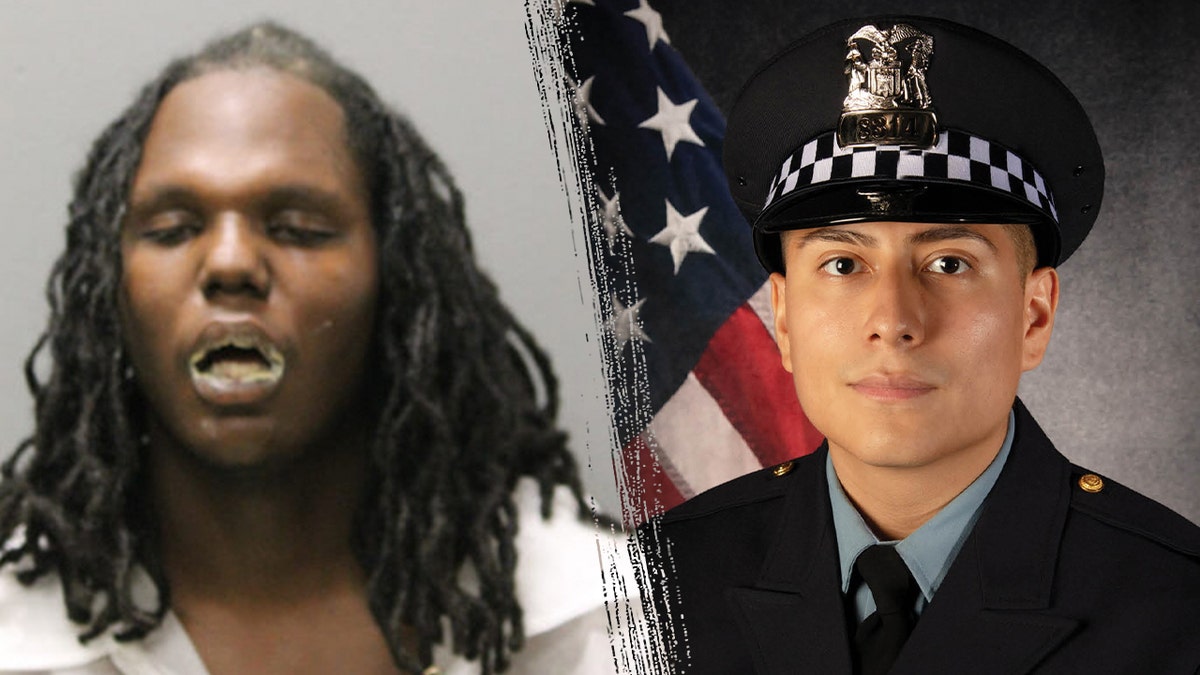
They point to cases in which officers are ambushed while sitting in patrol cars, deliberately lured into attacks or executed while trying to arrest dangerous offenders. In such cases, the argument goes, society should send the clearest possible message: deliberately murdering the person sent to protect the public will bring the most severe consequence the law allows.
There is also the suffering of surviving families.
A murder trial can take years. A capital prosecution can take much longer. After a death sentence, litigation may continue through state appeals, post-conviction proceedings, federal habeas review and applications to higher courts. Families can find themselves returning repeatedly to courtrooms long after a conviction, reliving the worst day of their lives each time another hearing or appeal is scheduled.
To some victims’ relatives, those protections can feel less like justice and more like an endless reopening of the wound.
That frustration is understandable.
But there is an important legal problem with the idea of an immediate, automatic death sentence with no appeal: under current constitutional law, America cannot simply adopt such a system.
The Supreme Court addressed mandatory capital punishment directly in Woodson v. North Carolina in 1976. North Carolina had attempted to require death sentences for certain first-degree murders. The Supreme Court found the mandatory system unconstitutional, emphasizing that capital sentencing must permit consideration of the individual defendant and the circumstances of the particular offense.
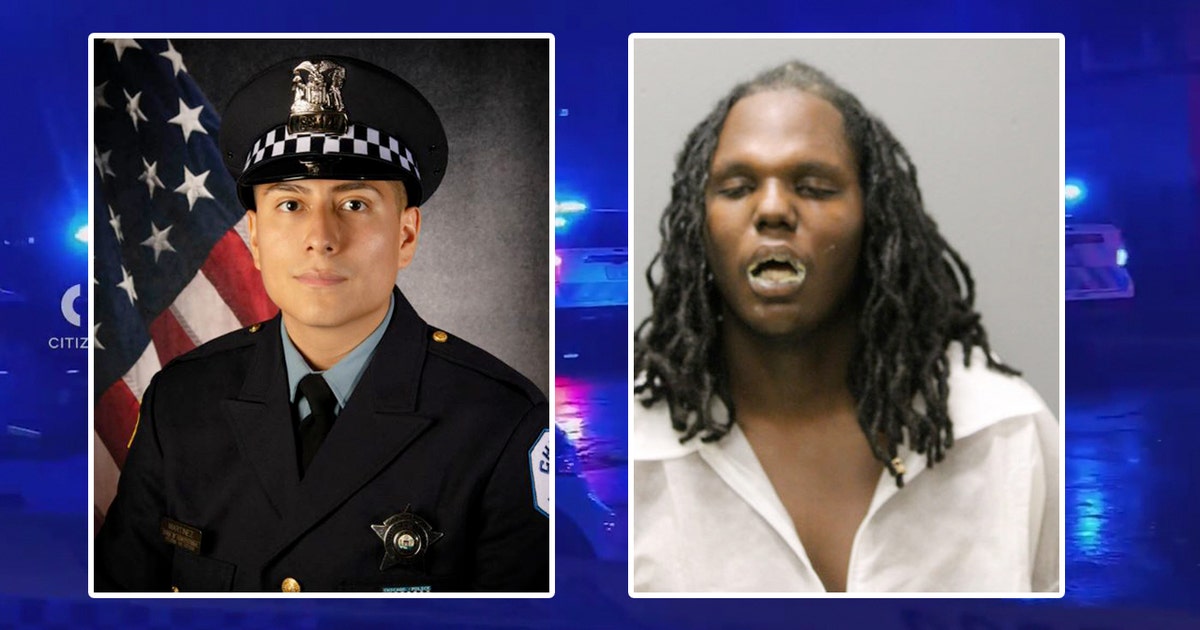
In other words, even for an extraordinarily serious murder, the government cannot constitutionally say that conviction automatically equals execution without individualized sentencing.
The same principle complicates proposals to eliminate meaningful judicial review altogether.
Capital punishment is irreversible. Once an execution occurs, a mistaken conviction cannot be corrected. American courts therefore subject death sentences to unusually intense scrutiny. That process can be frustratingly slow, particularly for victims’ families, but it exists partly because criminal justice systems sometimes make catastrophic mistakes.
Recent cases demonstrate that these protections are not merely theoretical. In 2026, the Supreme Court continued reviewing death-penalty cases involving questions such as intellectual disability, unreliable evidence and constitutional violations during trial proceedings.
That does not require accepting decades of unnecessary delay.
There is a substantial difference between arguing that capital defendants should receive no appeals and arguing that those appeals should be conducted more efficiently.
A government determined to impose strong consequences for deliberate attacks on police could pursue reforms that preserve constitutional safeguards while reducing needless delays. Courts could prioritize capital cases involving murdered officers. Legislatures could fund additional judges, prosecutors and qualified defense attorneys so cases do not sit unresolved because of overloaded systems. Deadlines could be enforced more consistently, and repetitive claims that have already been thoroughly adjudicated could be handled more quickly where the Constitution permits.

Such an approach would attempt to balance two principles that are often presented as mutually exclusive: swift justice and reliable justice.
There is another difficult issue that deserves acknowledgment: not every killing involving a police officer presents identical circumstances.
The law distinguishes intentional murder from reckless conduct, manslaughter and killings committed without premeditation. A defendant who deliberately waits for an officer and launches an ambush presents a fundamentally different factual situation from a case where the identity of the shooter is disputed or where the circumstances surrounding a chaotic confrontation remain unclear.
That is why due process matters even when the alleged crime inspires overwhelming anger.
Protecting police officers does not require abandoning the legal principles they themselves swear to uphold.
In fact, one can make a conservative law-and-order argument for maintaining rigorous trials and appeals: punishment carries greater legitimacy when society can say that the evidence was tested, the defendant received a fair trial, an impartial jury reached a verdict, and independent judges reviewed the process before the government imposed an irreversible sentence.
The strongest justice system is not necessarily the one that punishes fastest.
It is the one that punishes the guilty with confidence.
Supporters of the death penalty can therefore advocate forcefully for capital punishment in cases involving intentional murders of law-enforcement officers without demanding an automatic execution system that the Supreme Court has already found constitutionally defective.
They can argue that deliberate attacks on officers should qualify as aggravated murder.
They can demand that prosecutors pursue the harshest lawful sentence when the evidence warrants it.
They can call for capital appeals to be resolved faster.
And they can insist that families of fallen officers should not have to wait decades for finality.
But eliminating individualized sentencing and appeals altogether would create another danger: giving the government enormous power to make an irreversible decision without sufficient mechanisms for correcting error.
That principle should matter regardless of political affiliation.
There is nothing weak about insisting on due process before imposing society’s ultimate punishment. Nor is there anything unreasonable about believing that someone who knowingly ambushes and murders a police officer deserves the most severe punishment constitutionally available.
Those two ideas can exist together.
Police officers deserve protection. Their families deserve justice. A person proven to have deliberately murdered an officer can already face extraordinarily severe punishment, including death in jurisdictions where capital punishment is legally available.
The real debate is therefore not whether murdering a police officer is an exceptionally grave crime.
It clearly is.
The harder question is what justice should look like afterward.
Should America make such cases a priority, pursue capital punishment where legally justified and dramatically shorten unnecessary delays?
There is a strong argument for doing exactly that.
But justice also has to survive scrutiny. Because when the government takes a life in the name of the law, there is no appeal from a mistake after the sentence has been carried out.
Supporting the officers who protect society and protecting the integrity of the justice system should not be competing goals. A system worthy of the officers it seeks to honor must be both firm enough to punish the guilty and careful enough to be certain it has the right person.