BREAKING: Lancashire has become the first to WALK AWAY from the refugee scheme, sparking a massive national debate! . HYN

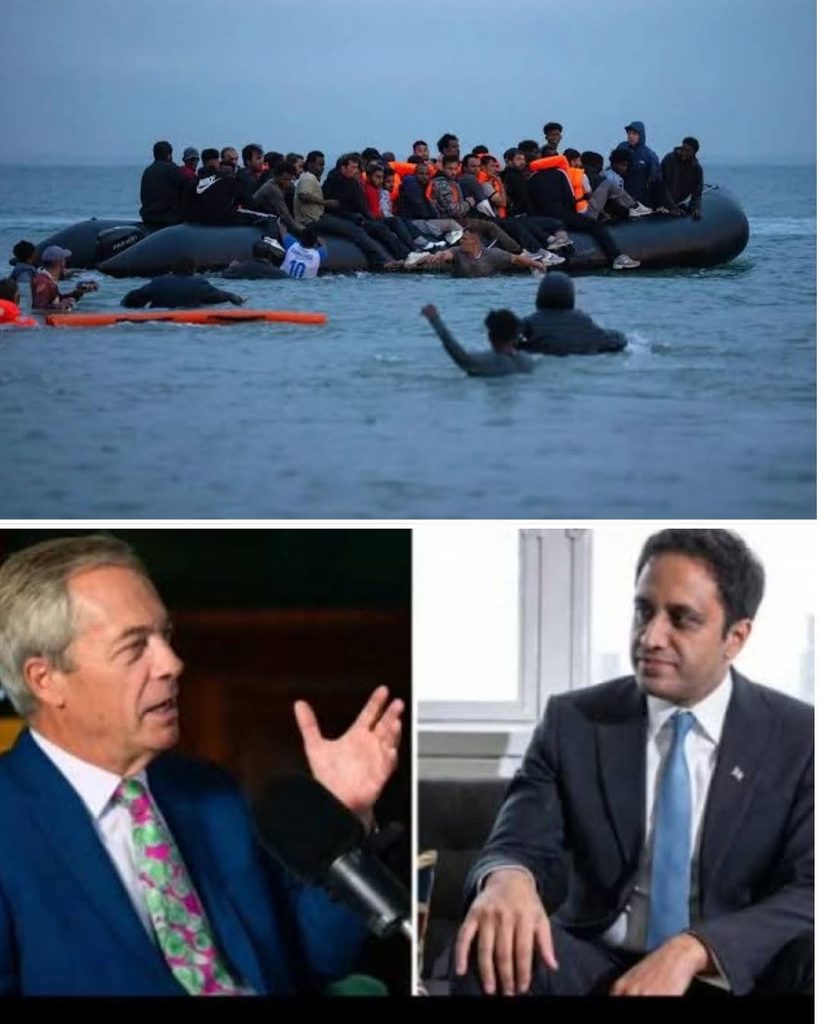
LANCASHIRE — Lancashire County Council has formally decided to withdraw from its role administering refugee resettlement schemes across the county, triggering a fierce national debate over local authority powers, housing pressure and immigration policy.
The decision is real.
But the viral claim that Lancashire has simply “walked away from refugees” needs an important qualification.
Lancashire County Council was acting as the coordinating authority for refugee resettlement schemes involving multiple local councils.
It was not operating a legal border.
And it has not announced that refugees are banned from Lancashire.
What it has done is end its administrative responsibility for several Home Office-backed resettlement programmes.
On September 3, 2026, the council’s Cabinet considered three options.
The first was a full withdrawal from all refugee resettlement administration responsibilities.
The second was to stop administering new arrivals while continuing support for existing families.
The third was to continue the current arrangements.
Cabinet chose Option 1.
That means Lancashire County Council will cease acting as the coordinating authority, with a managed transition to another arrangement.
The council gave several reasons.
It said it wanted to deliver value for money.
It argued that Lancashire County Council was no longer the best body to administer the schemes.
It said responsibility should increasingly sit with authorities that actually hold statutory housing duties, particularly ahead of local government reorganisation.
And it raised what it described as the unfairness of operating a dedicated scheme that was not available to all Lancashire residents.
That final argument is the one driving the biggest political reaction.
Supporters of the decision say local residents are already facing intense pressure on housing, public services and council budgets.
From that perspective, they argue that local authorities should be able to prioritise scarce resources according to local need.
Critics see the issue very differently.
They argue that refugee resettlement exists precisely because people fleeing war or persecution face circumstances that ordinary housing applicants do not.
They also warn that if more councils withdraw, responsibility may simply be pushed onto neighbouring authorities rather than disappearing.
That is why the phrase “put locals first” is politically powerful but incomplete.
The council is not choosing between giving one specific house to a refugee or one specific house to a local family.
The system is more complicated.
Refugee resettlement programmes are funded and organised through the Home Office, with local authorities participating in different administrative and delivery roles.
Lancashire’s decision is about whether the county council should continue coordinating those programmes, not whether every individual district or borough must automatically stop participating.
The scale is significant.
Council documents indicate the arrangements affected around 745 refugees across 14 Lancashire councils, while Lancashire County Council had been managing central administrative functions associated with the schemes.
The council also had substantial Home Office funding attached to those responsibilities.
CouncilMonitor’s summary of the underlying report states that more than £18 million had been claimed up to March 31, 2026, alongside millions more in unspent or expected funding.
So this is not simply a symbolic gesture.
It involves staff.
Contracts.
Funding.
Existing families.
Future arrivals.
And the practical question of who takes over once Lancashire County Council exits.
That is why the Home Office reportedly asked for a phased and carefully managed transition rather than an immediate stop.
The decision also faced internal resistance.
Nineteen councillors submitted a formal call-in request asking the scrutiny committee to reconsider Cabinet’s decision.
On September 11, the Community, Cultural and Corporate Services Scrutiny Committee examined the issue.
After discussion, a motion asking Cabinet to reconsider was put to a vote.
It failed.
The original decision therefore remained in place.
This makes Lancashire an important test case.
LocalGov had already reported in May that the Reform-led authority could become the first UK council to withdraw from the government’s refugee resettlement scheme in this manner.
By September, the council had formally approved the exit.
But is this really the beginning of a nationwide “revolt”?
That is not established yet.
Other councils have certainly challenged different parts of national asylum and immigration policy.
Some have demanded more local control.
Others have criticised asylum accommodation decisions.
And some councils have moved in the opposite direction, defending refugee support or reducing cooperation with immigration enforcement.
The political pressure is therefore real.
But there is not yet evidence of a coordinated national wave of councils abandoning resettlement programmes.
Lancashire’s move matters because it creates a precedent.
If other councils conclude that central government funding does not compensate for administrative burdens, housing pressures or political backlash, they may reconsider their own participation.
But that depends on local circumstances.
And the Home Office still retains responsibility for national refugee and asylum policy.
There is also a crucial distinction between refugees and asylum seekers.
Refugee resettlement schemes typically involve people selected through official programmes before arrival.
The broader asylum system includes people who arrive in the UK and then claim protection.
Those are different legal and administrative systems.
Public debate frequently mixes them together.
That can make the political argument sound simpler than the policy really is.
Lancashire’s decision therefore tells us something important.
Local councils are becoming more willing to challenge Whitehall over who should pay for and administer immigration-related programmes.
But it does not mean Lancashire has “shut the door”.
It does not remove the Home Office’s responsibilities.
And it does not automatically force every district council in the county to stop supporting refugees.
The real question now is whether other authorities follow the same administrative path.
If they do, Westminster could face a much bigger problem:
not a rebellion against refugees themselves,
but a rebellion by local government against carrying the operational burden of national policy.
That distinction may decide whether Lancashire remains an isolated case —
or becomes the beginning of something much larger.
BREAKING: Lancashire Becomes the First to WALK AWAY from the Refugee Resettlement Scheme, Sparking a Massive National Debate!
A major political controversy has emerged in Britain after Lancashire County Council decided to withdraw from its role coordinating government refugee resettlement programmes across the county. The decision, approved by the council’s Cabinet on 3 September 2026, has reignited national discussions about immigration, public spending, housing shortages, local government responsibilities and the treatment of refugees. The move has attracted particular attention because Lancashire is among the first local authorities to take such a significant step away from administering the national resettlement arrangements.
The decision has placed additional pressure on the Labour government, which must now address growing disagreements between central government and local authorities over how refugees should be supported. It has also highlighted the increasing influence of Reform UK in local politics, as councillors argue that local residents’ needs should receive greater attention when public resources are allocated.
At the centre of the controversy is Lancashire County Council’s decision to end its coordinating responsibilities for several refugee resettlement programmes. The council had previously acted as the coordinating authority for 15 local authorities across Lancashire, helping organise accommodation, financial assistance and integration support for people arriving through government-approved humanitarian programmes.
Under the new arrangements, the council will notify the Home Office and work towards transferring administrative responsibilities through a managed process. The transition is expected to be completed no later than 31 March 2027. Importantly, the decision does not mean that refugees already living in Lancashire will automatically lose their support. The council has specifically explained that its withdrawal concerns the administration and coordination of the programmes rather than the assistance available to existing refugee households.
The decision followed a review of the council’s responsibilities, financial arrangements and future administrative structure. Lancashire County Council argued that it was not legally required to continue acting as the coordinating authority and believed that responsibility should eventually rest with local authorities that have direct statutory responsibilities for housing.
One of the strongest arguments presented by supporters of the decision concerns the growing pressure on housing. Across many parts of Britain, families are struggling to find affordable accommodation, while local authorities face substantial housing waiting lists. Homelessness, rising rental prices and the shortage of suitable properties have become serious concerns for communities.
Supporters of Lancashire’s decision argue that local authorities must ensure that housing resources are distributed fairly. They believe that councils should have greater flexibility to determine how available properties and public funds are used, particularly when local residents are experiencing financial difficulties.
Reform UK representatives have also argued that public money should be directed towards vulnerable British residents, including homeless people, struggling families and military veterans. From their perspective, local government should prioritise the needs of people already living in the community before accepting additional administrative responsibilities.
Joshua Roberts, Lancashire County Council’s Cabinet Member for Rural Affairs, Environment and Communities, supported the decision to withdraw from the coordinating role. He argued that the existing arrangements needed to be reconsidered to ensure that public resources were used effectively and fairly.
However, the decision has not been welcomed by everyone. Opposition councillors and refugee-support organisations have raised concerns about the potential consequences for vulnerable individuals who depend on resettlement programmes. They argue that withdrawing from the coordinating arrangements could create uncertainty and make it more difficult to provide consistent support.
Critics also question whether ending the council’s administrative responsibilities will actually resolve the housing problems affecting Lancashire. They argue that the wider shortage of affordable accommodation is connected to years of insufficient housebuilding, rising property prices and economic pressures. From this perspective, reducing involvement in refugee resettlement does not necessarily create additional affordable homes for British families.
Another important issue concerns the financial arrangements behind refugee resettlement. Government-supported programmes provide funding for accommodation, integration assistance and other essential services. Supporters of the withdrawal argue that councils must carefully examine whether these arrangements represent the most effective use of available resources.
Nevertheless, refugee-support organisations point out that resettlement programmes are not simply an unnecessary financial burden. They provide protection for individuals escaping conflict, persecution and serious threats to their safety. Many refugees arrive in Britain through legal humanitarian pathways after undergoing government assessments and security procedures.
People arriving through these programmes may include families from Afghanistan, Syria and other countries affected by conflict and instability. Some Afghan refugees previously worked alongside British forces or supported the UK’s mission in Afghanistan. Others may have faced persecution because of their political activities, professional responsibilities or personal circumstances.
For these individuals, resettlement represents an opportunity to rebuild their lives in safety. Access to accommodation, education, healthcare, language classes and employment assistance can make an important difference to their ability to integrate into British society.
The debate therefore raises an important humanitarian question: how can Britain balance the responsibilities it has towards vulnerable refugees with the needs of local communities facing economic difficulties?
Supporters of refugee resettlement argue that these responsibilities should not be treated as mutually exclusive. They believe that the government should provide sufficient funding to ensure that refugees receive appropriate assistance without placing unreasonable pressure on local services. They also point out that refugees who successfully integrate can contribute to the economy, establish businesses, pay taxes and become valuable members of their communities.
On the other hand, residents who are concerned about immigration and housing shortages want greater transparency about how decisions are made. They believe local communities should be consulted before councils accept additional responsibilities and that government funding should be sufficient to cover the costs involved.
The controversy has also highlighted tensions between central government and local authorities. National immigration and refugee policies are established by the government, but local councils often have to deal with the practical consequences. They must consider accommodation, education, social services and the needs of existing residents.
When local authorities believe that they lack sufficient resources or administrative capacity, disagreements with central government can emerge. Lancashire’s decision illustrates how these tensions may develop into wider political disputes about the responsibilities of different levels of government.
Another important consideration is the future of local government in Lancashire. The county is preparing for significant changes to its administrative structure, with local government reorganisation expected to affect how responsibilities are distributed between councils. Lancashire County Council argued that refugee resettlement administration should be transferred to authorities better positioned to manage housing-related responsibilities under the future arrangements.
This suggests that the decision was not exclusively about immigration policy. Administrative efficiency, legal responsibilities, financial management and organisational changes also played important roles.
The national political consequences could nevertheless be considerable. Reform UK politicians may point to Lancashire as an example of local authorities demanding greater control over immigration-related responsibilities. Other councils could examine their own arrangements and question whether continuing to coordinate refugee resettlement programmes is appropriate for their circumstances.
However, it would be premature to assume that every local authority will follow the same approach. Different councils face different housing conditions, financial circumstances and community priorities. Some may prefer to continue participating in humanitarian programmes, while others may consider alternative administrative arrangements.
The government now faces the challenge of ensuring that Lancashire’s withdrawal does not create unnecessary disruption. The Home Office and relevant local authorities will need to establish a clear transition plan, identify an appropriate replacement coordinating authority and ensure that existing refugee households continue receiving the support to which they are entitled.
Equally, ministers must address the concerns of local residents. Improving affordable housing, investing in public services and providing transparent information about refugee funding could help reduce tensions. Local communities should be able to understand how decisions are made and what financial responsibilities are involved.
The media also has an important responsibility when reporting this controversy. Describing Lancashire as walking away from the refugee scheme may attract attention, but it is important to explain precisely what the council has decided. Lancashire is withdrawing from its administrative coordinating role, not automatically ending refugee protection throughout the county or removing assistance from people already living there.
Ultimately, the controversy demonstrates the difficulty of balancing national humanitarian commitments with local economic and social responsibilities. Britain needs an immigration and refugee system that is properly funded, efficiently administered and responsive to the concerns of communities.
In conclusion, Lancashire County Council’s decision to withdraw from coordinating refugee resettlement programmes has opened another major debate about immigration, housing, public spending and local democracy. Supporters believe the move will allow local authorities to concentrate on their statutory responsibilities and the needs of existing residents, while critics warn that it could create uncertainty for vulnerable refugees and complicate the delivery of humanitarian support. The government’s priority must now be to organise a safe transition, protect existing refugee households and ensure that local councils have the resources required to support their communities. Ultimately, Britain must find a fair and sustainable approach that recognises the difficulties facing ordinary residents while maintaining its legal and humanitarian responsibilities towards people fleeing persecution and conflict. The real test will be whether the government can turn this political disagreement into practical improvements for everyone affected.