
BREAKING: Marine Veteran Robert Gilman Freed by Russia After 1,666 Days in Detention.982

After 1,666 days in Russian custody, former U.S. Marine Robert Gilman is finally free. Russia released the 32-year-old American on August 11, 2026, bringing an end to more than four years of detention that U.S. officials had challenged and that became increasingly urgent as reports emerged that Gilman’s physical and psychological condition had seriously deteriorated. His release came on humanitarian grounds following discussions between President Donald Trump and Russian President Vladimir Putin, with U.S. officials saying no prisoner exchange was required.
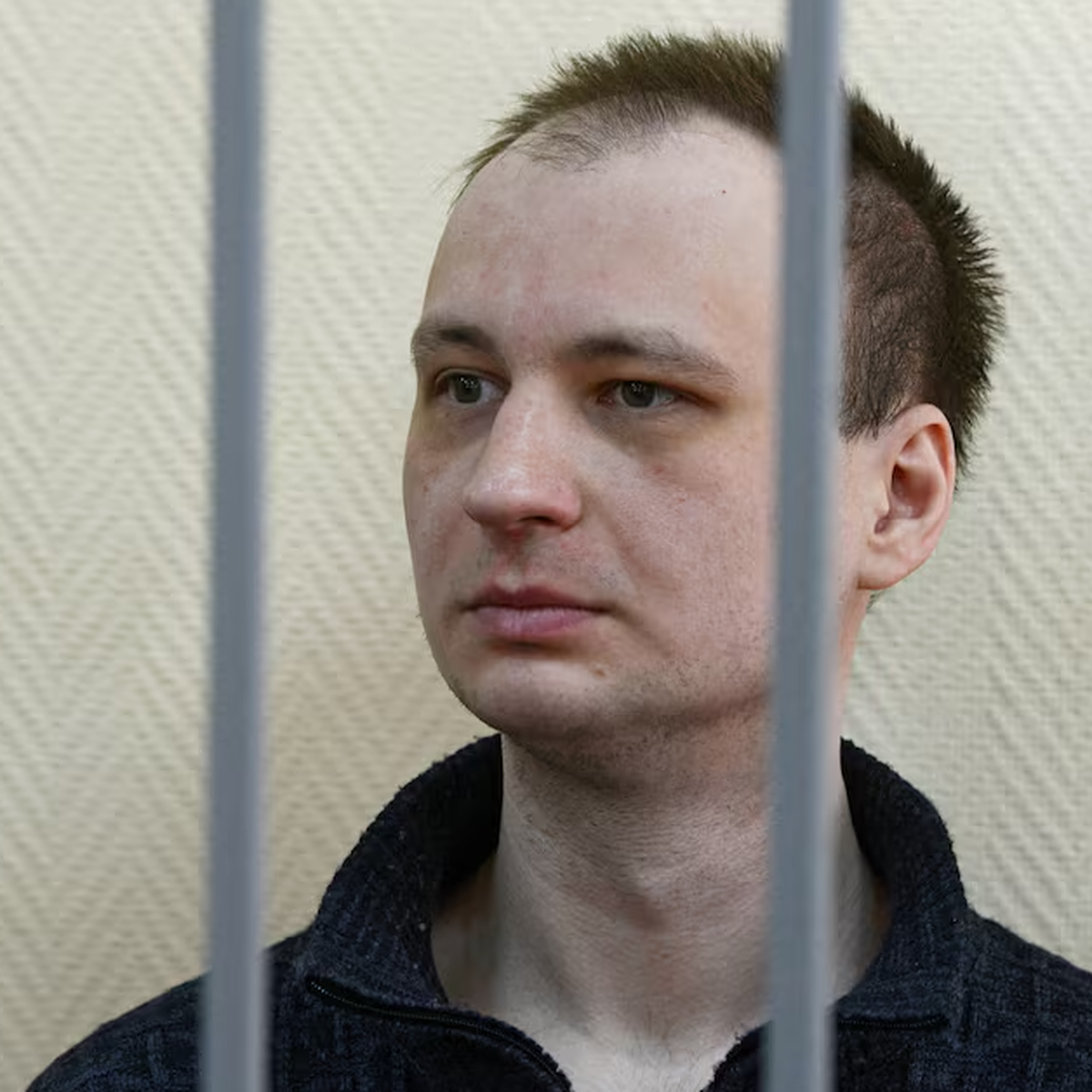
Gilman had been held in Russia since January 17, 2022. According to a 2025 letter from members of Congress to Secretary of State Marco Rubio, Gilman was traveling from the United States toward Moldova for a teaching assignment when he became ill while transiting through Moscow. He remained in Russia to recover and replace a damaged passport. While traveling for an appointment connected to replacing that passport, he was arrested by Russian authorities.
Russian authorities accused Gilman of assaulting a police officer while intoxicated. He was ultimately convicted and sentenced to prison, initially receiving a sentence of approximately four and a half years. His family disputed the Russian account and maintained that the case against him was unjustified. Over time, Gilman also faced additional allegations involving incidents while he was incarcerated, further extending the legal ordeal surrounding his detention.
For years, his family and advocates pushed American officials to intervene. The case gained additional political attention as lawmakers raised concerns about his treatment and sought stronger action from the State Department. Gilman’s family submitted an application seeking to have him formally designated as wrongfully detained under U.S. law, and lawmakers urged the government to use every available diplomatic channel to secure his freedom.
But by the summer of 2026, the issue was no longer simply about how long Gilman might remain imprisoned. It had become a race against his deteriorating health.
Reports from his advocates described an alarming decline while he remained in Russian custody. By June, Gilman’s condition had reportedly worsened so severely that he was transferred to a civilian psychiatric facility. Advocates described him as being in a dissociative or catatonic-like state and warned publicly that they feared he might not survive without urgent medical intervention. His representatives also alleged that years of harsh physical and psychological treatment had contributed to his condition. Those allegations heightened pressure on both governments to find a humanitarian solution.
The U.S. government said it was deeply concerned about Gilman’s health and repeatedly raised his case with Russian authorities, requesting his release on humanitarian grounds. With his condition reportedly becoming more serious, the effort to bring him home accelerated.
Then came the breakthrough.

On August 11, Russia released Gilman after Putin granted him a pardon. President Trump said the decision followed his discussions with Putin and emphasized that Russia did not demand another detainee in exchange. According to U.S. accounts of the release, there was no prisoner swap—an important distinction given the history of complicated exchanges involving Americans imprisoned in Russia. The release was instead characterized as a humanitarian action.
For Gilman’s family, the moment ended an ordeal that had lasted 1,666 days.
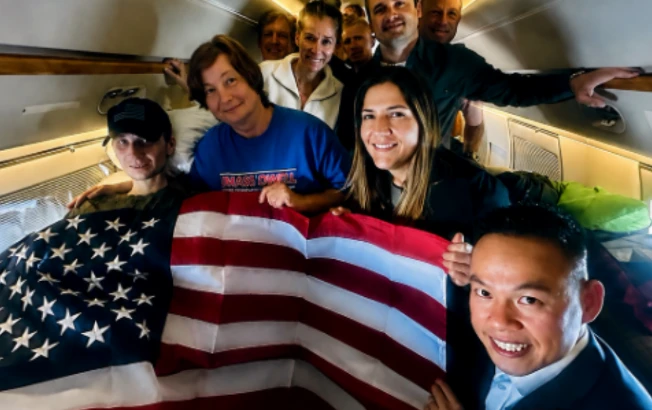
After leaving Russia, Gilman was flown back toward the United States. He arrived at Dulles International Airport, where his return reportedly included a distinctly American welcome: hamburgers and milkshakes. But the celebration was accompanied by the reality that his recovery may only be beginning. Plans called for Gilman to continue to a U.S. military medical facility in San Antonio, Texas, where he could receive extensive medical and psychological evaluation and treatment.
The joyful images surrounding his return stand in sharp contrast to the disturbing reports about his condition only days earlier. Instead of his family wondering whether he would survive Russian custody, Gilman was finally back under American care with the opportunity to recover alongside those who had spent years fighting for his release.

His case also illustrates the extraordinary complexity surrounding Americans detained overseas. Once an American citizen is arrested in another country, U.S. officials cannot simply order that country’s government to release the person. Diplomatic negotiations, consular access, local criminal laws, international relations and political considerations can all become part of the process.
Russia has been an especially difficult environment for such cases. Over the past several years, the detention of Americans has repeatedly become a major issue between Washington and Moscow. Some Americans have been released through high-profile prisoner exchanges, while others have remained behind bars for extended periods. Gilman’s release without an exchange therefore attracted particular attention.
Secretary of State Marco Rubio welcomed the development while also emphasizing that other Americans remain detained in Russia. Among the cases drawing U.S. concern is that of Stephen Hubbard, an American teacher imprisoned after Russian authorities accused him of assisting Ukrainian forces. Gilman’s freedom is therefore a significant victory for his family, but it does not end the broader diplomatic struggle over Americans still held in Russian custody.
Gilman’s story is also striking because of how quickly his circumstances changed. Only days before his release, public reports described advocates fearing that he was approaching a medical crisis from which he might not recover. Then diplomatic discussions produced the outcome his family had sought for years.
Four years and seven months is an enormous portion of anyone’s life. In Gilman’s case, those years unfolded almost entirely inside the Russian detention and prison system, far from his family and the country where he had served as a Marine.

Now comes a very different challenge.
Freedom does not automatically erase what happened during 1,666 days of incarceration. Gilman’s immediate priorities are expected to center on his health, treatment and reunion with his family rather than public attention. Medical professionals will need to assess the extent of his physical and psychological condition, particularly after the serious concerns raised shortly before his release.
There may also eventually be more questions about exactly what happened to him while he was imprisoned. His family and advocates have disputed key elements of the Russian case and raised serious allegations regarding his treatment. Gilman himself may ultimately provide a fuller account once his health allows him to do so.
For now, however, the most important development is simple: Robert Gilman is no longer inside a Russian prison.
After 1,666 days of uncertainty, legal battles, diplomatic pressure and growing fears about whether he would survive long enough to return home, the former Marine is back in American hands and headed for medical care.
His family finally has the outcome it spent more than four years seeking. Yet Gilman’s release may not be the end of his story. As doctors evaluate his condition and he begins recovering from years in Russian custody, Americans may soon learn much more about what he says happened behind those prison walls—and why the final days before his freedom became so urgent.