Horror as 39 dead after boat heading for Europe sinks off coast of African country . HYN

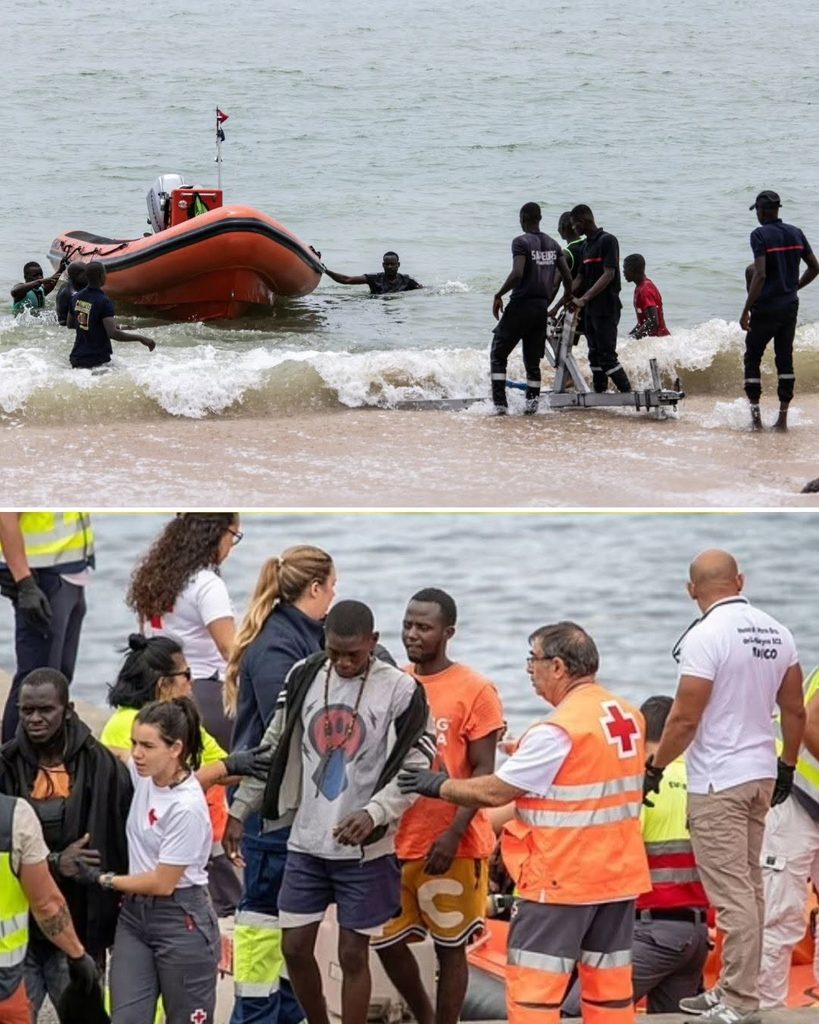

A small boat has capsized off the coast of Senegal (Image: Getty)
At least 39 people have died after a migrant boat travelling towards Europe capsized off the coast of Senegal, the Senegalese Press Agency (APS) reports. The small wooden boat which left the northern city of Saint-Louis was bound for Spain’s Canary Islands. According to the Ministry of Interior, only one passenger was rescued alive near the town of Kébémer, 112 miles north of the capital Dakar, and the number of missing people has yet to be confirmed. Initially, the Senegalese Ministry of the Interior stated that 21 bodies had been recovered. This number has since risen to 39.
Saliou Diouf, founder of Senegalese migrant aid group Boza Fii, told AFP that all the bodies recovered by Sunday evening were Senegalese.
The nationalities of other people on board have yet to be identified.
Rescue teams are continuing to search a 25km (15 mile) stretch of coastline, with difficult access and strong ocean currents hindering operations and carrying bodies further south.
Authorities say 24 of the 39 victims have been identified and their bodies returned to their families, while 11 others are still awaiting identification.
The vessel was travelling through the perilous, well-travelled migration route through the Atlantic Ocean to Spain’s Canary Islands.

El Hierro has seen more than 3,300 migrants arrive this month (Image: Getty)
President Bassirou Diomaye Faye has pledged to intensify efforts to dismantle the networks organising dangerous sea crossing.
In a statement on X, he offered his condolences to the victims’ families and urged Senegalese nationals not to risk their lives attempting the popular route.
Authorities on El Hierro, the second smallest, Canary Island declared an emergency on Saturday following a significant increase in small boat arrivals.
The tiny island, which is only home to 11,400 residents, has seen more than 3,300 migrants arrive this month in around 30 boats, according to officials. This makes up for almost a third of the population on the island.
“We are very concerned… by this sharp increase in arrivals,” Alpidio Armas, head of the El Hierro regional council, told Spanish television.
In 2024, around 47,000 migrants came from the west African coast heading to the Canaries, an 18% increase from the previous year.
Horror as 39 People Die After Migrant Boat Heading for Europe Sinks Off the Coast of Senegal
The deaths of 39 people after a migrant boat capsized off the coast of Senegal have once again highlighted the devastating dangers faced by individuals attempting to reach Europe by sea. The tragedy occurred on 8 November 2026, when a small wooden vessel carrying migrants overturned while travelling from the northern Senegalese city of Saint-Louis towards the Spanish coast. Only one passenger was rescued alive, while the bodies of dozens of victims were recovered during search operations. The incident has shocked communities and renewed concerns about the growing humanitarian crisis along dangerous migration routes connecting West Africa with Europe.
According to reports from Senegalese authorities, the vessel overturned near Kébémer, north of the capital, Dakar. Initial reports indicated that at least 21 people had died, but the death toll increased to 39 after additional bodies were discovered. Authorities did not immediately establish how many passengers had been travelling on the boat, making it difficult to determine the exact number of people still missing. Rescue teams faced challenging conditions as strong ocean currents and difficult coastal access complicated recovery operations.
The tragedy has attracted international attention because it represents another deadly incident along the Atlantic migration route towards Spain’s Canary Islands. Thousands of people attempt this dangerous journey every year, often travelling in overcrowded wooden boats that are poorly equipped for long-distance sea crossings. The Atlantic Ocean can be unpredictable, and even experienced sailors face considerable difficulties navigating its powerful waves and changing weather conditions. For migrants travelling without proper safety equipment, the risks can be catastrophic.
One of the most disturbing aspects of this incident is the extremely small number of survivors. Only one passenger was reportedly rescued alive, while 39 people lost their lives. Behind these figures are individual human stories involving families, parents, children and young people who may have hoped to find a safer and more prosperous future in Europe. Their deaths have left families facing unimaginable grief and uncertainty, particularly when relatives have not yet received official confirmation about the identities of missing passengers.
The tragedy also raises important questions about why so many people are willing to risk their lives to reach Europe. In countries such as Senegal, unemployment, poverty and limited economic opportunities can create difficult circumstances, particularly for younger generations. Many young people struggle to find stable employment despite having received an education or vocational training. Others face financial pressures within their families and believe that moving abroad may offer better opportunities.
For some migrants, Europe represents the possibility of earning a higher income, supporting relatives and building a more secure future. They may have heard stories from friends or family members who successfully established themselves overseas. Social media can also create unrealistic expectations about life in European countries, presenting images of economic prosperity without showing the difficulties associated with migration, employment, accommodation and legal status.
However, the journey across the Atlantic is extremely dangerous. Migrants may spend several days travelling in small, open wooden vessels with limited supplies of food and drinking water. Many boats are overcrowded, and passengers may have little protection from strong winds, heavy rain and enormous waves. Mechanical problems, fuel shortages and navigation difficulties can turn an already dangerous crossing into a life-threatening emergency.
Criminal smuggling networks make the situation even worse. These organisations often exploit vulnerable individuals by promising to arrange transportation to Europe in exchange for substantial payments. Some migrants spend their entire savings or borrow money from relatives to finance the journey. However, the boats used by smugglers may be unsuitable for ocean travel, and passengers are frequently exposed to serious risks. The people organising these journeys may prioritise financial profit rather than the safety of those on board.
Following the disaster, Senegal’s President Bassirou Diomaye Faye expressed condolences to the victims’ families and promised to strengthen efforts to dismantle the networks responsible for organising dangerous crossings. His response reflects the growing pressure on African governments to address irregular migration and prevent further loss of life. However, stopping these journeys requires more than increasing border patrols or arresting individual smugglers.
Governments must also address the economic and social conditions that encourage people to leave their countries. Creating employment opportunities, improving education, supporting local businesses and investing in infrastructure could help young people build sustainable futures at home. If individuals have access to decent jobs and realistic opportunities for economic advancement, fewer may feel compelled to risk everything on dangerous journeys across the ocean.
The European Union and its member states also have an important role to play. Spain, particularly the Canary Islands, has become a major destination for migrants travelling along the Atlantic route from West Africa. Spanish authorities frequently face the challenge of receiving large numbers of people arriving in small boats, providing emergency assistance and processing asylum applications. Local communities may also experience pressure on accommodation, healthcare and other public services.
Nevertheless, it is essential to recognise that migrants arriving by sea are human beings who deserve dignity and protection. Many are escaping poverty, instability or difficult personal circumstances. Some may qualify for international protection, while others may be seeking employment and better living conditions. Their individual circumstances should be assessed fairly and according to the law. Regardless of their immigration status, people in danger at sea should receive emergency assistance.
The International Organization for Migration has repeatedly warned about the dangers of irregular migration routes and the exploitation of vulnerable people by smugglers and traffickers. The organisation has called for stronger international cooperation and more effective measures to prevent deaths during migration journeys. The Senegal disaster demonstrates why these efforts are urgently needed. When criminal networks continue to operate, vulnerable people may remain exposed to dangerous transportation methods and false promises.
Another concern is the psychological impact on families and communities affected by these tragedies. In villages where several residents have disappeared or died, the consequences extend far beyond the immediate victims. Parents may lose their children, children may lose their parents, and entire families may experience financial hardship after investing their savings in a journey that ends in disaster. Communities can also suffer from grief, fear and uncertainty about the future.
The media has an important responsibility when reporting such incidents. Headlines about death tolls and migrant boat disasters can attract attention, but journalists should remember that every number represents a human life. Reporting should provide accurate information about the circumstances of the tragedy while avoiding language that dehumanises migrants or treats their deaths as merely another political statistic. Public discussion should focus on preventing future disasters rather than simply assigning blame.
Furthermore, European governments should examine whether existing migration policies are achieving their intended objectives. Stronger border controls may reduce certain irregular crossings, but they do not automatically eliminate the reasons why people migrate. In some circumstances, restrictions may encourage migrants to use more dangerous routes or rely more heavily on criminal smugglers. Therefore, border management should be combined with legal migration opportunities, international cooperation, humanitarian assistance and long-term economic development.
Legal pathways for migration could provide safer alternatives for individuals seeking employment, education or family reunification. Governments could work together to establish transparent recruitment programmes, improve access to vocational training and create opportunities for qualified workers. Such arrangements would help address labour shortages while reducing the dependence of vulnerable migrants on criminal networks.
At the same time, African governments must strengthen their efforts to protect citizens from exploitation. Public awareness campaigns should explain the real dangers of crossing the Atlantic in overcrowded boats. Authorities should investigate trafficking networks, prosecute those responsible and provide support to communities affected by irregular migration. These measures should be accompanied by meaningful economic reforms rather than relying exclusively on enforcement.
Ultimately, the deaths off Senegal demonstrate that irregular migration is not simply a political disagreement between African and European governments. It is a serious humanitarian challenge involving poverty, unemployment, inequality, criminal exploitation and the desire for a better future. Addressing the problem requires cooperation between countries of origin, transit and destination.
In conclusion, the deaths of 39 migrants after their boat sank off Senegal represent another devastating reminder of the dangers associated with irregular sea crossings towards Europe. The rescue of only one survivor makes the tragedy particularly heartbreaking and highlights the urgent need for stronger protection measures. While governments have a responsibility to control their borders and combat people-smuggling networks, they must also address the underlying reasons that drive people to undertake such dangerous journeys. Economic development, employment opportunities, legal migration pathways and international cooperation are essential parts of a long-term solution. Above all, the loss of these 39 lives should remind the international community that migration policies must never lose sight of human dignity. No individual should have to risk death in the Atlantic Ocean simply because they cannot find hope, security or opportunity in their own country.