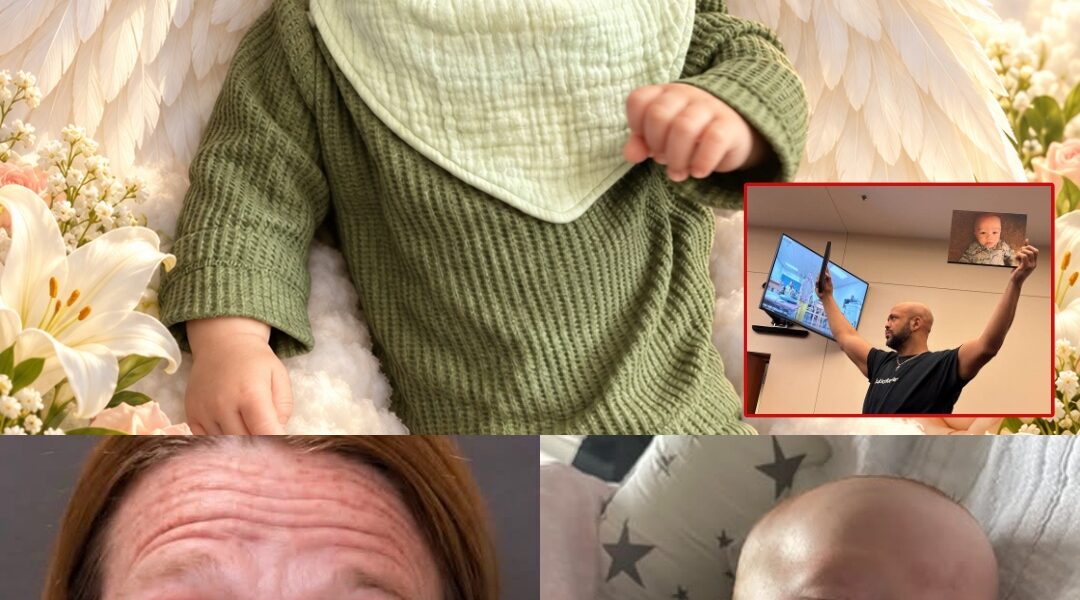

Daycare Operator Sentenced to Life After 5-Month-Old Baby Dies From Fatal Injuries While in Her Care
A devastating case in Reynoldsburg, Ohio, has ended with a daycare operator receiving a life sentence after being convicted in the death of a 5-month-old baby who was placed in her care by parents who believed he would be protected.
Tammra Straughter, 54, was sentenced on October 7, 2026, to life in prison with the possibility of parole after 15 years after a jury found her guilty of murder and child endangerment in connection with the death of Kashan Roman Crawford-Chatman.
Although the sentence allows the possibility of parole in the future, it does not guarantee that Straughter will ever be released.

For Kashan’s family, the verdict marked the end of a long legal battle but could never erase the loss of a child whose life had barely begun.
Kashan and his twin brother were born prematurely and spent weeks receiving care in a neonatal intensive care unit before finally returning home.
Months later, their mother, Stacia Crawford, made the difficult decision to place her sons in a home daycare, trusting that the caregiver would provide the same protection and attention they had received since birth.
That trust was shattered on October 9, 2023, when Kashan suffered a medical emergency while under Straughter’s supervision.
His mother received a phone call informing her that emergency crews were responding after her baby had stopped breathing.
According to court documents, the family was initially told that Kashan had started breathing again and appeared to be okay.
Straughter reportedly claimed that the baby had choked on formula and that she had attempted to help him by patting his back.
However, when Kashan was taken for medical attention, his condition became much more serious.
Doctors discovered severe brain injuries, fractures on both sides of his jaw, and significant bruising.
Despite medical efforts, Kashan passed away on October 13, 2023, just days after the incident.
The coroner later determined that his death was a homicide caused by a closed head injury consistent with shaken baby syndrome.
Investigators examining the case uncovered additional evidence that raised questions about what happened inside the daycare home that day.
According to prosecutors, deleted messages recovered from Straughter’s phone showed that she had expressed frustration about the twins’ behavior, describing them as “fussy.”

Authorities also presented evidence from inside the home that showed Kashan appeared healthy earlier in the day before his condition suddenly changed that afternoon.
At the time of the incident, Straughter was reportedly alone caring for Kashan, his twin brother, and six other children.
Prosecutors argued that the evidence showed Kashan’s injuries were not accidental and that Straughter was responsible for the fatal harm suffered by the infant.
The case became a painful reminder of the responsibility placed on childcare providers and the trust families give to those who care for their children.
During sentencing, Kashan’s father spoke about the faith his family had placed in Straughter when they left their sons in her care.
He described the heartbreak of knowing that someone trusted to protect his child was instead connected to his death.
Kashan’s mother also addressed the court, speaking about the overwhelming grief, anger, and unanswered questions she continues to carry.
She said she did not want her life to be defined by focusing only on the person responsible for taking her son away.
Instead, she wanted people to remember Kashan for the joy he brought to his family during his short life.
Loved ones described Kashan as a sweet and loving baby who had a beautiful smile and enjoyed being held and comforted.
His family remembers not only the tragedy of his final days but also the happiness he brought during the five months and 18 days he was alive.
The conviction brought accountability through the justice system, but for Kashan’s parents and twin brother, the emotional pain will continue far beyond the courtroom.
A sentence cannot return the moments they lost, the milestones Kashan will never experience, or the future his family imagined for him.

The case has also raised difficult questions about whether people convicted of crimes involving vulnerable children should ever have the possibility of parole.
While the court determined the punishment for Straughter’s actions, the debate over justice, accountability, and rehabilitation continues among those following the case.
For Kashan’s family, however, the most important message remains clear: their son was more than the circumstances of his death.
He was a baby who was loved, cherished, and remembered by everyone who knew him.
And although his life lasted only five months, his memory continues to live on through the family who will never forget him.