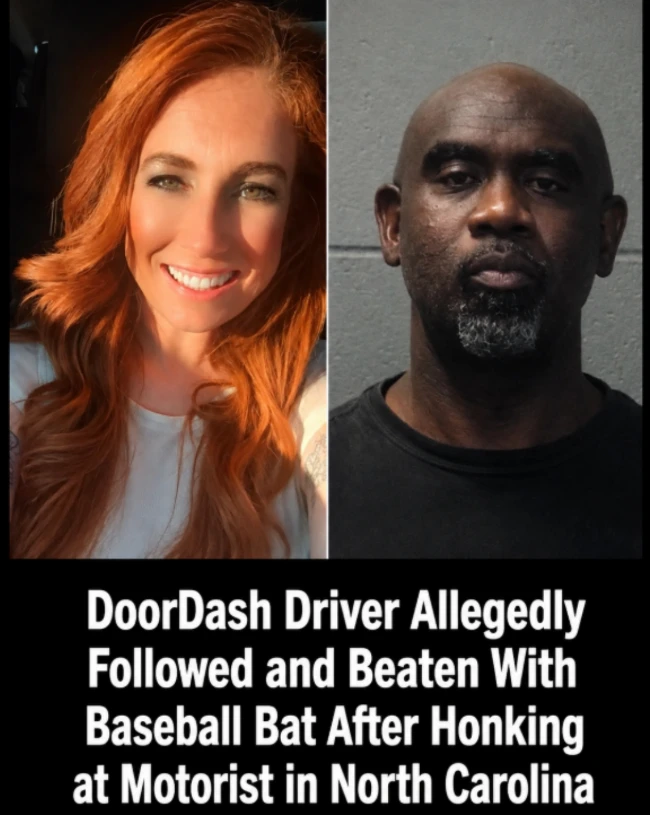
DoorDash Driver Allegedly Followed and Beaten With Baseball Bat After Honking at Motorist in North Carolina.989

A North Carolina mother of three suffered multiple skull fractures and brain bleeds after investigators say a man followed her during a DoorDash delivery shift and brutally attacked her with a wooden bat or baton. Authorities say the terrifying encounter began with something that happens on American roads every day: a driver honking her horn at another vehicle stopped in front of her.

Christen Phillips was working for DoorDash on Aug. 1 in Jacksonville, North Carolina, when she encountered another driver at an intersection. According to Phillips, the vehicle was stopped in front of her, prompting her to honk. The driver eventually moved forward, but what initially appeared to be a minor traffic interaction allegedly took a frightening turn.
The Onslow County Sheriff’s Office says the driver began following Phillips.
Phillips continued working and eventually arrived in a neighborhood to complete a DoorDash delivery. She parked her vehicle, delivered the customer’s order and began walking back toward her car. At that point, according to her account, the same man approached her vehicle.
What happened next left the mother of three with devastating injuries and almost no memory of the attack itself.
“He came around to my door with a small wooden bat or baton and beat me in the head and face with it,” Phillips later wrote on social media.
Phillips said she cannot remember the assault. Her memory effectively disappears during the most violent part of the encounter.
“I don’t remember it at all,” she said. “I woke up an unverified amount of time later.”
She did not know exactly how long she had been unconscious or incapacitated. When she regained awareness, however, she was seriously injured and needed immediate medical attention.
Despite the trauma she had suffered, Phillips somehow managed to get behind the wheel and drive herself to a nearby hospital.
Doctors soon discovered the severity of her injuries.
According to Phillips, medical examinations revealed multiple fractures to her skull, several brain bleeds and a fractured cheekbone. She also reported experiencing blood and cerebrospinal fluid draining from her ear, an alarming symptom consistent with the seriousness of the trauma to her head.
“I had multiple skull fractures and brain bleeds,” she said.
The injuries paint a disturbing picture of the force allegedly used during the attack. Investigators say the weapon involved was a bat, while Phillips described it as a small wooden bat or baton.
For Phillips and her family, what began as an ordinary DoorDash shift suddenly became a fight for recovery.

The case quickly drew attention from the Onslow County Sheriff’s Office. Detectives began trying to determine who had followed Phillips and who was responsible for the assault.
One of the challenges investigators faced was that the victim herself could not provide a complete account of the attack because of her memory loss. That meant detectives needed to rely on other evidence, witness information and tips from members of the public to reconstruct what happened.
Onslow County Sheriff Chris Thomas said investigators worked through evidence and information supplied by the public as they attempted to identify a suspect.
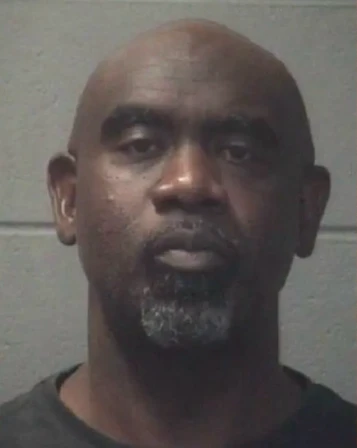
Their investigation eventually led to 44-year-old Stanley Shockley.
Authorities arrested Shockley on Monday. According to records, he faces a charge of assault with a deadly weapon with intent to kill, inflicting serious injury.
The charge reflects the seriousness of both the alleged conduct and Phillips’ injuries. Prosecutors will ultimately have to prove the allegations against Shockley in court, and he is presumed innocent unless convicted.
Investigators have not publicly disclosed every piece of evidence that led them to Shockley, and the investigation remains ongoing. That means additional information about the alleged pursuit, the attack itself and the events immediately afterward could still emerge.
A major question is how investigators reconstructed the period Phillips cannot remember.
Detectives may examine surveillance cameras, residential security systems, vehicle information, witness accounts and other evidence from the neighborhood where the DoorDash delivery occurred. Public tips can also be especially important in cases involving a vehicle or suspect seen traveling through multiple areas.
According to Sheriff Thomas, tips from the public were among the information detectives worked through before identifying a suspect.
The circumstances also highlight a vulnerability faced by delivery drivers. Workers for services such as DoorDash frequently travel alone, enter unfamiliar neighborhoods and leave their vehicles to approach homes. Their jobs require them to move from one location to another, often without coworkers nearby who could immediately notice when something goes wrong.
For Phillips, the alleged road confrontation followed her directly into that working environment.
According to investigators, the encounter did not end when the other driver moved through the intersection. Instead, he allegedly followed her as she continued her delivery route.
That detail dramatically changes the nature of what otherwise could have been dismissed as a brief moment of road frustration. Police allegations suggest that the driver had time to continue following Phillips before the confrontation occurred in the neighborhood.
The motive and exact sequence of events will likely become central questions as the criminal case develops.
Was the horn itself the only interaction between Phillips and the other driver? How far was she allegedly followed? Did Phillips realize someone was behind her before arriving at the delivery location? Was the attack captured by any camera? And what happened during the period she cannot remember?
Those unanswered questions could become important as investigators continue gathering evidence.
Phillips’ ability to drive herself to the hospital despite severe head trauma is also one of the most striking parts of her account. Multiple skull fractures and brain bleeding can be extremely serious injuries requiring urgent medical evaluation. Yet after regaining consciousness, she was apparently alone and forced to find help herself.
Her recovery may take time, particularly given the severity of the injuries she described. Head trauma can create physical and neurological complications beyond the initial wounds, and the long-term consequences may not always be immediately clear.
The fact that Phillips is a mother of three adds another painful dimension. A routine work shift intended to earn money for her family ended with hospitalization and an uncertain recovery.
The case is also a reminder of how quickly road rage or perceived disrespect behind the wheel can escalate. Honking a horn is an everyday occurrence. Drivers may use it to alert someone that a traffic light has changed, warn of danger or express frustration. Most such interactions end within seconds as both vehicles continue on their way.
Authorities allege that this one did not.
Instead, what began at an intersection allegedly continued into another neighborhood and culminated in an attack involving a weapon.
Shockley now faces an extremely serious criminal allegation. Assault with a deadly weapon with intent to kill and inflicting serious injury requires prosecutors to address not simply whether an assault occurred but the circumstances surrounding the alleged weapon, injuries and intent.
As the case progresses, the evidence used to identify Shockley could become increasingly important. Investigators may need to establish that the person arrested was the same driver involved in the original traffic encounter and connect him to the subsequent attack.
For now, Phillips is recovering while detectives continue their investigation.
Her own account remains haunting precisely because of what she cannot remember. She recalls honking at another driver. She remembers arriving to complete her DoorDash delivery. She knows, based on what happened and the injuries she suffered, that she was allegedly struck repeatedly in the head and face.
But the attack itself is missing from her memory.
She remembers waking afterward and somehow getting herself to a hospital, where doctors told her she had multiple skull fractures, brain bleeds and a fractured cheekbone.
What investigators believe happened during those missing moments has now resulted in the arrest of Stanley Shockley. Yet authorities say the investigation is not over.
As detectives continue examining evidence, more details may emerge about how a simple honk at an intersection allegedly escalated into a pursuit—and why a mother delivering food ended her shift unconscious, severely injured and alone in a neighborhood.
The criminal case will ultimately determine whether prosecutors can prove the allegations against Shockley. But for Phillips, the consequences are already painfully real: a routine night of work, a brief traffic encounter and a violent episode she cannot remember have left her facing a difficult recovery—and investigators still trying to piece together exactly what happened during the moments her memory cannot provide.