
Fort Worth Proposes $11.25 Million Settlement for Atatiana Jefferson’s Family Years After Fatal Police Shooting.980

More than six years after Atatiana Jefferson was fatally shot inside her own home by a Fort Worth police officer, the case that shocked the nation has reached another major turning point. The City of Fort Worth has proposed an $11.25 million settlement for Jefferson’s family, potentially resolving part of the long-running legal battle surrounding her 2019 death. The proposed agreement comes years after the shooting sparked outrage, criminal proceedings against the officer involved, and renewed questions about police accountability and the use of deadly force inside a person’s home.
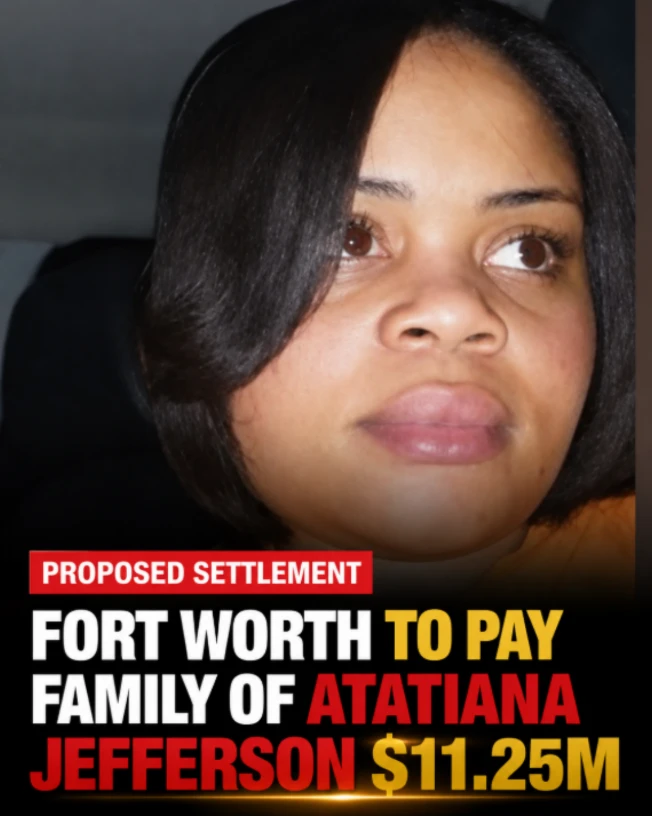
Jefferson was 28 years old when she was killed in the early hours of October 12, 2019. That night, she was at her Fort Worth home with her young nephew. According to accounts of the case, the two had been playing video games when a neighbor noticed that the front door of the house appeared to be open. Concerned that something might be wrong, the neighbor contacted authorities and requested a welfare check. What was intended to be a call to make sure the people inside were safe would instead end with Jefferson being shot and killed.
Fort Worth police officers responded to the residence, including Officer Aaron Dean. Rather than approaching the situation as an obvious emergency involving an armed suspect, officers were responding to a welfare concern. Dean and another officer moved around the outside of the house and into the backyard. Jefferson, meanwhile, apparently heard noises outside and went to investigate. The encounter that followed happened within seconds.
Body-camera footage released after the shooting showed Dean outside the home shining a flashlight toward a window. He suddenly shouted commands for the person inside to show their hands. Almost immediately afterward, he fired through the window. Jefferson was struck and later pronounced dead. The footage and circumstances surrounding the shooting immediately raised a critical question: whether Jefferson had been given any meaningful opportunity to understand that police officers were outside her home before the fatal shot was fired.

Authorities later said a firearm was found inside the residence. Texas law allows eligible residents to possess firearms in their homes, and the presence of the weapon became an important part of the subsequent criminal trial. Prosecutors and defense attorneys disagreed sharply over what Dean saw, what Jefferson was doing during those final seconds and whether his decision to fire was legally justified.
The case rapidly attracted national attention. Jefferson had not been the subject of a criminal investigation. Police had been called to check on her welfare, yet she ended up being killed inside the place where she should have had the greatest expectation of safety. Public anger intensified as more details emerged about how officers approached the home and how quickly the encounter escalated.
Dean resigned from the Fort Worth Police Department shortly after the shooting and was arrested on a murder charge. His criminal case eventually went before a jury in 2022. Prosecutors argued that Dean’s actions were unjustified, while the defense maintained that he perceived a deadly threat and reacted accordingly. After hearing the evidence, jurors did not convict Dean of murder. Instead, they found him guilty of manslaughter, a lesser offense.
Dean was sentenced to 11 years, 10 months and 12 days in prison. The conviction represented a rare instance in which a police officer was sent to prison following an on-duty shooting, but it did not end the legal and emotional consequences of Jefferson’s death.
Her family continued pursuing accountability through the civil justice system. Civil litigation differs significantly from a criminal prosecution. A criminal trial determines whether an individual defendant committed a crime beyond a reasonable doubt, while a civil case can examine whether government agencies or officials bear financial responsibility for harm and damages. The legal standards and potential outcomes are different.
Now, Fort Worth’s proposed $11.25 million settlement could bring another chapter of that process closer to an end. A settlement of this magnitude represents a substantial financial commitment by the city, although a settlement should not automatically be interpreted as the same thing as a new criminal finding or admission beyond the specific terms of the agreement.
No amount of money, however, can restore what Jefferson’s family lost.
Jefferson was a daughter, sister, aunt and a young woman whose life ended during an encounter that began with a neighbor simply trying to make sure everything was okay. Her nephew was inside the home when the shooting occurred, adding another devastating dimension to a case already marked by tragedy.

The neighbor who requested the welfare check also publicly expressed anguish afterward. His call had been intended as an act of concern, not a request for aggressive police intervention. That detail became one of the most haunting aspects of the case and helped trigger wider discussions about how law enforcement agencies conduct welfare checks.
Jefferson’s death also became part of a much larger national conversation about police use of force, particularly involving Black Americans. Questions emerged about officer training, identifying oneself as law enforcement, approaching private homes at night, responding to legally possessed firearms and determining whether deadly force is truly necessary.
For Fort Worth, the consequences extended beyond the courtroom. The department faced intense public scrutiny over its policies, training and relationship with the community. Jefferson’s name became associated with calls for reforms intended to prevent another welfare check from ending in tragedy.
The proposed settlement does not erase those questions. Instead, it underscores how long the consequences of a few seconds in October 2019 have continued.
More than six years have passed since Jefferson was killed. There has been an officer’s resignation, a criminal prosecution, a manslaughter conviction, a lengthy prison sentence and years of civil litigation. Now an $11.25 million proposed settlement could represent one of the final major legal developments connected to her family’s pursuit of accountability.
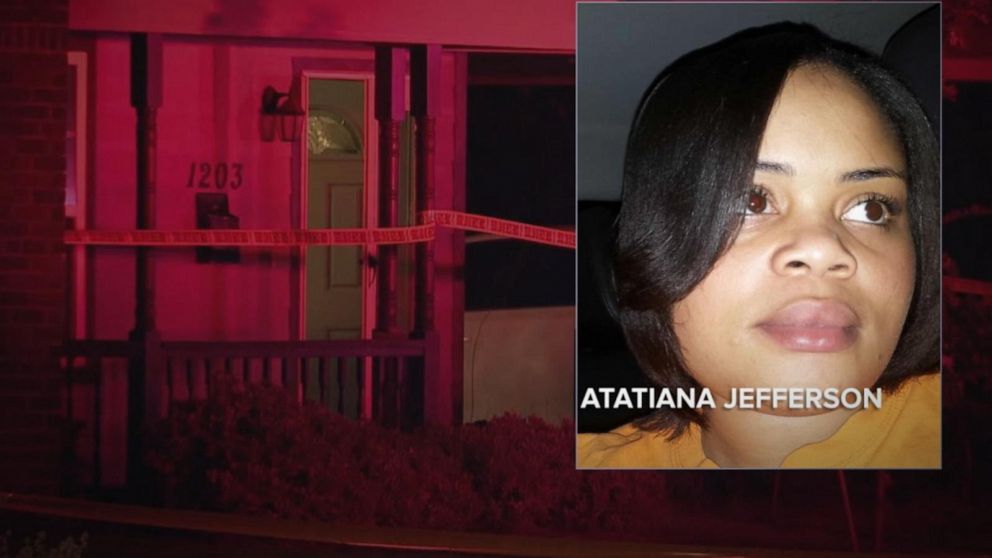
But settlements often contain details that receive far less attention than the headline dollar amount. How the agreement is structured, which claims it resolves and what it means for the remaining legal issues surrounding Jefferson’s death are all important parts of understanding what happens next.
Atatiana Jefferson’s story began that night not with a reported violent crime, but with a concerned neighbor asking someone to check on her. Minutes later, a 28-year-old woman was dead inside her home. Years of investigations, court proceedings and public debate followed.
Now Fort Worth is prepared to potentially pay $11.25 million to her family.
For some, the proposal represents another measure of accountability after years of legal battles. For others, it is a reminder that financial compensation can never truly account for a life that was lost. And behind the multimillion-dollar headline remains a deeper question that has followed this case since 2019: how did a simple welfare check meant to protect Atatiana Jefferson end with her being fatally shot inside her own home?