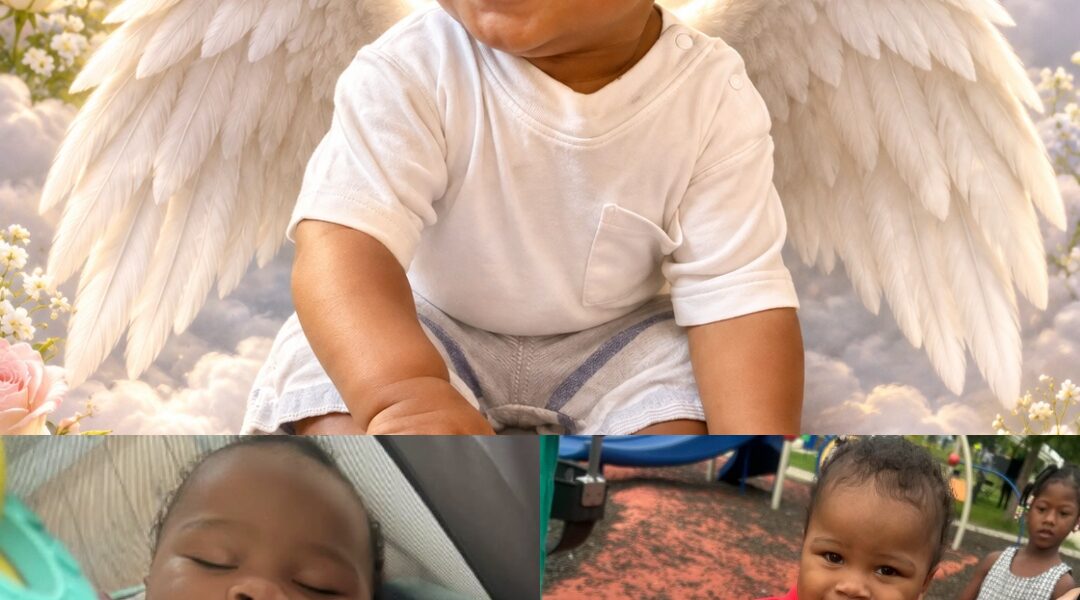

HEARTBREAKING: 11-MONTH-OLD BABY DON DIED AFTER CHOKING ON A BALLOON — JUST TWO DAYS BEFORE HIS FIRST BIRTHDAY
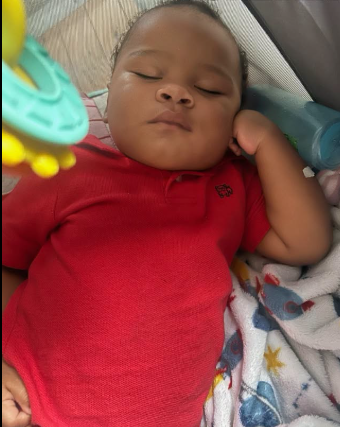
He was supposed to celebrate his very first birthday in just two days, surrounded by his mother’s love, his sisters’ laughter, and the excitement of a family preparing to mark an unforgettable milestone. Instead, 11-month-old Don’Vyaire Avita-Mays, affectionately known as “Baby Don,” lost his life in a devastating accident involving a balloon during what should have been a joyful Halloween celebration. What began as an ordinary family outing ended in an unimaginable tragedy, leaving a grieving mother with memories of a little boy whose life had barely begun.
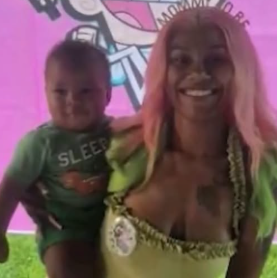
For Kisha Avita-Wilson, taking her children to a Halloween trunk-or-treat event in Kenosha, Wisconsin, was supposed to create another happy family memory. Her two older daughters were enjoying the festivities, receiving treats and colorful balloon animals while their baby brother accompanied them in his car seat. Nothing about the celebration suggested that a harmless-looking party decoration could become the object that would forever change their family.
Baby Don was only 11 months old, an age when the world is filled with fascinating colors, unfamiliar objects, and discoveries waiting around every corner. Like many babies, he was naturally curious, reaching toward things that caught his attention and exploring his surroundings in the instinctive ways infants do. His family understood that curiosity, which was why his mother said they had deliberately tried to keep the balloons away from him.
But during the celebration, one of the balloon animals came undone, creating a dangerous situation that developed before anyone could fully comprehend what was happening. According to Kisha, Baby Don managed to grab the loose balloon and bite it, causing the tied portion to shoot into his throat and become lodged in his esophagus. Within moments, a celebration filled with childhood excitement had turned into a desperate struggle to save an infant’s life.
Kisha immediately pulled her son from his car seat, realizing that something was terribly wrong as his condition rapidly deteriorated. She attempted CPR and tried to remove the obstruction, while another person accompanying the family also desperately attempted to help the struggling baby. Despite their frantic efforts, Baby Don turned blue and went into cardiac arrest, transforming a mother’s worst nightmare into a terrifying reality.
Emergency medical responders arrived quickly and attempted to remove the balloon material using specialized equipment, including a tube and forceps. Every effort centered on saving the little boy, whose tiny body had been overwhelmed by an obstruction that proved extraordinarily difficult to resolve. Tragically, despite those emergency efforts, Baby Don could not be saved, and his family was left facing a loss that no amount of preparation could have made bearable.
October 24 became the date that would forever divide the family’s life into everything that happened before the tragedy and everything that followed. Baby Don’s first birthday was supposed to arrive on October 26, bringing photographs, birthday wishes, and the joy of watching him reach his first major milestone. Instead of celebrating his first year, his loved ones were confronting the heartbreaking reality that he would never grow older.
The cruelty of the timing has made the loss especially painful, because a first birthday represents so much more than another date on a calendar. It celebrates twelve months of sleepless nights, comforting embraces, first smiles, developing personalities, and the countless little moments through which parents come to know their children. For Kisha, those memories now carry the unbearable knowledge that the little boy she expected to watch grow up was taken from her before his first birthday could arrive.
Speaking publicly about the accident, Kisha described the terrible speed with which everything unfolded and the helplessness she felt despite trying to rescue her son. One of the most devastating parts of her account was her difficulty speaking about Baby Don in the past tense, because accepting that he was gone felt almost impossible. Her words reflected a mother’s grief so profound that even the language of loss seemed too painful to bear.
Baby Don was not simply the infant at the center of a tragic news story, because to his family he was a beloved son, a little brother, and a source of everyday happiness. In messages shared through the family’s fundraiser, relatives remembered a handsome little boy with an infectious laugh and a smile capable of lighting up an entire room. Those details offer a glimpse of the child behind the headlines, reminding readers that his brief life was filled with love long before it became associated with heartbreak.
The tragedy also brought another frightening medical emergency into the family, as Kisha was approximately 30 weeks pregnant when she lost her son. According to relatives, the tremendous emotional and physical strain surrounding Baby Don’s death was followed by early contractions and premature cervical dilation, requiring Kisha to remain hospitalized. While mourning one child, she was also facing serious concerns about the pregnancy of another, placing an almost unimaginable burden on a mother already enduring profound grief.

The family’s concern extended beyond funeral arrangements to Kisha’s health, her two daughters, and the unborn baby whose arrival was still expected in the months ahead. Loved ones publicly requested prayers and support, recognizing that grief does not suspend the responsibilities and uncertainties that continue around a family after a tragedy. Their appeal reflected both the emotional devastation of losing Baby Don and the urgent need to protect and support those he left behind.
An online fundraiser was established to help the family manage funeral expenses and immediate needs during this extraordinarily difficult period. What should have been money, time, and energy devoted to a baby’s first birthday had become part of an effort to arrange a final farewell. For grieving relatives, the practical demands of organizing a memorial added another painful dimension to a loss they were still struggling to comprehend.
Yet amid her heartbreak, Kisha made the difficult decision to share what happened to her son, hoping that other families might recognize a danger they had never considered. She wanted parents to understand that an object commonly associated with happiness, birthdays, and celebrations could become deadly under certain circumstances. Her message was not simply about the loss of Baby Don, but about the possibility of preventing another family from experiencing the same devastating outcome.
Balloons appear at countless childhood events, from birthday parties and school gatherings to baby showers and seasonal celebrations. Their bright colors and playful shapes make them appealing to children, and adults often view them as ordinary decorations rather than objects requiring special precautions. But uninflated latex balloons and broken balloon pieces carry a choking and suffocation risk that may not be obvious until an emergency occurs.
The United States Consumer Product Safety Commission has warned that balloon fragments can become especially dangerous because their flexible material can conform to the shape of a child’s throat. Unlike some solid objects, which may leave small spaces through which air can pass, soft latex can create a tight obstruction that severely interferes with breathing. The agency specifically warns that uninflated balloons and broken pieces present serious hazards to young children, including those under the age of eight.

This danger can emerge even when adults believe they have taken reasonable precautions, as illustrated by Kisha’s account of deliberately keeping balloons away from her infant son. A balloon can unexpectedly deflate, break, or come apart, leaving pieces that are small enough for a curious child to reach and place inside the mouth. When events unfold in seconds, the distance between an ordinary celebration and a life-threatening emergency can become frighteningly small.
Kisha has argued that the warnings printed on balloon packaging are insufficient to protect children from these risks. She has called for stronger restrictions, including ending the marketing and sale of balloons for children, believing that stronger action could help prevent similar tragedies. Her position comes from the deeply personal experience of watching her son die despite the immediate rescue attempts made by those around him.
For parents reading about Baby Don, the circumstances may feel especially unsettling because the setting was familiar and the activity seemed innocent. It was not an extreme adventure, a reckless stunt, or an obviously hazardous environment, but a family event designed to entertain young children. The tragedy challenges an assumption many people naturally make, that objects commonly used to make children happy must also be reasonably safe for them.
Safety experts encourage families to keep uninflated balloons and discarded fragments away from children, especially infants and toddlers who frequently explore objects with their mouths. Broken balloons should be collected and disposed of immediately, while adults supervising celebrations should remain attentive to decorations that children may reach unexpectedly. Recognizing these hazards before an accident occurs is far more effective than relying on emergency intervention after a child begins choking.
The warning is especially important because balloon-related obstructions can be difficult to remove, even when emergency responders arrive rapidly. Baby Don’s mother described how medical personnel worked urgently with equipment to reach the material lodged inside her son’s throat, yet those efforts could not reverse the tragedy. His death demonstrates how serious such emergencies can become, while reinforcing the importance of prevention rather than suggesting that any particular rescue attempt could have guaranteed a different outcome.
Beyond the safety discussion, however, remains a family whose loss cannot be reduced to warnings, statistics, or recommendations. Baby Don’s sisters have lost their little brother, a child who should have been part of their birthdays, school milestones, holiday gatherings, and ordinary family memories for years to come. His mother has lost the opportunity to hear him speak his first sentences, watch him take his first confident steps, and discover the person he might have become.
There is a particular heartbreak in losing a child before the first birthday, because so many anticipated moments are still waiting to happen. Parents often imagine the milestones ahead, from running across a living room to beginning school, making friends, and eventually becoming independent adults. For Baby Don’s family, those imagined chapters ended before the first candle could be placed on his birthday cake.
The world may remember his story because of the shocking circumstances surrounding his death, but his family will remember something far more personal. They will remember his laughter, his little expressions, the comfort of holding him, and the everyday routines that once seemed so ordinary. Those memories cannot replace the future they expected, but they remain precious reminders that Baby Don’s life was defined by more than its tragic ending.
As the family continues navigating grief, Kisha’s willingness to speak publicly has given a deeply painful experience a broader purpose. Every parent who learns to remove balloon fragments immediately, every caregiver who reconsiders giving latex balloons to young children, and every celebration organizer who evaluates potential choking hazards represents another opportunity for prevention. Although awareness cannot bring Baby Don home, it may help protect another child whose family has never imagined facing such an emergency.
The loss has also raised questions about how effectively choking warnings are communicated to families purchasing common party decorations. A warning label can describe a hazard, but parents must still understand what the danger looks like and how quickly a seemingly harmless object can become life-threatening. Kisha’s appeal asks people to consider whether more prominent warnings, better education, or stronger product restrictions are needed to prevent future deaths.

No public discussion about safety can erase the personal suffering behind this story, and the family deserves compassion rather than speculation about decisions made during an emergency. By Kisha’s account, the balloons were being kept away from her baby, the accident unfolded suddenly, and those present immediately tried to intervene. The most meaningful response is to recognize the devastating risk, support the grieving family, and share accurate information that might help another household.
As his loved ones prepare to honor Baby Don’s memory, the contrast between what was expected and what actually happened remains almost impossible to comprehend. A birthday celebration should have marked the beginning of another year of growth, discovery, and family happiness, yet his relatives are instead arranging a farewell to a child they cherished. Their grief is a reminder that behind every tragic headline are people whose entire understanding of the future has been permanently changed.
Baby Don’s name now carries a warning that his mother never wanted to have to deliver, born from a loss that no parent should endure. He was only eleven months old, a little boy with a bright smile, a loving family, and an entire lifetime that should have been waiting ahead of him. Although his time was heartbreakingly brief, the awareness created by his story may continue long after the celebration where everything went wrong.
Tonight, somewhere another family may be preparing for a birthday party, buying balloons, choosing decorations, and imagining the joyful photographs they will take together. Baby Don’s story asks those families to look closely at the objects surrounding their children, because the smallest overlooked hazard can sometimes carry the most devastating consequences. And as his mother continues mourning the son she could not save, one heartbreaking question remains: How many more families must experience a tragedy like this before the dangers of balloons are taken more seriously?
Rest peacefully, sweet Baby Don. Your life was far too short, but your story deserves to be remembered with love, compassion, and a commitment to protecting other children.
📌 The family’s fundraising link will be shared in the comments. Please keep Kisha, her daughters, her unborn baby, and everyone who loved Baby Don in your thoughts.
#BabyDon #RestInPeace #ChildSafety #BalloonSafety #HeartbreakingNews #FamilySupport #USAnews #TouchingStories