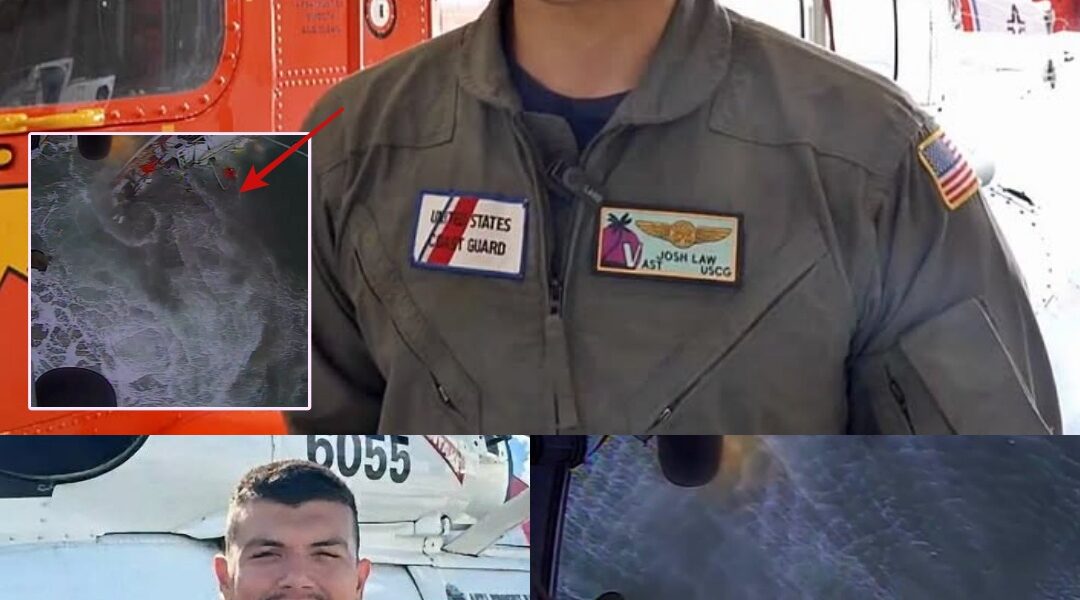
HERO IN THE DARKNESS: 24-YEAR-OLD COAST GUARD SWIMMER BATTLES 8-FOOT WAVES TO SAVE STRANGERS.9343

HERO IN THE DARKNESS: 24-YEAR-OLD COAST GUARD SWIMMER JOSH LAW BATTLES 8-FOOT WAVES TO SAVE STRANGERS STRANDED IN THE OCEAN
The ocean was dark, the waves were merciless, and somewhere beneath the glow of a helicopter’s searchlight, dozens of people were fighting desperately to stay alive. On October 16, what began as a voyage aboard a vessel carrying 27 people turned into a terrifying struggle for survival when the boat capsized approximately 140 miles off the coast of Mexico. As survivors clung to floating debris, equipment, and one another in the cold water, a 24-year-old Coast Guard rescue swimmer named Josh Law prepared to descend into conditions that would push his strength, endurance, and courage to their limits.
For the people trapped in the water, every passing minute brought another challenge. They had reportedly spent hours struggling to remain afloat, surrounded by darkness and powerful waves reaching approximately eight feet high. Some survivors had sustained injuries, including reported shark bites, making an already dangerous situation even more frightening as they waited for help to reach them.

When the Coast Guard helicopter arrived, its searchlight illuminated only fragments of the vast ocean below. The rescuers had to identify survivors scattered across the water while battling difficult conditions that made every movement dangerous. For Josh, the mission was clear: reach the people who needed help, bring them to safety, and keep going for as long as the rescue operation required.
Being a rescue swimmer means entering situations that others are desperately trying to escape. It requires extensive training, physical endurance, quick judgment, and the ability to remain focused when the environment threatens both the rescuer and the people being rescued. Yet knowing the risks in theory is different from confronting them in the middle of a dark ocean, where every wave can separate a rescuer from someone whose life depends on reaching help.
Josh was lowered from the helicopter into the darkness, guided by little more than the aircraft’s searchlight and the coordination of the crew above him. The cold water, turbulent waves, and scattered survivors created a demanding environment in which every approach required care and determination. He began moving from one person to another, swimming through the rough water and helping survivors reach a rescue basket so they could be lifted toward the helicopter.
One person at a time, the rescue continued. Each survivor represented another individual who had endured hours of fear and uncertainty, hoping someone would arrive before exhaustion became overwhelming. For those waiting in the water, seeing a rescuer approach through the darkness must have offered a powerful reminder that they had not been forgotten.
But the conditions were taking a toll on Josh as well. Water began entering his protective suit, and the physical effort of repeatedly swimming through powerful waves steadily drained his strength. The ocean did not become any less dangerous simply because he was there, and his own safety depended on maintaining enough energy and awareness to continue operating in a hostile environment.

Still, he kept moving.
In an interview with The Associated Press, Josh acknowledged how exhausting the experience had been, while emphasizing that his own discomfort was nothing compared with what the people struggling in the water were enduring. His words reflected the mindset of someone who understood that the mission was not about being fearless or pretending the conditions were easy. It was about recognizing the danger and continuing to do everything possible to help people who were in even greater immediate peril.
Josh was not working alone, even when he was the only rescue swimmer directly reaching survivors in the water during parts of the operation. Lieutenant Miyako Miller, who piloted the helicopter, and the other Coast Guard crew members played essential roles from above, searching the darkness, tracking survivors, coordinating movements, and helping position the aircraft to support the rescue. The success of such a mission depends on teamwork, communication, and trust between the person in the water and the people responsible for keeping the operation moving safely.
For nearly two hours, the rescue effort continued under punishing conditions. The helicopter crew had to maintain awareness of the changing situation while the swimmer worked to reach people who were scattered across the water. Every rescue required coordination, and every movement had to account for the waves, the darkness, the helicopter’s position, and the limited visibility surrounding the survivors.

According to the account provided, six survivors were ultimately rescued. Although that number represents lives saved, the incident also left families facing the painful uncertainty surrounding those who remained missing or were not accounted for in the available information. For their loved ones, the hours after the disaster would have been filled with fear, unanswered calls, and desperate hopes that the people they cared about might still be found.
Behind every person in the water was a life that mattered to someone. A survivor might have been a parent, a child, a sibling, a partner, or a friend whose absence would leave an enormous void. In a maritime emergency, rescue workers encounter people at their most vulnerable, often without knowing their names, their histories, or the families waiting for them on shore.
That is what makes Josh’s actions so meaningful. He did not need to know the people he was approaching to recognize that they needed help. Their backgrounds, identities, and personal stories were not conditions for receiving his assistance. In the darkness, the immediate priority was simple: reach those who could be reached and give them a chance to survive.
Rescue swimmers train for dangerous situations, but training cannot eliminate every risk or guarantee that every mission will end without loss. Their work requires them to make difficult decisions under pressure, balance their own safety against the urgency of the emergency, and rely on the judgment of their teammates. Josh’s reported experience demonstrates how demanding that responsibility can become when weather, darkness, exhaustion, and time all work against the people trying to save lives.
It also highlights the importance of the helicopter crew and every member of the Coast Guard team involved. The pilot must keep the aircraft positioned to support the swimmer, while the rest of the crew must identify survivors and coordinate the operation in conditions that can change quickly. From the person swimming through the waves to the people watching from above, each role contributes to the possibility of bringing someone home alive.
For Josh, the experience may remain a powerful memory of the physical demands and emotional weight of rescue work. For the survivors, it may represent the moment when a terrifying night began to turn toward safety. And for the families still waiting for news of missing loved ones, the rescue operation serves as a reminder that people were working against the darkness to reach those in danger.
The story is not simply about a young man who entered the ocean and continued despite exhaustion. It is about the courage required to help strangers, the discipline needed to work as part of a rescue team, and the humanity that drives people to respond when others are facing the possibility of death. Josh Law and the Coast Guard crew demonstrated the importance of that commitment during an operation in which every successful rescue mattered.

Josh was only 24 years old, yet he entered a dark, dangerous ocean to help people he had never met. While powerful waves battered the water around him and exhaustion threatened to overwhelm his body, he continued working alongside a team determined to bring survivors to safety.
His actions deserve recognition, but the families of those who remain missing also deserve compassion, support, and hope. As the details of the incident continue to be remembered, one question stands out: What would you say to a young man who risked his life in the darkness so that strangers might have another chance to see their families again?
May Josh Law, Lieutenant Miyako Miller, and every Coast Guard member involved in the rescue know that their courage and dedication matter. And may the families still waiting for news of their loved ones find strength and comfort in the days ahead. ❤️🇺🇸🙏