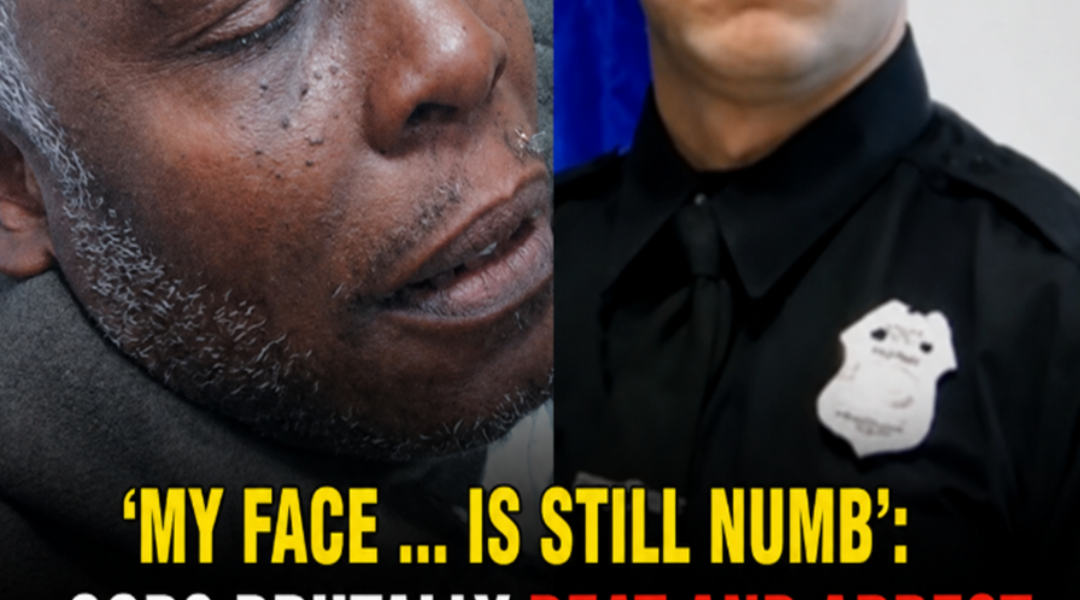
‘My Face… Is Still Numb’: Judge Orders New Trial After Black Man Was Beaten and Arrested While Recording Buffalo Police.944

A routine bicycle ride home turned into a violent encounter with police for Dean Taylor, a 65-year-old Black man who says he was beaten, thrown to the ground and arrested after doing something courts have repeatedly recognized as constitutionally protected: recording police officers in public. Six years later, Taylor’s case has taken another dramatic turn after a New York judge overturned a jury verdict that had favored the officers and ruled that police had no legally legitimate justification to arrest him in the first place.
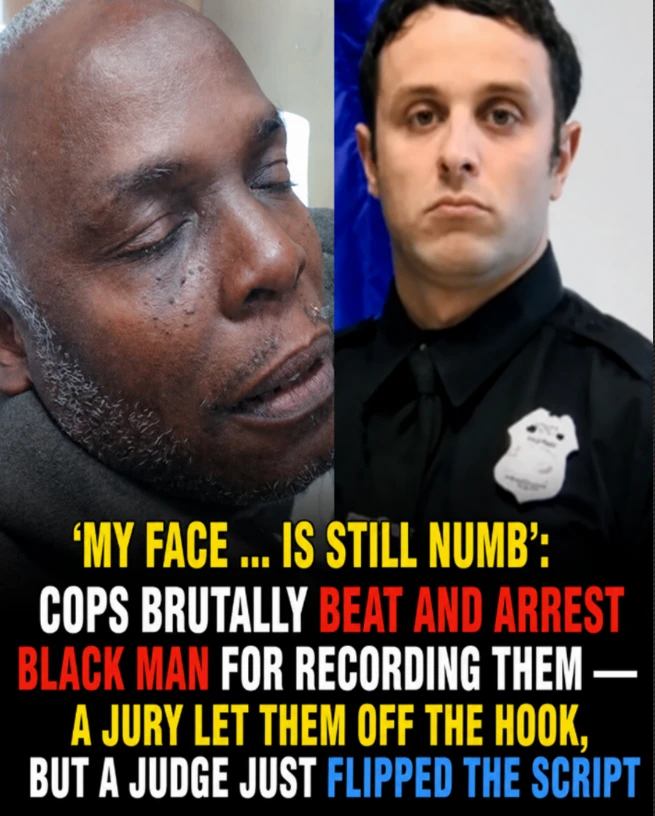
The confrontation happened on September 1, 2019, when Taylor was riding his bicycle home from a store in Buffalo, New York. Along the way, he noticed several police vehicles gathered outside a residence where officers were investigating a reported drive-by shooting. No one had been killed or injured, according to reports. Curious about the large police presence, Taylor stopped across the street, placed his bicycle down and began recording the scene with his phone.
Taylor later testified that he initially did not know what officers were investigating. He remained on a public street corner, filming from a distance. At one point, a woman passing through the area reportedly confronted him and questioned why he was recording. Taylor exchanged words with her but continued filming.
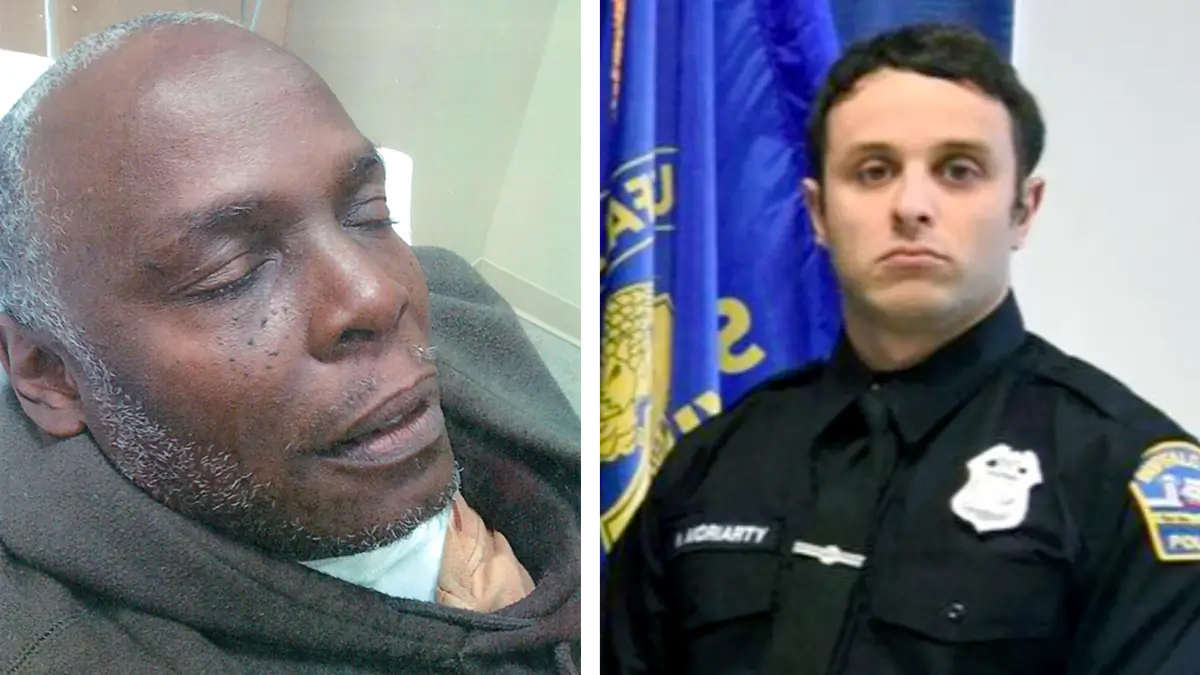
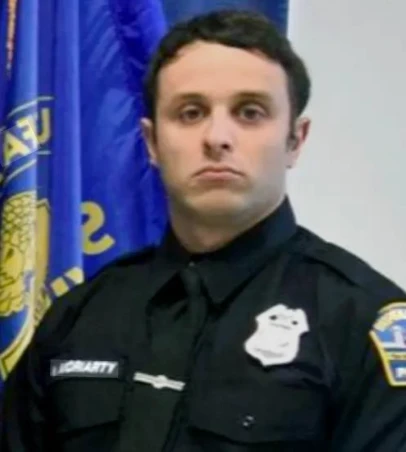
About 20 minutes later, Buffalo police officer Kyle T. Moriarity approached Taylor. According to Taylor’s deposition, Moriarity told him that residents of the home did not want to be recorded and instructed him to move farther away. Taylor responded that he was not focused on recording the house.
“I said I’m not filming their house,” Taylor recalled. “I said I’m filming y’all.”
Taylor refused to relocate, maintaining that he was standing in a public area and had the right to continue recording. What happened next is sharply disputed by Taylor and the officers.
Taylor says Moriarity was standing beside him when the officer suddenly struck him several times in the face. Taylor described losing consciousness almost immediately.
“He stood on the side of me and he hit me with his left hand, like three or four times, and I went down,” Taylor testified. “I think everybody jumped on me then.”
Taylor said that as he regained awareness on the ground, he heard officers ordering him to stop resisting while his arms were being pulled behind his back. He alleged that several officers piled onto him and that one pressed a knee near his neck while he was being restrained.
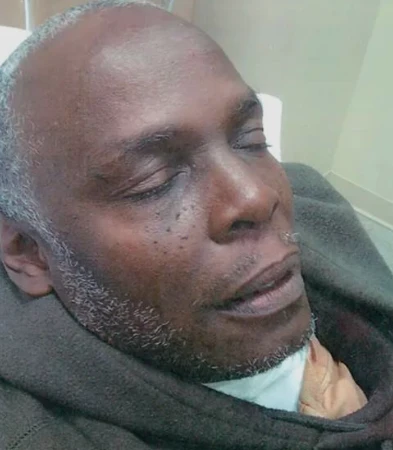
His injuries were significant. Photographs later included in court records reportedly showed a wound to his head that required multiple stitches. Taylor also said he lost a tooth and developed chronic pain in his arms and back.
Years after the encounter, he said some effects had never disappeared.
“My face, side of my face, is still numb, my eye still hurts,” Taylor said during his deposition.
After being handcuffed, Taylor was placed in a patrol vehicle. He alleged the officer driving intentionally drove aggressively to give him what he described as a “rough ride.” Taylor spent the night in jail and was charged with harassment, obstructing governmental administration, disorderly conduct and resisting arrest.
All of those charges were dismissed on October 11, 2019, less than six weeks after his arrest.
Taylor later filed a civil lawsuit against the officers and other defendants, including Moriarity, officer Christopher Bridgett, the City of Buffalo, the Buffalo Police Department and Police Commissioner Byron G. Lockwood. The lawsuit alleged excessive force, battery, false imprisonment, intentional infliction of emotional distress, negligent hiring, negligent supervision and failure to intervene, among other claims.
The officers presented a very different account of the confrontation.
During the civil trial, Moriarity testified that Taylor’s conduct was “annoying and alarming” and that his recording served what the officer considered “no legitimate purpose.” According to court reporting, Moriarity argued that this gave police grounds to intervene.
He testified that officers tried repeatedly to resolve the situation verbally before he attempted to take hold of Taylor’s arm. Moriarity claimed Taylor pulled away, knocked handcuffs from his hands and raised an elbow in a way the officer interpreted as an attempted strike.
“He assumed what I perceived to be a fighting posture,” Moriarity testified, saying he feared Taylor might hit him.
That account became central to the officers’ defense. Taylor, however, maintained that he never attacked the officers and was struck without warning after refusing to stop recording or move from the public corner.
Despite the dismissal of the criminal charges and Taylor’s argument that he was simply exercising his First Amendment rights, a jury earlier in 2025 sided with the police officers.
For Taylor, it appeared that years of litigation had ended in defeat.
Then his legal team made an unusual move.
Attorney Blake Zaccagnino of the Shaw & Shaw law firm filed a post-trial motion asking New York Supreme Court Judge John DelMonte to set aside the jury’s verdict under New York civil procedure rules.
On September 19, 2025, Judge DelMonte issued a lengthy decision that dramatically changed the direction of the case.
The judge concluded that Taylor was legally entitled to stand in the public location where he had been recording and that the officers themselves acknowledged knowing citizens have a constitutional right to record police performing their duties in public.
“The plaintiff’s physical position and presence at the incident scene was a public space that he was constitutionally entitled to traverse and occupy,” DelMonte wrote.
The judge went further, saying the evidence provided no legitimate basis for officers to arrest Taylor.
According to DelMonte, there was “no legally legitimate justification” for a reasonable officer to conclude that probable cause existed to arrest Taylor for a crime under the circumstances presented during the trial.
The judge also noted that the officers admitted they understood Taylor had a constitutional right to record police activity.
That conclusion undermined one of the core arguments presented to the jury: that Taylor’s filming was somehow improper because officers believed it served no legitimate purpose. The First Amendment does not require a person to convince an officer that recording police has a useful purpose before exercising that right.
DelMonte therefore overturned the jury’s decision and ordered a new trial focused on determining the damages Taylor should receive for the violation of his constitutional rights.
The ruling does not automatically determine the final dollar amount Taylor may receive, nor does it resolve every allegation in his lawsuit. Instead, another proceeding will determine what compensation, if any, is appropriate based on the violations established by the court.
The case has attracted attention because it illustrates the tension that can occur when citizens record police activity. Recording law-enforcement officers performing official duties in a public place has repeatedly been recognized by courts as constitutionally protected activity, provided the person recording does not physically interfere with police work.
Taylor’s case also raises questions about what happens when an officer believes a lawful activity is irritating, unnecessary or disruptive. Judge DelMonte’s ruling makes clear that an officer’s personal opinion about the usefulness of a recording does not, by itself, create probable cause for an arrest.
For Taylor, however, the case is about far more than constitutional theory.
He says a decision to stop his bicycle and hold up his phone left him with a missing tooth, lasting pain and numbness that remained years later. He also spent a night in jail facing criminal accusations that were eventually thrown out.
For a time, even the civil jury rejected his claims.
Now, after a judge took the rare step of overturning that verdict, Taylor will return to court—not to prove whether he had the right to record police, but to determine what that violation may ultimately cost those responsible.