Three Alabama Women Charged in Absentee-Ballot Fraud Case as Local Election Faces Wider Scrutiny.920

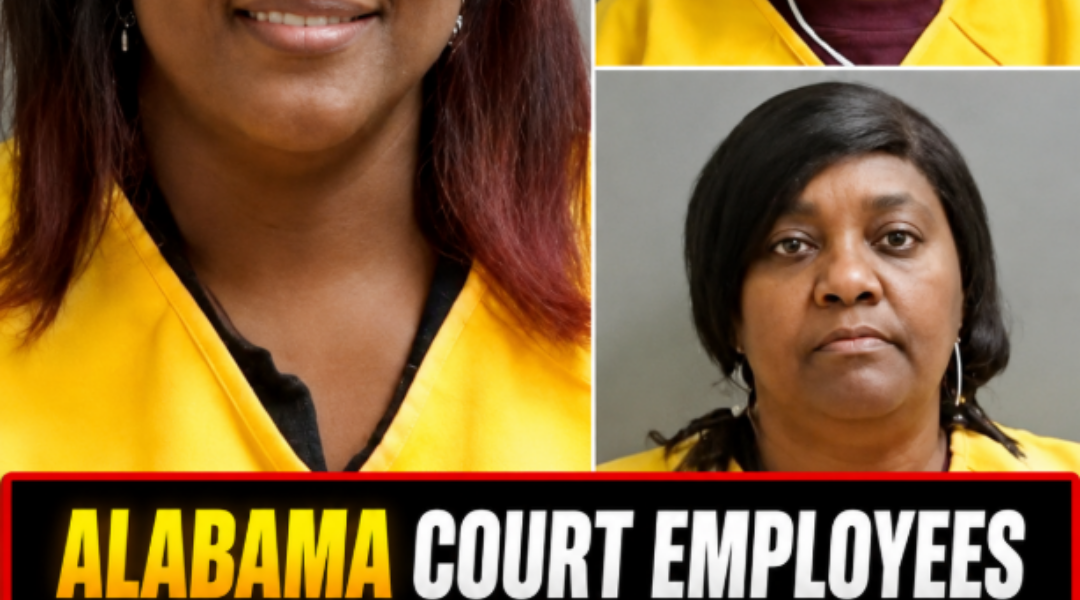
Three women from Monroe County, Alabama, were arrested and indicted on multiple election-related charges after investigators alleged that absentee ballots were illegally collected, altered, or submitted during the August 26, 2025, municipal election in Frisco City. The defendants—Samantha Trashawn Kyles, Sarah Crayton Bennett, and Sharon Crayton Denson—are accused of falsifying absentee-ballot applications or verification documents and unlawfully handling ballots belonging to other voters. Alabama Attorney General Steve Marshall announced the arrests on February 26, 2026, saying the three women initially faced a combined 17 counts of ballot harvesting and 20 counts of unlawful use of absentee ballots. All three have pleaded not guilty, and none has been convicted.
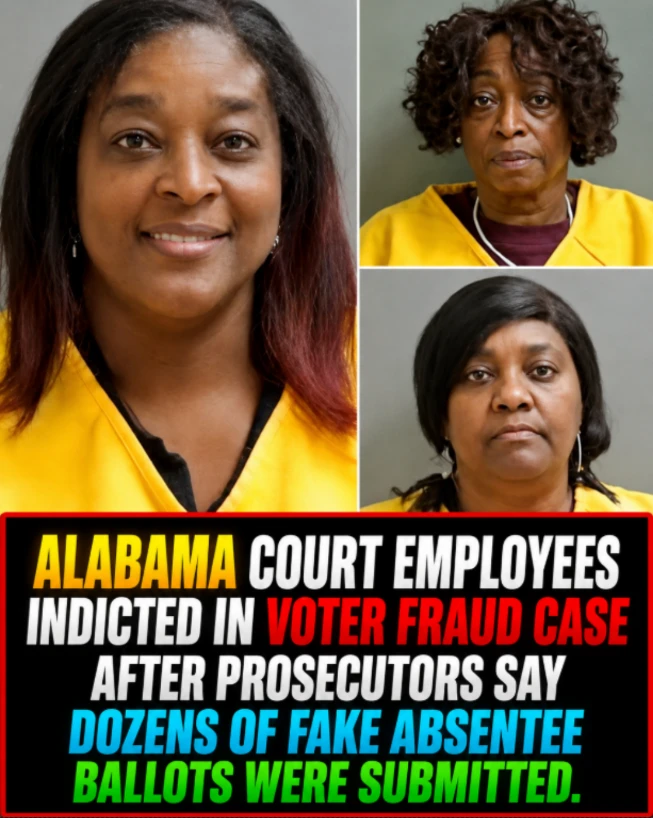
According to the Alabama Attorney General’s Office, Bennett was listed as 60 years old, Denson as 67, and Kyles as 46 when the charges were announced. Prosecutors allege that each woman falsified official documents or collected and handled absentee ballots in ways prohibited by state law. Court reporting indicates that the allegations involve ballots connected to approximately 20 voters. Authorities have not publicly released every piece of evidence gathered during the investigation, and an indictment represents only a formal accusation presented by prosecutors—not proof that the defendants committed the crimes.
The case centers on Alabama’s rules governing absentee voting. An absentee ballot allows an eligible voter who cannot appear at a polling location to vote through an alternative process, but the application, completion, witnessing, and submission of that ballot are controlled by strict legal requirements. Alabama law restricts third parties from collecting multiple completed absentee ballots, a practice commonly called ballot harvesting. The state’s restrictions are intended to protect voters from coercion, prevent ballots from being changed without their knowledge, and preserve a clear chain of custody from the voter to election officials.

Prosecutors say the alleged conduct went beyond simply helping a relative understand a form or delivering a ballot in a legally permitted circumstance. The indictments reportedly accuse the women of submitting false absentee-ballot applications, falsifying verification documents, or altering ballots associated with several voters. Kyles was initially accused of four counts of unlawful use of absentee ballots and three counts involving false absentee-ballot applications. Prosecutors alleged that she altered absentee ballots for four voters. By April, a judge had dismissed one count from her indictment at the state’s request, leaving her facing four unlawful-use counts and two counts related to false applications.
Denson also sought to have the case against her dismissed. Court records reported in April show that the state opposed dismissing every charge but requested the removal of selected counts. Monroe County Circuit Judge Jack Weaver granted motions dismissing several counts while allowing the remaining allegations to move forward. The dismissals do not necessarily mean the court found the overall case false; prosecutors may remove individual counts because of evidentiary issues, duplication, procedural concerns, or decisions about how best to present the case at trial. The surviving charges remain unresolved.
The investigation attracted additional attention because two of the defendants had worked at the Monroe County Courthouse. Local officials confirmed that Kyles had served as a judicial assistant for District Judge Donna Silcox and previously worked for the county probate court before leaving that position in 2019. Bennett worked as a courthouse security guard, with officials reporting that her final day was March 4, 2026. Authorities have not publicly established that either woman used her courthouse position to carry out the alleged offenses, and their employment alone is not proof of wrongdoing.
Kyles’ attorney emphasized that a grand-jury indictment is based on evidence presented only by the prosecution and does not allow the accused or defense attorneys to argue their side before charges are issued. That principle is especially important in a politically sensitive election case. The defendants are entitled to challenge the reliability of witnesses, the interpretation of ballot records, the legality of the investigation, and whether prosecutors can prove that any improper action was committed knowingly and intentionally.
The criminal case is unfolding alongside a separate legal challenge to the Frisco City election itself. Former mayor Allen Lang filed a lawsuit alleging that 131 illegal absentee ballots were included in the August 2025 election. Officially reported results showed Brandaun Love defeating Lang by a vote of 255 to 165, a margin of 90 votes. A judge later ordered a special election amid the dispute, although the lawsuit’s broader allegation of 131 questionable ballots is distinct from the criminal indictments involving the three women and should not be treated as proof that every challenged ballot was fraudulent.
That distinction matters because election litigation and criminal prosecution apply different standards. In a civil election contest, a judge may consider whether irregularities were serious enough to cast doubt on the declared result. In a criminal case, prosecutors must prove each defendant’s guilt beyond a reasonable doubt and establish the required intent for every charged offense. A ballot may be rejected or questioned because of an administrative mistake without proving that someone deliberately committed fraud. Likewise, a court’s decision to order a new election does not automatically establish that a particular defendant illegally changed or submitted ballots.
Under Alabama law, unlawful use of an absentee ballot is classified as a Class C felony. The Attorney General’s Office said a conviction can carry a sentence ranging from one year and one day to 10 years in prison. Ballot harvesting is classified as a Class A misdemeanor and can carry up to one year in jail. Any eventual punishment would depend on the specific counts resulting in conviction, the facts established in court, sentencing rules, and each defendant’s prior history.
Supporters of strict absentee-ballot laws argue that cases like this demonstrate why third-party handling must be closely controlled. Unlike in-person voting, absentee voting takes place outside a supervised polling station, which can create opportunities for pressure, forged documents, altered choices, or ballots submitted without a voter’s informed consent. Prosecutors say enforcement is necessary not only to punish proven misconduct but also to reassure voters that every lawful ballot will be protected.
Civil-rights advocates and defense attorneys, however, often warn that broad ballot-collection laws can also create confusion for elderly voters, people with disabilities, and residents who depend on relatives or community members for assistance. For that reason, the precise conduct matters. Helping someone obtain instructions is not automatically the same as falsifying an application, changing a vote, or taking possession of multiple ballots in violation of the law. The court must determine what each woman allegedly did, what she understood at the time, and whether the evidence satisfies every element of the charged offense.
The Monroe County case has therefore become about more than three arrests. It involves the integrity of a closely watched municipal election, allegations surrounding dozens of absentee-ballot documents, the employment of two defendants within the local courthouse system, and a separate judicial order requiring voters to return to the polls. Yet despite the seriousness of the accusations, the legal process remains unfinished. Some charges have already been dismissed, others are proceeding, and the defendants continue to deny wrongdoing.
The final outcome will depend on evidence rather than headlines: voter testimony, ballot applications, signatures, verification records, chain-of-custody information, communications among the accused, and any explanation offered by the defense. Until a judge or jury reaches a verdict, Samantha Kyles, Sarah Bennett, and Sharon Denson remain legally presumed innocent. What the case ultimately reveals—an organized effort to manipulate absentee ballots, individual misunderstandings of election law, or a more complicated dispute surrounding a contested local race—will only become clear as the remaining allegations are tested in court.